Basic Home Improvement Tools: A Beginner-Friendly Guide
A clear, beginner-friendly guide to the essential tools for home improvement, including measuring tools, hand tools, a first power tool, and basic storage and safety habits.
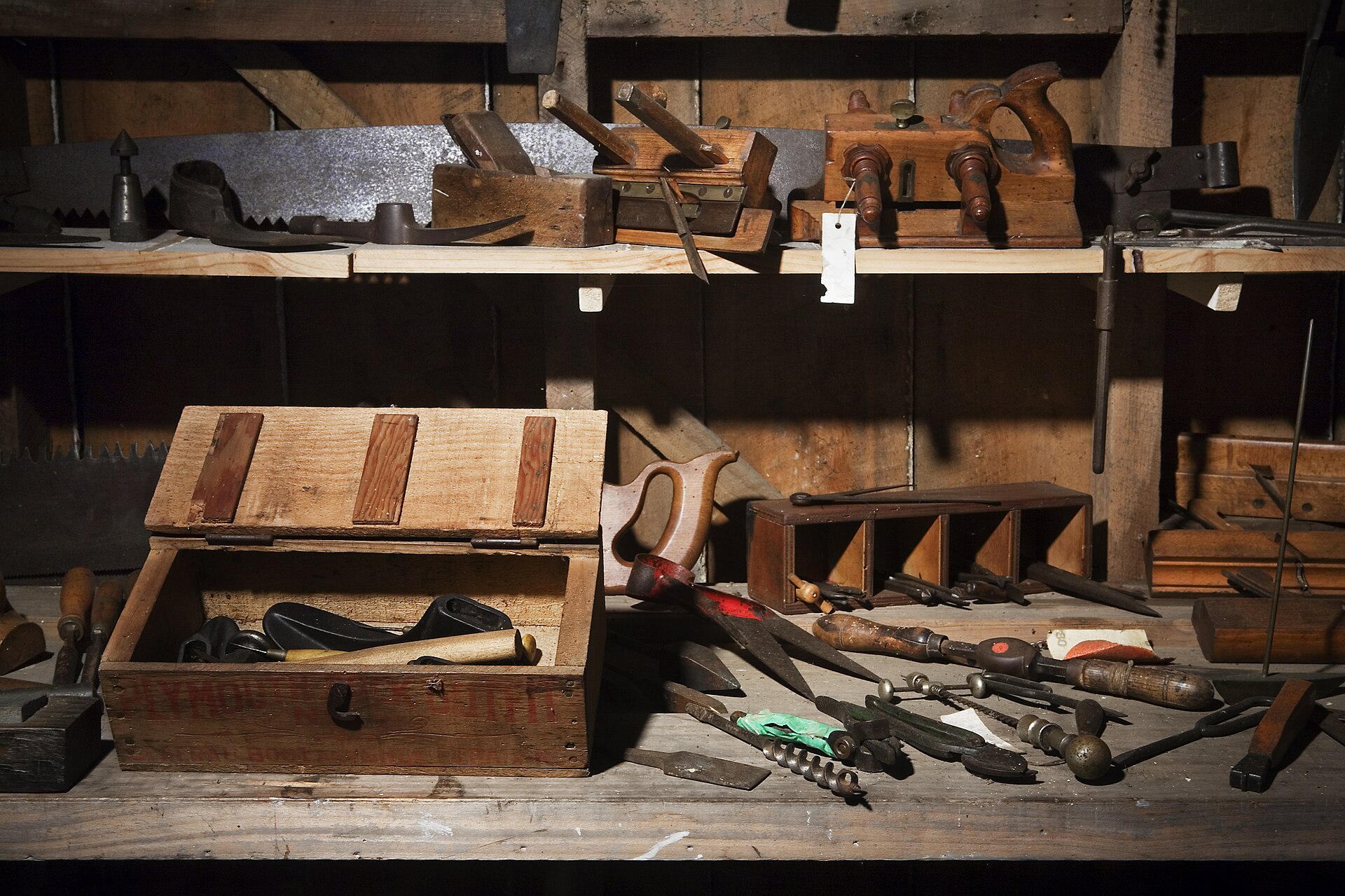
Cover: Own work · Wikimedia Commons · CC BY-SA 3.0
Question: What basic tools should a beginner choose for home improvement projects?
Start with measuring and marking
Most projects begin with measuring and marking. A tape measure is the most common measuring tool because it extends and locks at a chosen length. A level helps you confirm that shelves, pictures, or furniture are straight. A simple carpenter's pencil or standard pencil makes a visible mark on wood, drywall, and metal. These three items are inexpensive, easy to store, and useful in nearly every project.
Gather essential hand tools
A basic tool kit can be built around a few multi-purpose hand tools. A claw hammer is useful for driving and removing nails. A set of screwdrivers with both flat and Phillips heads covers most screws. Slip-joint pliers grip and hold objects, while an adjustable wrench fits several sizes of nuts and bolts. A utility knife with a retractable blade is handy for opening boxes, cutting drywall paper, and trimming materials. These tools do not require electricity and are ideal for beginners to practice with.
Consider a cordless drill/driver
The first power tool many beginners choose is a cordless drill/driver. It can drill holes and drive screws, which are common tasks in furniture assembly, hanging shelves, and small repairs. Cordless models are portable and simple to operate. Beginners may want a drill with a basic clutch setting so they can practice controlling how deep a screw goes. A starter kit usually includes a charger, a battery, and a selection of drill bits and screwdriver bits.
Plan simple storage and upkeep
Keeping tools in one place makes projects easier to start. A toolbox with compartments, a tool bag, or a pegboard in a garage or closet can keep hand tools visible and protected. After use, wipe off dust, return tools to their labeled spots, and check for loose handles or worn bits. If you use a rechargeable drill, store the battery according to the manufacturer's guidance. Regular care helps tools last longer and stay ready for the next task.
Use basic safety habits
For beginners, simple habits make a big difference. Wear safety glasses when cutting, drilling, or hammering. Consider work gloves when handling rough materials. Keep blades retracted and tools out of reach of children. Read the short instruction sheet that comes with any new tool and watch a trusted demonstration video if you are unsure. Start with easy projects and practice on scrap material before working on a valued surface.