Home Improvement Tools for Beginners: What to Learn First
A beginner-friendly overview of the main families of home improvement tools — measuring, fastening, cutting, and power tools — with notes on how to choose a sensible starter kit, work safely, and keep tools in good shape.
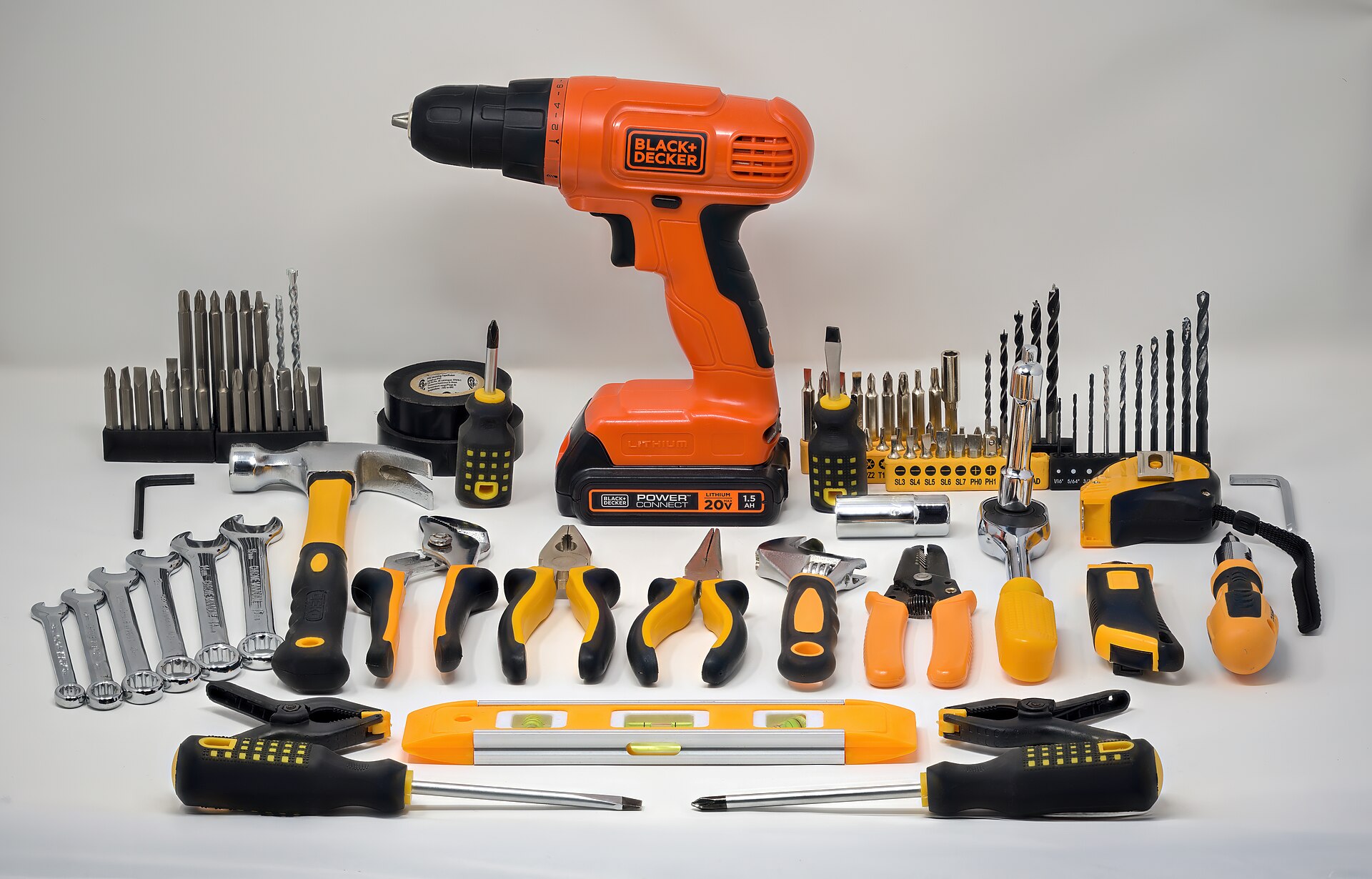
Cover: Own work · Wikimedia Commons · CC0
Question: Which home improvement tools should a beginner start with, and how do you choose and use them sensibly?
Start with categories, not a shopping list
Most beginner home improvement tasks draw on a small number of tool families: measuring and marking, holding and clamping, fastening and driving, cutting and shaping, and finishing or cleaning up. Safety gear sits alongside all of them. Once you can place a task in one of these families, choosing a tool becomes a question of fit rather than brand. A shelf project and a leaking tap may both need measuring and fastening, but the specific tools differ, and that is normal. Beginners often buy a large bundled kit and then find half of it unused; buying for the job in front of you is usually a better teacher.
Measuring and marking tools
Accurate work starts before any cutting. A tape measure covers most general measuring, while a folding rule or steel rule can be steadier for short, flat work. A spirit level helps you check whether a surface is horizontal or vertical, and a try square or combination square helps mark and check right angles. A pencil, a marking knife, and a straightedge round out the group. The tools only help if the technique is consistent: keep the tape straight, measure from a single reference point, and mark with a fine line rather than a broad smudge. Public reference pages on measuring tools and levels are useful for understanding how each one works.
Holding, clamping, and fastening
A workpiece that moves is hard to work on safely and accurately. Clamps, a bench vice, and a stable surface do much of the quiet work in a workshop. For fastening, screwdrivers in the common head patterns and a matching set of bits matter more than the number of handles you own — a driver that does not fit the screw head damages both. A hammer, pliers, and an adjustable wrench cover a lot of general holding and turning tasks. Learning the difference between a screwdriver for turning and a driver bit for a drill helps you avoid stripping heads and wasting material.
Cutting and shaping tools
Hand saws, utility knives, chisels, files, and abrasives are the beginner's cutting and shaping group. Sharpness is the theme: a sharp blade or saw cuts with less force, which usually means more control. Utility knife blades are designed to be replaced, and saw blades and chisels can be sharpened or replaced as they dull. Always cut away from your body, keep your free hand clear of the blade path, and clamp the work rather than holding it by hand. Manufacturer guidance and general workshop references explain the specific blade or accessory suited to a given material.
Power tools: speed, and what it asks of you
Power tools trade effort for speed, and they ask for more attention in return. A drill-driver is the tool most beginners meet first, because it covers drilling and driving across many small jobs. Corded models typically run continuously from mains power, while cordless models rely on a battery platform, so choosing within one battery system can matter more than any single specification. Other power tools — saws, sanders, and routers — are worth adding when a specific project calls for them rather than in advance. Read the manual for each tool, use the guard and handles as designed, and unplug or remove the battery before changing bits or blades.
Safety habits that belong with every tool
Personal protective equipment is part of the toolkit: eye protection for cutting and drilling, hearing protection around loud machinery, and dust protection when sanding or working with dusty materials. Ventilation matters when working indoors, and a tidy, well-lit bench reduces mistakes. Gloves protect hands for handling materials but are generally kept away from rotating machinery, where they can catch. Know where your limits are: electrical, gas, and structural work is best referred to a qualified professional, and local regulations may require it. General safety guidance from workplace authorities is written for professionals but is readable and relevant for beginners.
Building a starter kit at a sensible pace
A practical approach is to buy for the first few projects and borrow or hire anything used once. Secondhand hand tools are often good value if the handles are sound and the blades are not badly worn, while battery tools are worth buying within a system you plan to stay with. Mid-range tools for jobs you do often and inexpensive tools for jobs you rarely do is a common balance. Storage and upkeep protect the investment: keep tools dry, wipe metal parts after use, store blades safely, and keep the manual with the tool. A simple tool wall, box, or drawer organiser makes a small kit easier to use than a large disorganised one.
Where to learn more
Manufacturer instructions and safety leaflets are the most specific source for any individual tool and should be kept and read. Public encyclopaedia articles on hand tools, power tools, and levels give useful background on how and why tools are designed as they are, and workplace safety bodies publish general guidance on hand and power tool hazards. Community workshops, adult education classes, and library books on basic DIY can add technique that a product page never covers. Learning one tool thoroughly before adding the next keeps both skill and spending under control.