Photos from current listings. Actual item, color, and included accessories may vary.
Floating Shelf Buying Guide
Floating shelves are wall-mounted storage platforms that hide their brackets inside or behind the shelf, creating a clean, furniture-like look in garages, workshops, and utility rooms. The core trade-off is concealed support strength versus installation simplicity: hollow-back Chinese-made MDF shelves with metal keyhole brackets are cheap but load-limited, while solid-wood or steel-core shelves with full-length steel rods or French cleats carry serious weight. The decision rule: buy the strongest concealed bracket system your wall framing can anchor into, and never mount a floating shelf to drywall alone without a stud or masonry anchor rated for the shelf's fully loaded weight.


At a glance
- Category
- Garage Storage
- Data updated
- Nov 20, 2026
Current offers
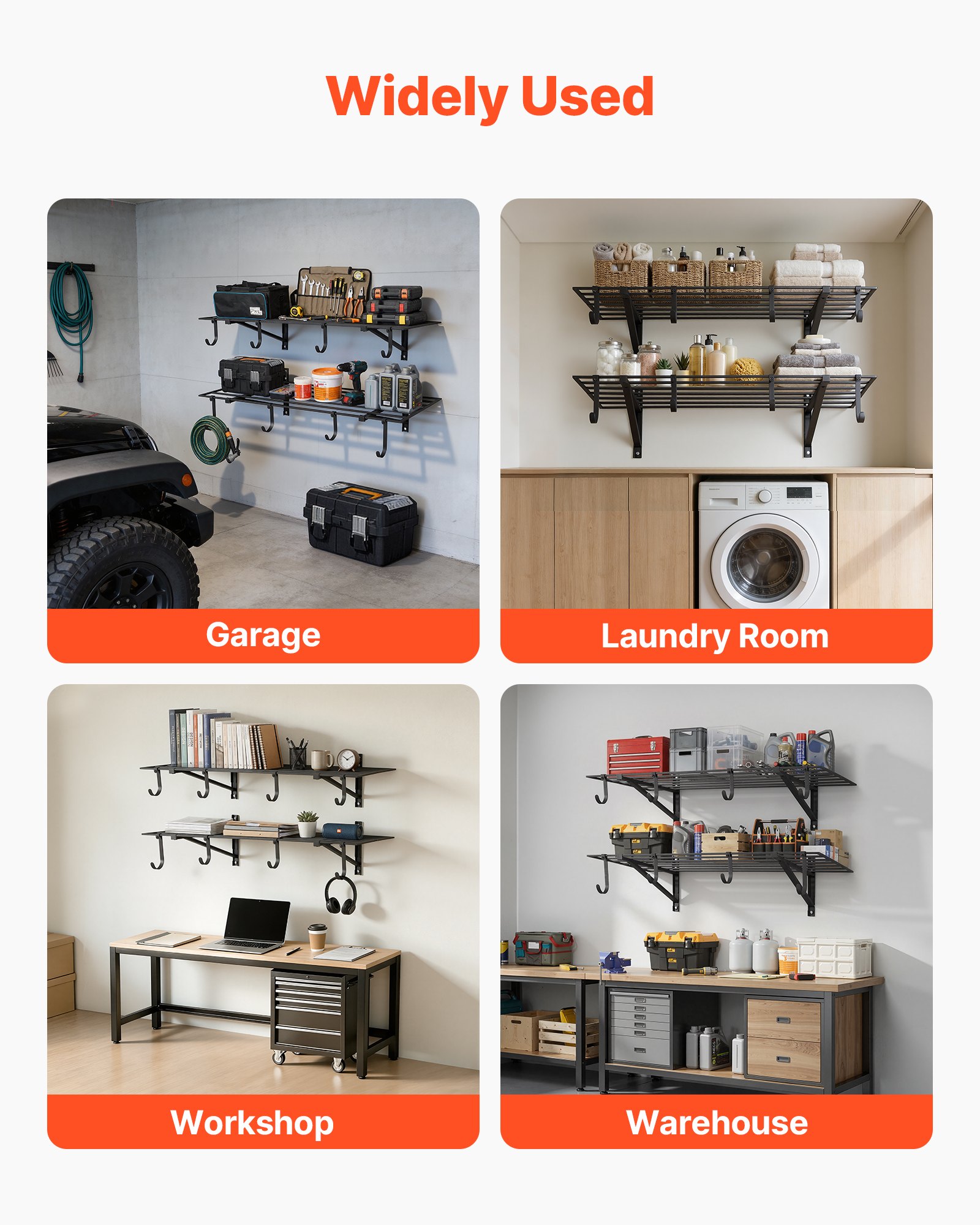 2-Tier Heavy Duty Wall Garage Shelving, 2 X 4 Ft Steel Mounted Unit With Hooks, 24 X 48 Inch Per Shelf Floating Storage Metal Rack For 520 Lbs Total Weight Capacity, Black$108.99
 View on Mallflare
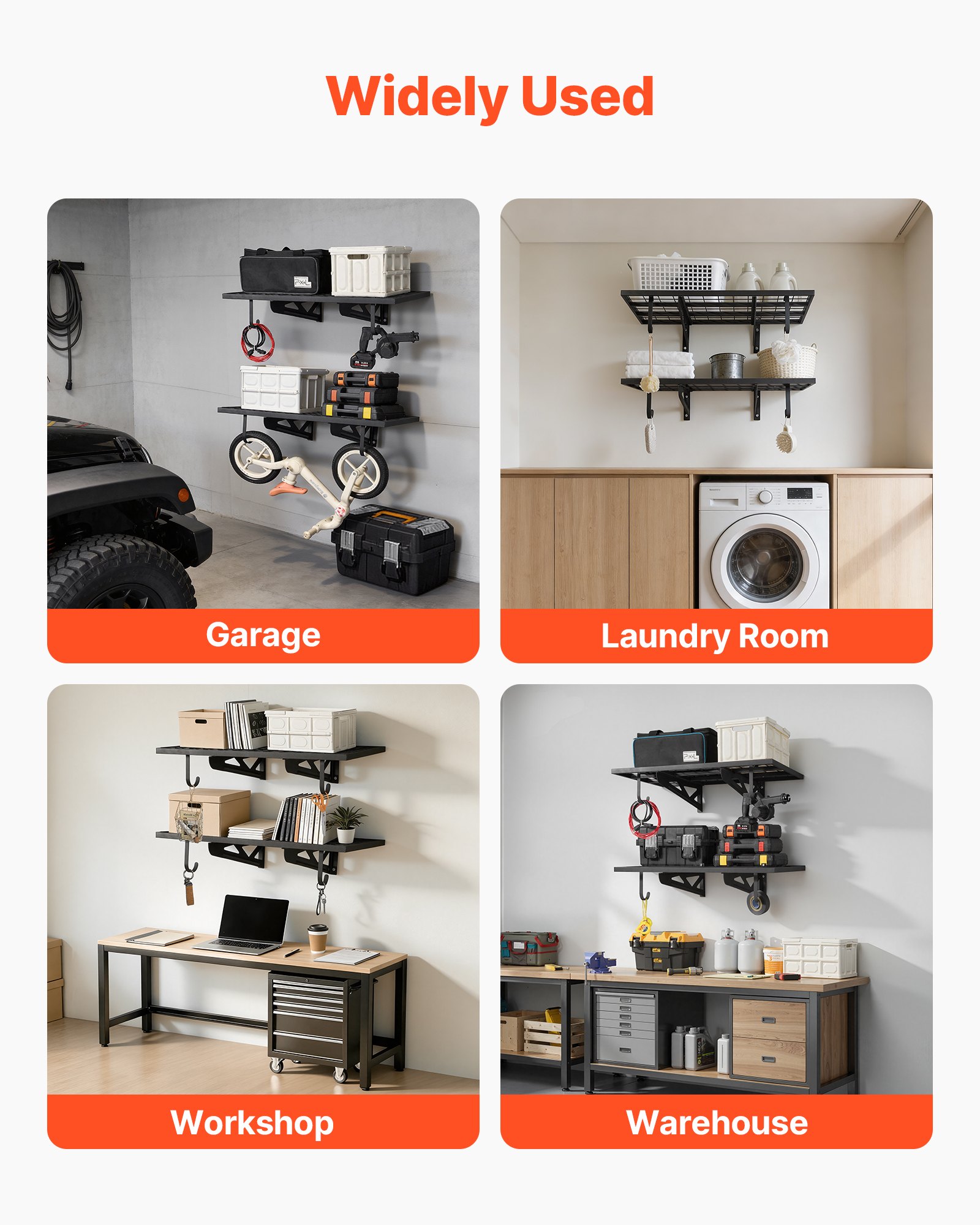 2-Tier Heavy Duty Wall Garage Shelving, 2 X 3 Ft Steel Mounted Unit With Hooks, 24 X 36 Inch Per Shelf Floating Storage Metal Rack For 500 Lbs Total Weight Capacity, Black$110.99View on Mallflare
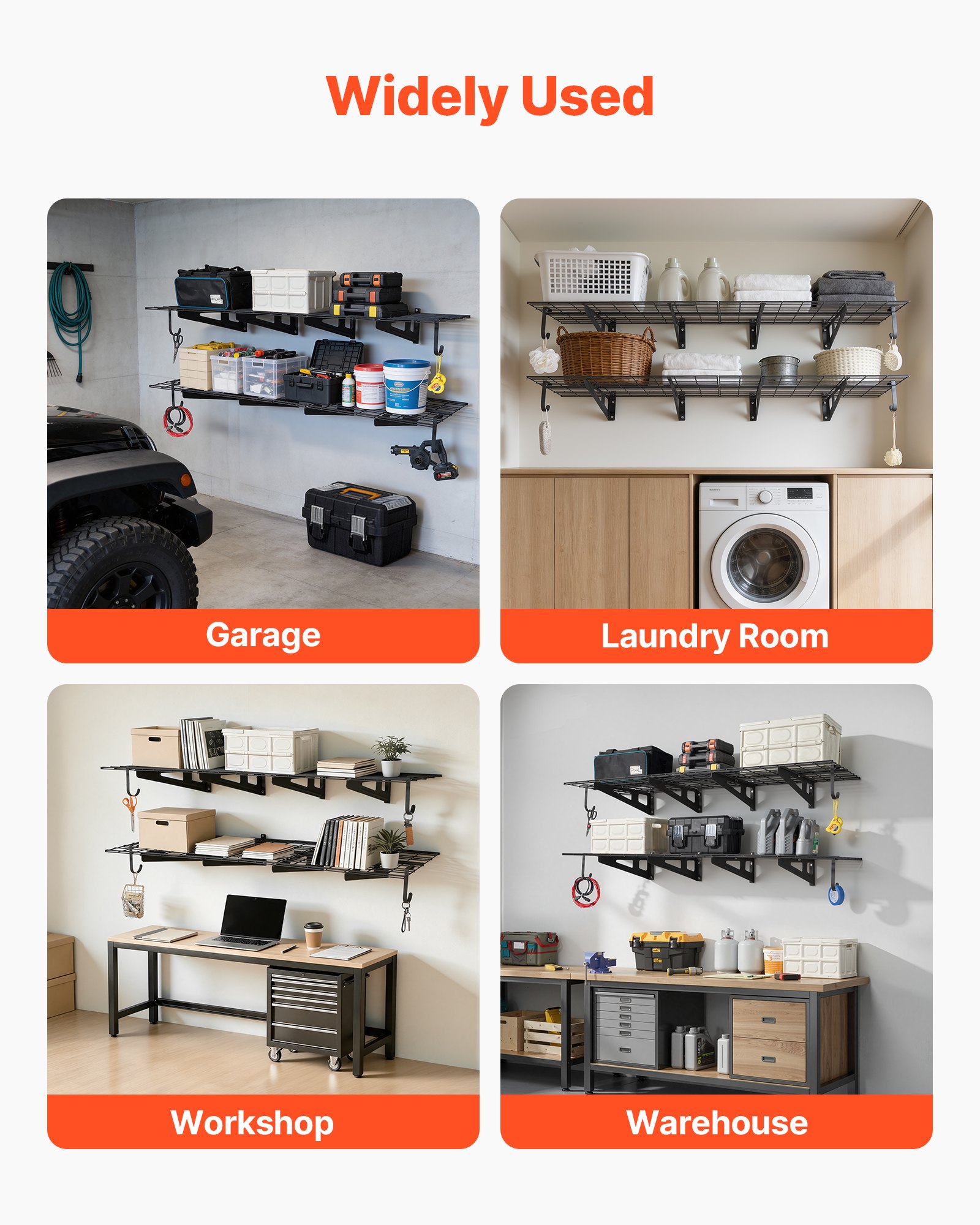 2-Tier Heavy Duty Wall Garage Shelving, 8 Pack 1 X 3 Ft Steel Mounted Unit With Hooks, 24 X 72 Inch Per Shelf Floating Storage Metal Rack, 1000 Lbs Total Weight Capacity, Black$139.99View on Mallflare
Highlights
- Concealed bracket architecture dictates load: keyhole/slot brackets suit 15–25 lb decorative loads, while through-shelf steel rod systems and internal steel frames support 50–100+ lb per shelf when anchored to studs.
- Shelf depth and thickness drive real capacity: 1.5-inch-thick solid wood or 2-inch steel-frame shelves resist sag far better than 0.6-inch hollow MDF, especially at spans beyond 36 inches.
- Wall anchoring is the true failure point: a 50 lb shelf on two studs with 3-inch lag screws outperforms a 100 lb-rated shelf mounted with drywall anchors every time.
- Material grade separates tiers: solid hardwood (oak, maple, pine) and welded steel outlast particleboard/MDF with veneer, which swells and crumbles if garage humidity spikes or a pipe leaks.
Best use cases
- Best fit: mount solid-wood or steel-core floating shelves directly into wall studs for heavy garage storage of paint cans, tools, and seasonal boxes; skip hollow MDF shelves for anything over 25 lb.
- Best fit: use shallow 6–8 inch deep floating shelves above a workbench for frequently used hand tools and supplies; skip deep 12-inch shelves in that zone because they crowd the work surface and block light.
- Best fit: choose concrete-anchor-rated floating shelves for block or brick garage walls using sleeve anchors or masonry screws; skip standard drywall toggle kits, which are not rated for masonry.
- Wrong fit: installing floating shelves on a wall with no studs at the desired height without adding a plywood backer or French cleat rail; skip the project or switch to a wall-track system instead.
Buying tips
- Match shelf span to thickness: keep 1.5-inch solid wood or 2-inch steel-frame shelves at 36 inches or less between studs to avoid visible sag under load.
- Verify bracket type before buying: keyhole brackets are for light loads only; specify through-shelf steel rods or internal welded frames for anything you expect to load past 30 lb.
- Measure stud spacing first: standard 16-inch on-center framing means a 32- or 48-inch shelf can hit two studs; odd widths may require a French cleat rail to bridge studs safely.
- Choose fasteners by wall type: 3-inch lag screws into wood studs, 1/4-inch sleeve anchors into concrete block, and never drywall-only anchors for shelves holding more than a few pounds.
Specs
| Bracket Type | Keyhole / Steel rod / French cleat |
|---|---|
| Load Rating | 15–25 lb light / 50–100+ lb heavy |
| Shelf Material | Solid wood / Steel / MDF veneer |
| Shelf Depth | 6–8 in tools / 10–12 in bins |
Related searches
What to check before buying
- Confirm wall construction (wood stud, concrete block, brick, or drywall-only) and locate studs with a stud finder before selecting bracket hardware.
- Measure the available wall run and height clearance so shelves do not collide with garage door tracks, open car doors, or overhead storage racks.
- Check shelf depth against planned items: 6–8 inches for small tools and cans, 10–12 inches for storage bins and bulky equipment.
- Verify the shelf's rated load per pair of brackets and ensure your fastener and wall type meet or exceed that rating with a safety margin.
FAQ
Data sources: eBay / Amazon listings and product attribute feeds Data updated Nov 20, 2026.
Some links on this page are affiliate links. If you buy after clicking one, we may earn a commission at no extra cost to you. This does not change which products appear here or their order. Affiliate disclosure.