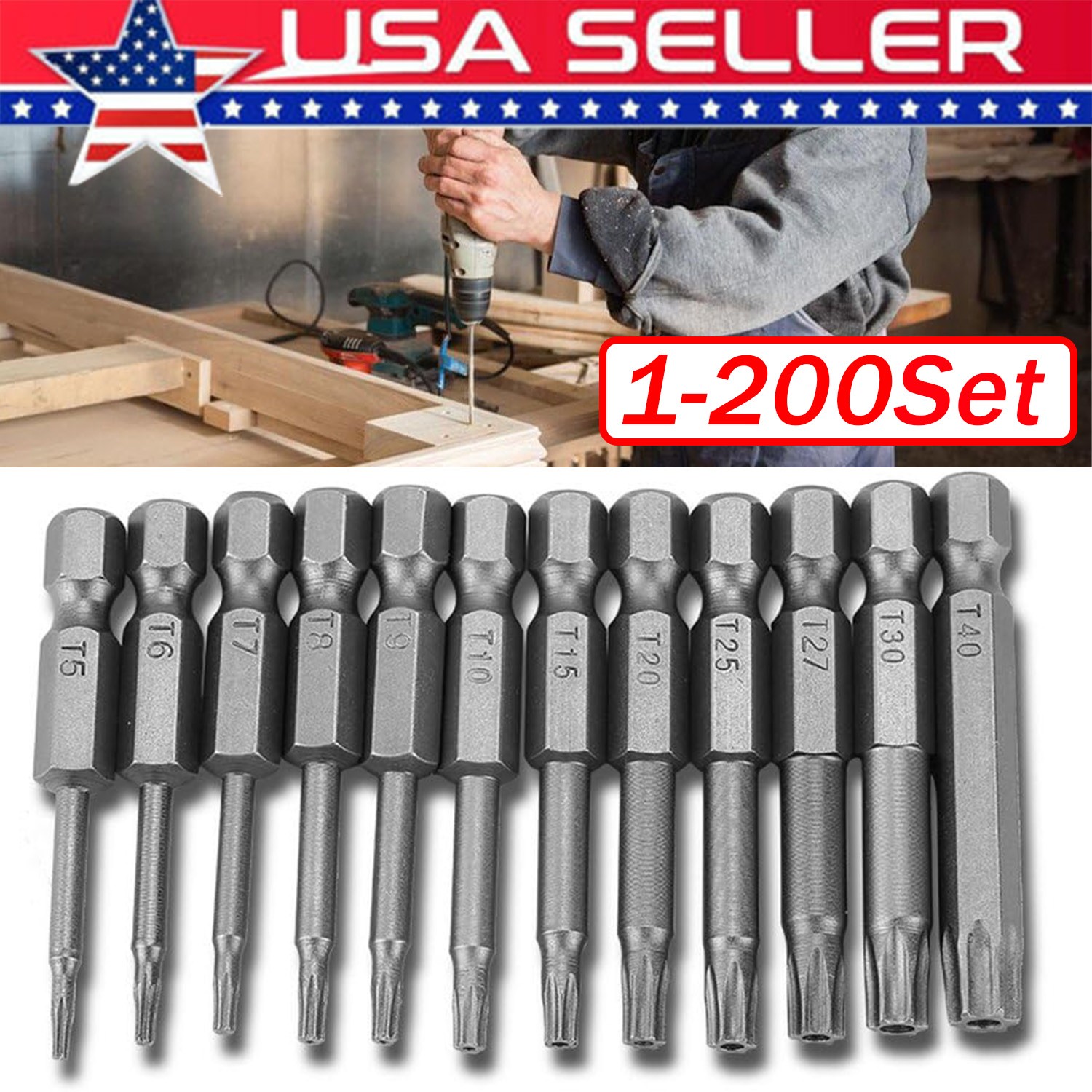

Photos from current listings. Actual item, color, and included accessories may vary.
Allen Key Set Buying Guide
An Allen key set is a collection of hex-shaped drivers used to turn socket-head screws, and the core trade-off is between soft, imprecise carbon steel that rounds out and properly hardened S2 or chrome-vanadium steel that holds tolerance. Buy a set whose tips are machined to size, whose handles or L-keys resist twisting, and whose size range matches your actual fastener inventory; skip any set that lists sizes loosely or uses unhardened metal.


At a glance
- Category
- Hand Tools
- Data updated
- Nov 20, 2026
Current offers
Highlights
- S2 steel holds shape under high torque and resists rounding, while CR-V is a good general-purpose alternative; plain carbon steel wears fast on repeated use.
- L-keys with a ball-end reach angled fasteners up to roughly 25-30 degrees, but ball ends are weaker and should not be used for final high-torque tightening.
- Folding or T-handle sets speed up repetitive work, while long-arm L-keys give the leverage needed to break loose tight screws.
- Metric and imperial (SAE) sizes are not interchangeable; a 5mm key is 0.197 in and will slip in a 3/16 in (0.1875 in) socket, damaging both.
Best use cases
- Best fit: bike maintenance, furniture assembly, and light electronics — pick a metric L-key set with ball ends and a compact holder; skip oversized SAE sets.
- Best fit: automotive and heavy machinery — choose long-arm L-keys or T-handles in S2 steel with a full metric and SAE range; skip folding pocket sets.
- Best fit: power-drill and impact-driver use — buy 1/4-inch hex-shank bit sets rated for impact; skip standard L-keys, which cannot be chucked.
- Wrong fit: precision work on small electronics — standard 1.5-10mm keys are too coarse; use a dedicated precision driver set with 0.7-3mm tips instead.
Buying tips
- Match the size system to your fasteners: metric sets commonly run 1.5-10mm, SAE sets 1/16-3/8 in; buy the system your equipment actually uses.
- Choose S2 or CR-V steel with clearly stated hardness; unhardened keys twist and round out at the tip under load.
- For impact-driver use, select bits explicitly rated for impact; standard hex bits can shatter under repeated hammering.
- Long-arm L-keys give more leverage for tight screws; short-arm or folding sets are for access and speed, not high torque.
Specs
| Steel Grade | S2 vs CR-V vs carbon steel |
|---|---|
| Size System | Metric (mm) vs SAE (inch) |
| Drive Type | L-key / T-handle / 1/4-in hex bit |
| Tip Style | Square vs ball-end vs Torx/security |
Related searches
What to check before buying
- Measure the hex socket across flats on your fasteners to confirm metric versus SAE before choosing a set.
- Check that your drill or impact driver accepts 1/4-inch hex shanks if buying bit sets rather than L-keys.
- Confirm the set includes the specific sizes you need; many sets skip 5.5mm, 7mm, or 9/32 in sizes used on some equipment.
- For ball-end keys, verify the ball diameter clears the socket depth; deep-reach screws may need a long-arm key.
FAQ
Data sources: eBay / Amazon listings and product attribute feeds Data updated Nov 20, 2026.
Some links on this page are affiliate links. If you buy after clicking one, we may earn a commission at no extra cost to you. This does not change which products appear here or their order. Affiliate disclosure.