Photos from current listings. Actual item, color, and included accessories may vary.
Portable Work Bench Buying Guide
Portable work benches are foldable or wheeled work surfaces that trade fixed-shop rigidity for transport and storage. The core decision is load-path stiffness versus portability: welded steel frames with locking casters handle heavy static loads, while aluminum or scissor-folding platforms prioritize light, quick deployment. Choose a welded steel bench for sustained 500+ lb workholding and an aluminum folding platform for sub-300 lb tasks that must collapse flat.


At a glance
- Category
- Workbenches & Shop Equipment
- Data updated
- Nov 20, 2026
Current offers
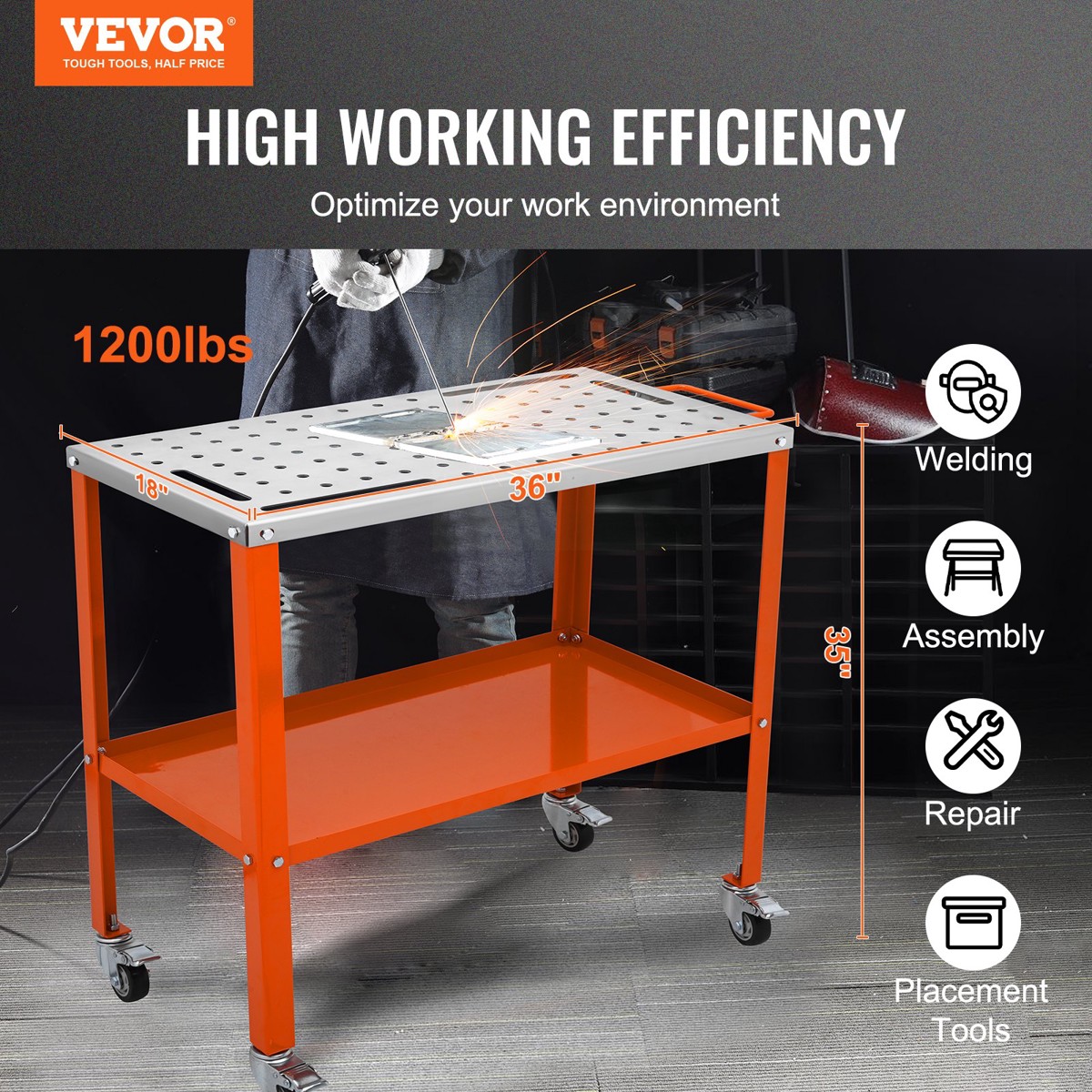 Welding Table, 1200lbs Load Capacity Steel Workbench On Wheels, Portable Work Bench With Braking Lockable Casters, 4 Tool Slots$106.99
 View on Mallflare
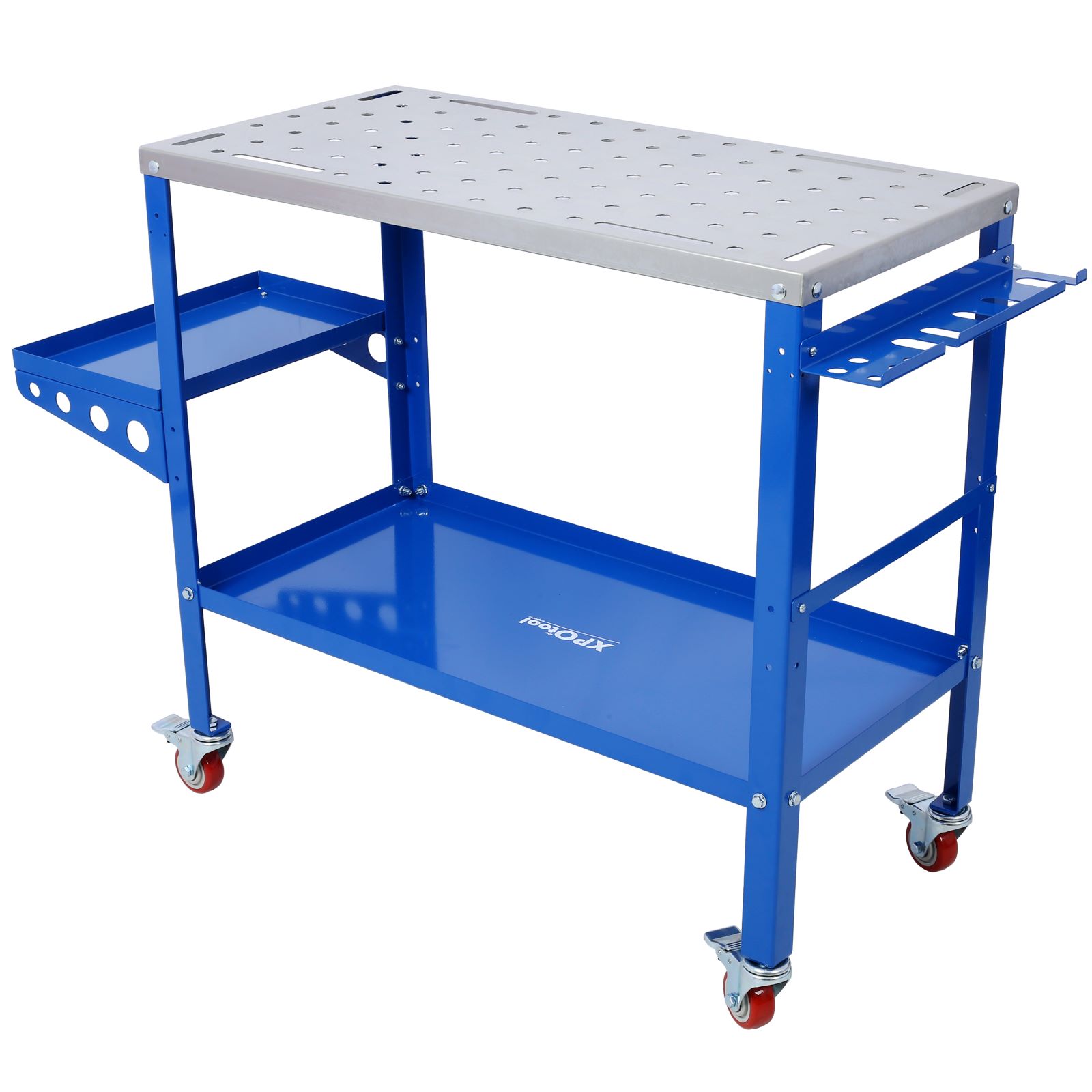 Welding Table 36"x18", 1200lbs Load Capacity Steel Workbench on Wheels, Portable Work Bench with Braking Lockable Casters, Tool Slots, 5/8-inch Fixture Holes, Tray$234.99View on Mallflare
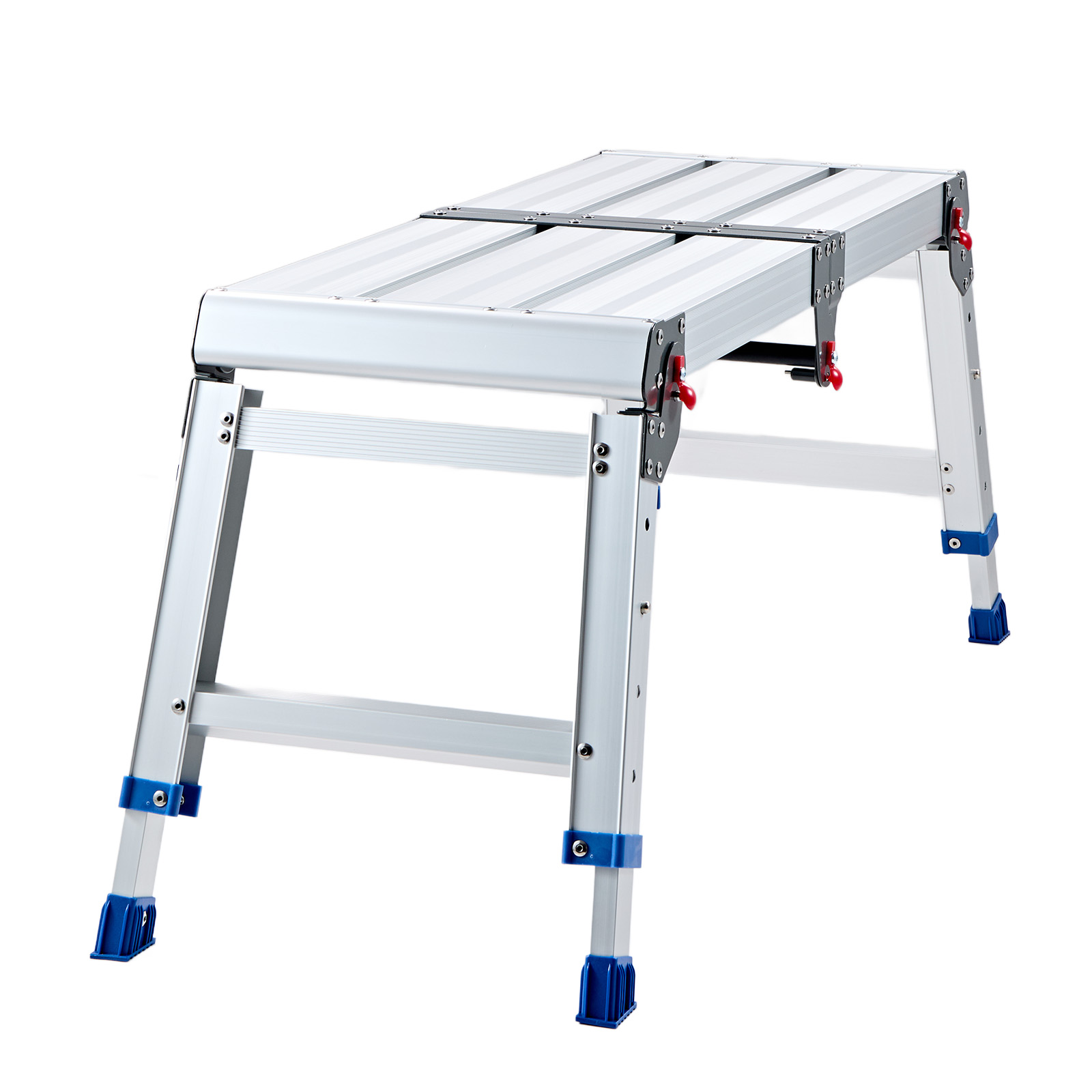 Folding Work Platform, Adjustable Height 14.2-20 In, 500 Lbs Capacity Aluminum Step Stool, Heavy Duty Non-Slip Ladder, Portable Bench For Painting, Cleaning, Home & Professional$128.99View on Mallflare
Highlights
- Welded steel benches with 5/8-inch fixture holes accept standard woodworking and welding clamps; folding aluminum platforms do not support fixture-based workholding.
- Locking casters with foot brakes are the critical mobility component; benches without at least two braked casters creep under lateral planing or sanding forces.
- Frame construction separates tiers: continuous welded square-tube steel resists racking, while bolted or riveted aluminum scissor frames flex under off-center loads.
- Load ratings assume evenly distributed static weight; point loads at the bench edge typically reduce safe capacity by roughly half.
Best use cases
- Pick a wheeled steel bench with fixture holes for welding, assembly, and vise-mounted workholding up to roughly 1,000 lb static; skip aluminum platforms for any vise or clamp-heavy task.
- Pick an adjustable-height aluminum folding platform for painting, cleaning, and overhead reach tasks under 300 lb; skip it for sawing, planing, or hammering.
- Pick a flat-folding bench with compact collapsed footprint for apartment, garage, or job-site storage; skip fixed-leg benches if the bench must share floor space with a vehicle.
- Pick a bench with a integrated lower tray or tool slots when working with loose fasteners and small parts; skip open-frame designs in high-clutter environments.
Buying tips
- Match bench height to your body: a comfortable working surface sits roughly at elbow height when standing, typically 34-38 inches for most adults.
- Verify caster diameter: 3-inch casters roll over cords and debris; 2-inch casters bind on rough concrete and shop mats.
- For welding or metalwork, require 5/8-inch fixture holes on a 2-inch grid; for woodworking, prioritize a flat top and edge clamp access over hole patterns.
- Choose a bench with a collapsed thickness under 4 inches if it must slide behind a door or lean against a wall between uses.
Specs
| Frame Material | Welded steel vs aluminum |
|---|---|
| Load Capacity | 300-1,200 lb static |
| Mobility | Locking casters / folding legs |
| Workholding | 5/8-in fixture holes / flat top |
Related searches
What to check before buying
- Measure your shop floor and door widths; confirm the bench fits through the narrowest passage in its collapsed or assembled state.
- Confirm your floor type: locking casters grip concrete well but can slide on smooth epoxy or tile without rubber treads.
- Check the bench top height against your tallest vise or benchtop tool so the tool sits below shoulder level during use.
- Verify the load rating against your heaviest single item plus expected downward force from clamping or planing, not just static weight.
FAQ
Data sources: eBay / Amazon listings and product attribute feeds Data updated Nov 20, 2026.
Some links on this page are affiliate links. If you buy after clicking one, we may earn a commission at no extra cost to you. This does not change which products appear here or their order. Affiliate disclosure.