Choosing between a draw knife and a chamfer planer in the woodworking tools category comes down to what you do most in your shop. The 10-inch draw knife uses a long straight blade to pull off bark and rough shavings, while the chamfer hand planer uses a compact body and adjustable blade depth to trim edges and corners with more control. Both are priced below $30, but they are not interchangeable.
Quick Verdict
Choose the 10-inch draw knife at USD 29.99 when you need to remove bark and take rough shavings off logs. Choose the chamfer hand planer at USD 23.48 when you need clean, repeatable edge trimming and corner flattening.
Comparison at a Glance
| Feature | 10-Inch Draw Shave Knife | Chamfer Hand Planer |
|---|---|---|
| Listed price | USD 29.99 | USD 23.48 |
| Main job | Debarking and straight shaving | Chamfering edges and flattening corners |
| Blade | Straight 10-inch blade | Alloy steel blade |
| Depth control | Pulling angle | Adjustable 0-2mm |
| Extra aid | - | Built-in bubble levels |
Where Each Tool Wins
Where the draw knife wins
The long straight blade covers a lot of surface in one pull, which makes it the better tool for rough log work and broad shaping. It responds directly to your hands, so you can react quickly to knots and uneven spots.
Where the chamfer planer wins
It brings repeatability to edge work. The adjustable depth and bubble levels let you set a pass and keep the tool square, so you get a uniform chamfer across the full length of the piece.
Product Notes
10-Inch Draw Shave Knife
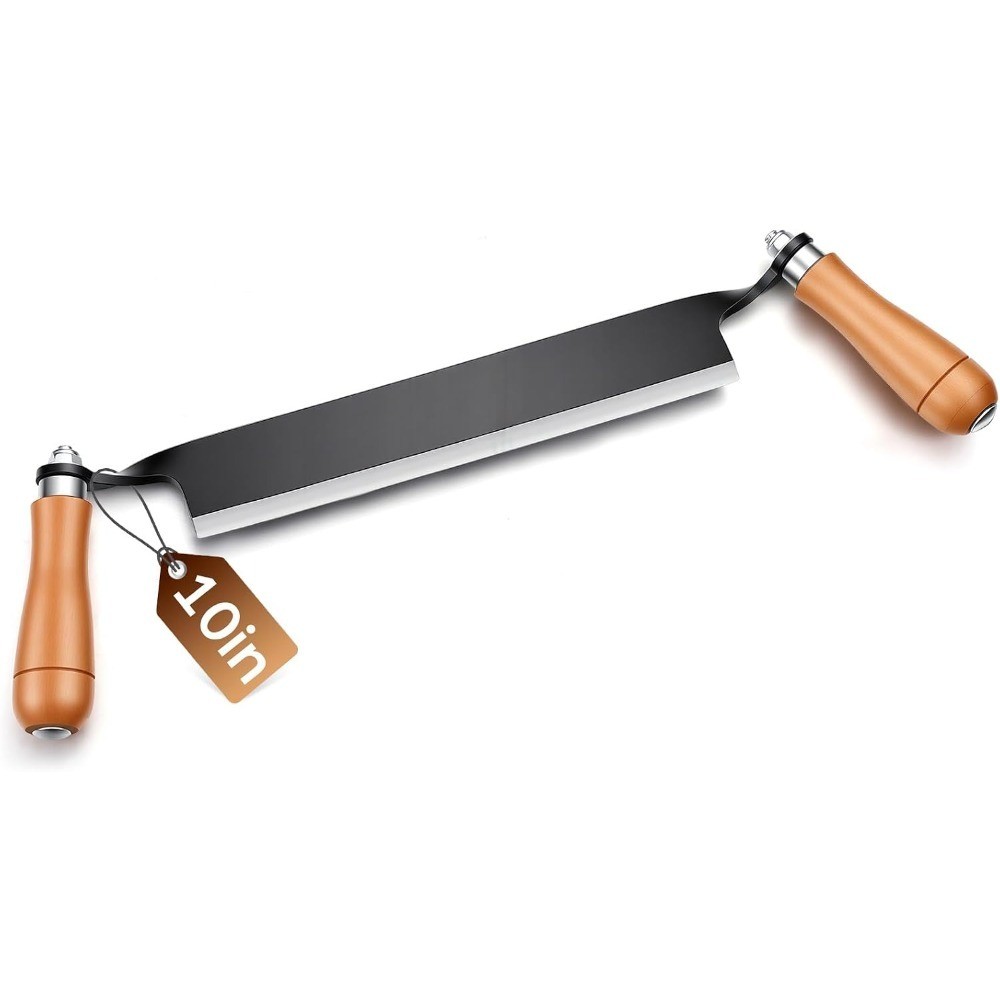
If your project starts with a rough log, the 10-inch draw knife gives you a long straight blade for debarking and straight shave cuts in one simple tool. It arrives as a single draw shave knife, ready for pulling strokes that remove material quickly. The limitation is that it is built for broad shaping rather than repeatable edge widths; the straight blade requires a steady hand to keep a consistent chamfer or line. For debarking and taking down rough stock, that trade-off is worth it, but for precision corner work you will likely reach for the adjustable planer instead.
Chamfer Hand Planer with Adjustable Depth
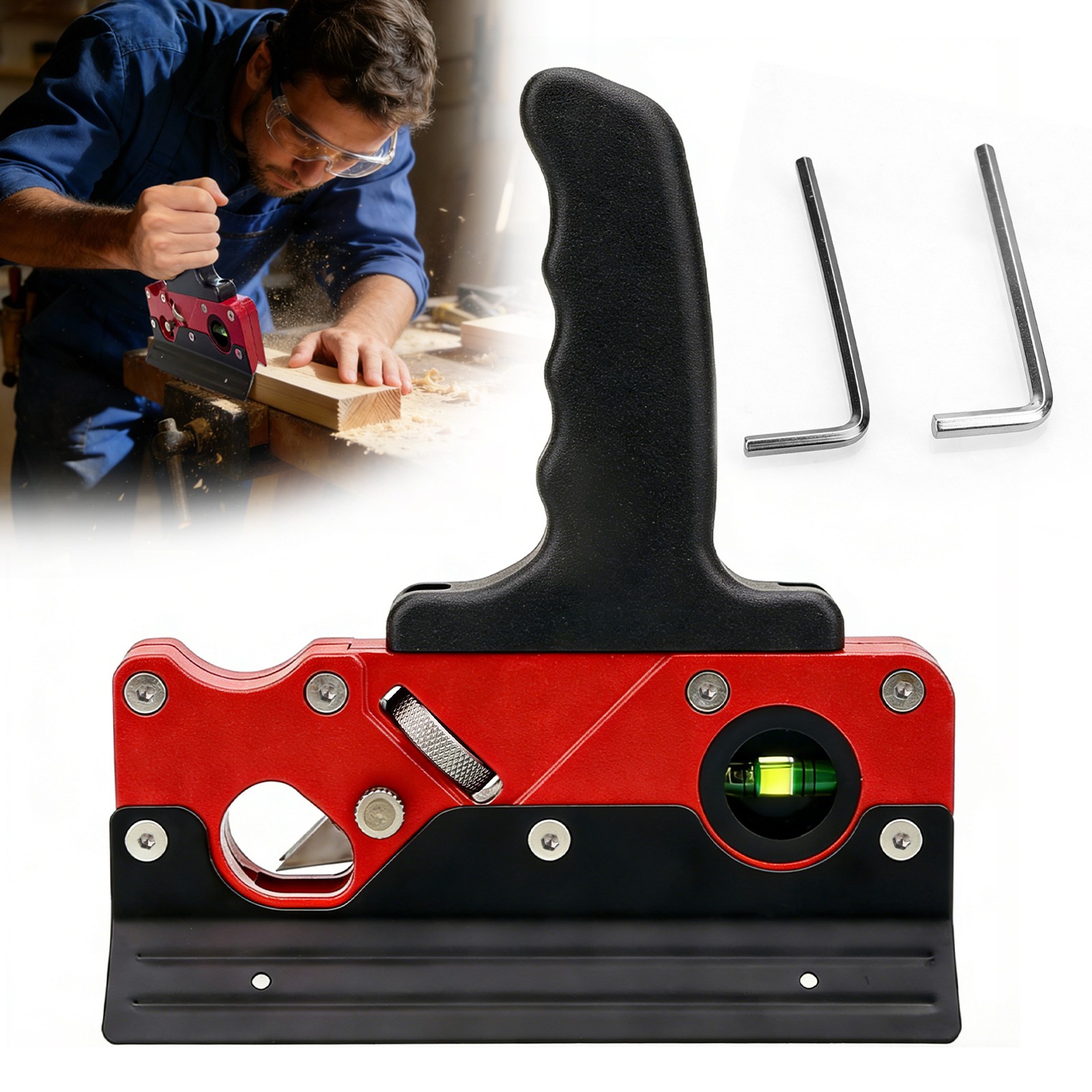
If your work involves tidying up edges and corners after cutting, this chamfer hand planer is the more precise companion. It combines an alloy steel blade with an adjustable 0-2mm cutting depth, so you can set a light pass for finish work or a deeper pass for shaping. Built-in bubble levels help you keep the tool square while you plane, which is a clear advantage for straight, even edges. The limitation is that the 2mm maximum depth makes it a trimming and finishing tool, not a heavy stock remover; it cannot replace the draw knife for debarking a log. It also requires assembly before first use, so set aside a few minutes to put it together.
Final Choice by Use Case
If you are starting with logs or thick rough stock, the 10-inch draw knife is the tool you will reach for. If you are finishing edges, breaking corners, or trimming parts that are already close to final size, the chamfer hand planer gives you the control and consistency. For mixed shops, both tools complement each other: the draw knife does the heavy shaping, and the planer cleans up the results.