For a 3d printing filament & resin setup, the hard choice is not simply whether filament needs rewinding; it is whether a dedicated machine will remove enough tangles and spool-handling work to justify its $99.98 price and the space it occupies. The 3D Industrial Filament Respooler Machine targets that job by transferring material from large industrial spools to smaller ones. The decision turns on your spool sizes and how often you need controlled rewinding.
Quick verdict
At USD 99.98, this is a specialized spool-management purchase rather than printing material itself. It makes the most sense for someone who regularly moves PLA, ABS, PETG, or TPU between spool sizes. The 1KG and 3KG configurations give it a defined use case, while the stated connection requirement is an important operating constraint.
3D Industrial Filament Respooler Machine,Electric 3D Printer Filament Winder Fit
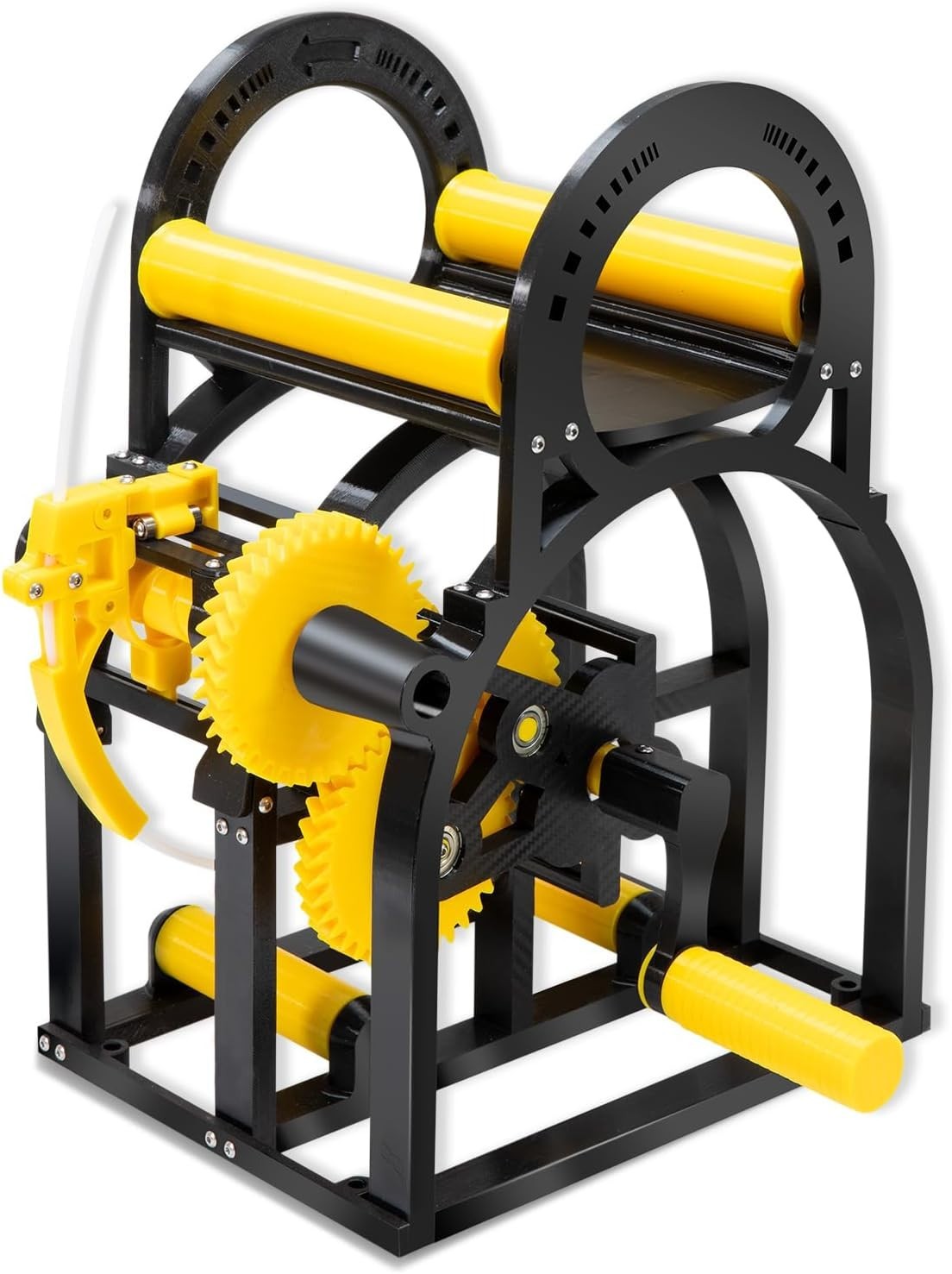
Choose this winder if you need to transfer filament, wire, or cord from large industrial spools to smaller, more manageable ones. It handles spools up to 8 inches (20 cm) in diameter and is described for PLA, ABS, PETG, and TPU. The practical limitation is explicit: the machine can only rotate when connected to the filament. Its listed 12.6-inch height, length, and width also call for a dedicated working surface.
Who it suits
This machine fits a workshop or home printing area where spool management is a recurring task rather than a one-time chore. It is particularly relevant when material arrives on a larger industrial spool and needs to be moved to a smaller format for handling. If the goal is simply to buy a roll of 3D printer filament or 3D printing resin, this is not the consumable itself; it is equipment for reorganizing material.
What stands out from the listed details
The useful feature is its range of intended materials: PLA, ABS, PETG, and TPU are all named, along with wire and cord. The winding setup also accommodates two stated spool scenarios: an unmodified spool winder for 1KG spools and a modified spool winder with included accessories for 3KG spools. The up-to-8-inch diameter specification gives a concrete boundary for judging whether a spool fits the intended workflow.
Meaningful trade-offs
The main trade-off is specialization. A respooler can address tangles and transfer work, but it adds another machine to the workspace and does not replace the filament or resin used by a printer. The connection-dependent rotation also means the winding process is tied to having filament engaged correctly. Those details matter more than the broad material list if occasional respooling is all you expect to do.
Bottom line
Buy the 3D Industrial Filament Respooler Machine when repeated transfers from large spools to smaller ones are slowing down your printing routine, especially across the listed PLA, ABS, PETG, or TPU materials. Pass on it when your need is printing material rather than spool-handling equipment. The choice is ultimately about whether the stated winding capacity and material range match a regular workflow.