When a compression sleeve has fused itself to a copper supply line, a plumbing repair can stall. You need to remove the old ring without cutting too much pipe, but you also want the right tool for the rest of the job. These two plumbing tools take different approaches: one is a 4-in-1 wrench, the other is a dedicated removal tool for a specific compression sleeve.
Quick verdict
If you need one tool for an angle stop swap and work with varied compression fittings, the $38 Angle Stop Removal Tool with compression sleeve puller gives you broader coverage. If you mainly need to pull a stuck compression ring and want to spend less, the $17.74 Compression Ring Removal Tool for Sleeve Puller Remover is the more focused choice. The listed-price gap is about $20.26, and it mainly reflects a multi-tool design versus a single-purpose puller.
Comparison table
| Consideration | Angle Stop Removal Tool | Compression Ring Removal Tool |
|---|---|---|
| Listed price | USD 38.00 | USD 17.74 |
| Price indicator | ||
| Primary focus | 4-in-1 plumbing wrench; angle stops, straight stops, compression, utility key | Compression ring/sleeve puller for 1/2-inch copper |
| Fitting sizes mentioned | 3/8-inch and 1/2-inch MPT compression outlets | 1/2-inch copper water compression sleeve |
| Finish / material | Black, polished finish | Yellow, aluminum |
The table shows the real trade-off. The multi-tool is built to cover multiple compression-fitting tasks, while the dedicated puller concentrates on pulling a stuck sleeve. For a focused repair, the dedicated tool is usually all you need.
Where each product wins
Where the Angle Stop Removal Tool wins
- Broader coverage for sink and bathroom work.
- Multi-tool flexibility when you need more than a sleeve puller.
- Polished black finish stands out on a workbench.
Where the Compression Ring Removal Tool wins
- Dedicated puller design for old compression rings and sleeves.
- Light yellow aluminum body.
Product notes
Angle Stop Removal Tool with compression sleeve puller
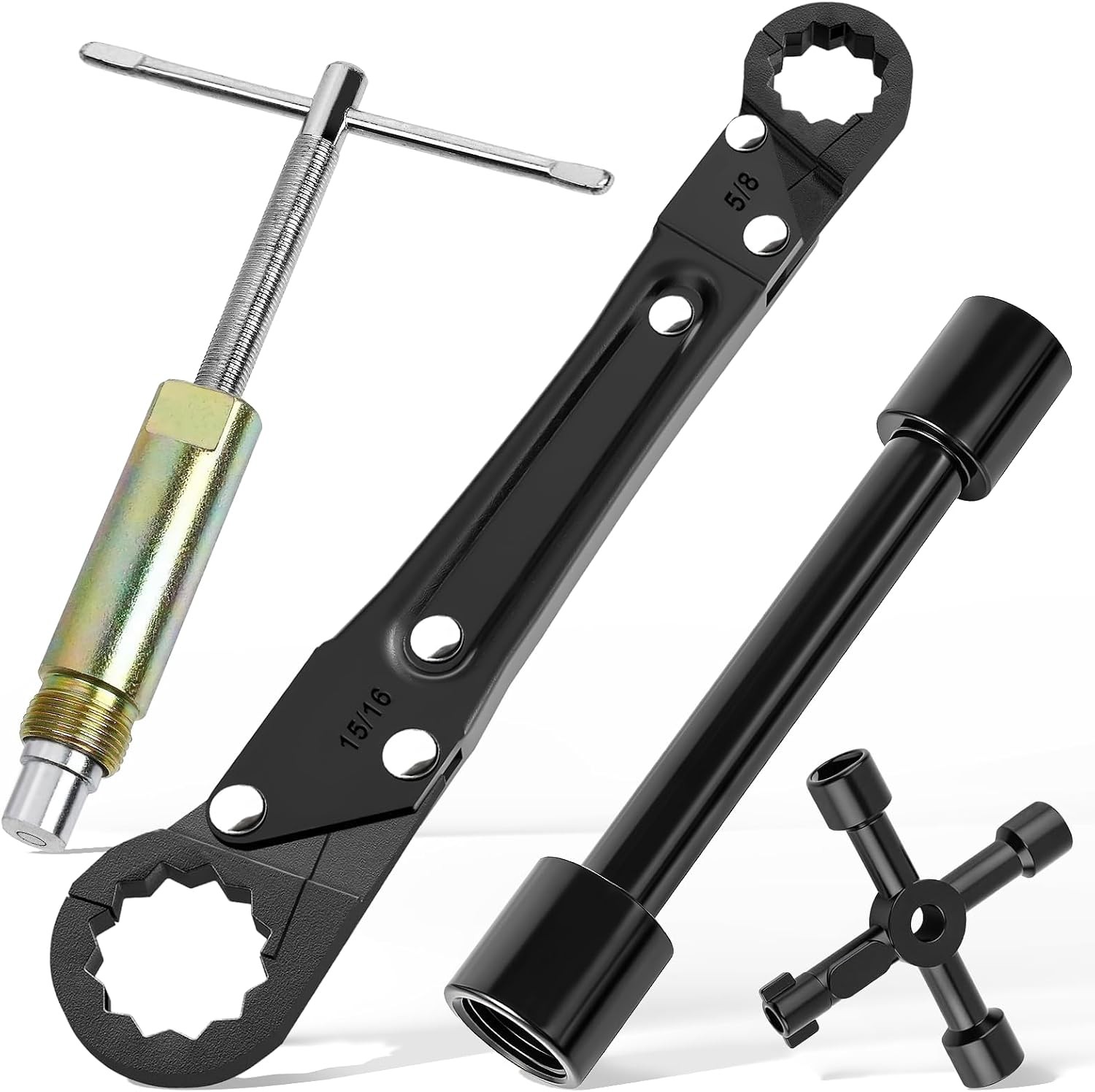
The Angle Stop Removal Tool is the broader option. It is a 4-in-1 wrench that handles angle stops, straight stops, compression work, and a four-way utility key. The same tool can be used with 3/8-inch and 1/2-inch MPT compression outlets, and it removes a 1/2-inch copper water compression sleeve. That makes it a strong choice for a bathroom or kitchen sink project where you need to switch between different fittings without hunting for another wrench. The black polished finish stands out on a workbench. The limitation is the broader design itself: if your project only involves pulling a single stuck compression ring, the extra functions may go unused. The convenience of the multi-tool is real, but the dedicated puller is easier to justify for that one job.
Compression Ring Removal Tool for Sleeve Puller Remover 1/2-Inch
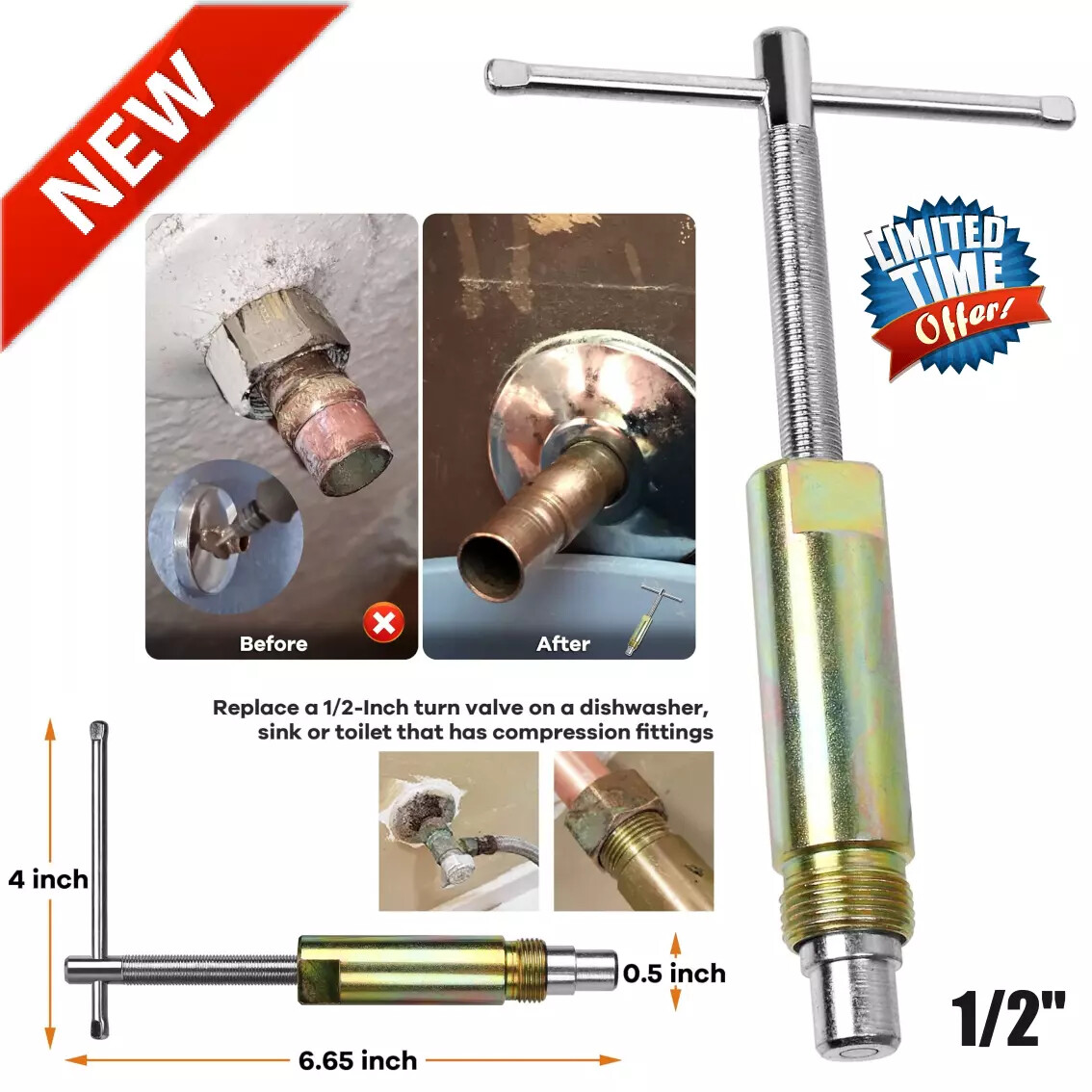
The Compression Ring Removal Tool is the more focused option. It is made to remove old compression rings and sleeves from copper pipe, and it can pull the nut and ferrule off without damaging walls. It can even reform a crimped copper pipe back toward a perfect circle, which helps when there is not enough exposed pipe to cut off the old fitting. The yellow aluminum body keeps the tool light and easy to spot next to heavier wrenches. That focus is also its limitation: the tool centers on compression sleeve work, while the other product also includes 3/8-inch and 1/2-inch MPT outlet coverage and angle stop functions. For a simple ring-removal job, that narrow scope is an advantage. For a multi-fitting plumbing project, you would likely need the other wrench.
Final choice by use case
Choose the Angle Stop Removal Tool if you are working on a bathroom or kitchen sink with a wider range of compression-fitting jobs. Choose the Compression Ring Removal Tool if you just need to free a stuck compression sleeve and want a dedicated puller.