Choosing between these cordless impact wrenches comes down to more than torque wording: the Autojare is built around a 1/2-inch square anvil and an included battery, while the Milwaukee 2854-20 uses a compact 3/8-inch friction-ring format with more detailed output controls. The listed prices are separated by $121.78, so match the tool to the fasteners and working space you expect to handle.
Quick verdict
Pick the Autojare 500NM Cordless Impact Wrench when an included 4 Ah lithium-ion battery, a 1/2-inch square anvil, and the title's focus on car tire lug nut removal align with your intended jobs. Its yellow 20-volt design also includes a brushless motor, two-speed control, and forward/reverse operation.
Choose the Milwaukee 2854-20 M18 FUEL 3/8-inch Compact Impact Wrench when you want the listed 3/8-inch friction ring and four-mode DRIVE CONTROL™ system. Its auto shut-off and bolt-removal modes give it a more specialized control-oriented setup.
At-a-glance comparison
| Product | Listed price | Drive and torque detail | Battery arrangement | Control details |
|---|---|---|---|---|
| Autojare 500NM Cordless Impact Wrench | USD 37.59 | 1/2-inch square anvil; 500 N.m | 4 Ah lithium-ion battery included | Two speeds; variable switch; forward/reverse |
| Milwaukee 2854-20 M18 FUEL 3/8-inch Compact Impact Wrench | USD 159.37 | 3/8-inch friction ring; up to 250 ft-lbs nut-busting torque | 5 Ah capacity listed; battery not included | Four modes, including auto shut-off and bolt removal |
The two torque figures use different units, while the drive formats are clearly different. For this matchup, choose based first on whether your sockets and fasteners call for a 1/2-inch square anvil or a 3/8-inch friction ring.
Where each product wins
Autojare's advantage is a ready-to-use battery arrangement and a larger listed drive format. The product description pairs its brushless motor with a continuously variable switch, two-speed control, and a forward/reverse selector. That combination suits shoppers prioritizing straightforward tightening and loosening tasks, particularly where the title's lug-nut-removal focus is relevant.
Milwaukee's strength is access and controlled fastening behavior. It is listed at 8 inches long for tight spaces and has Tri-LED lighting intended to improve workspace visibility with fewer shadows. The compact form and friction-ring configuration make it the more focused choice for shoppers whose work calls for a 3/8-inch impact wrench.
Product notes
Autojare 500NM Cordless Impact Wrench
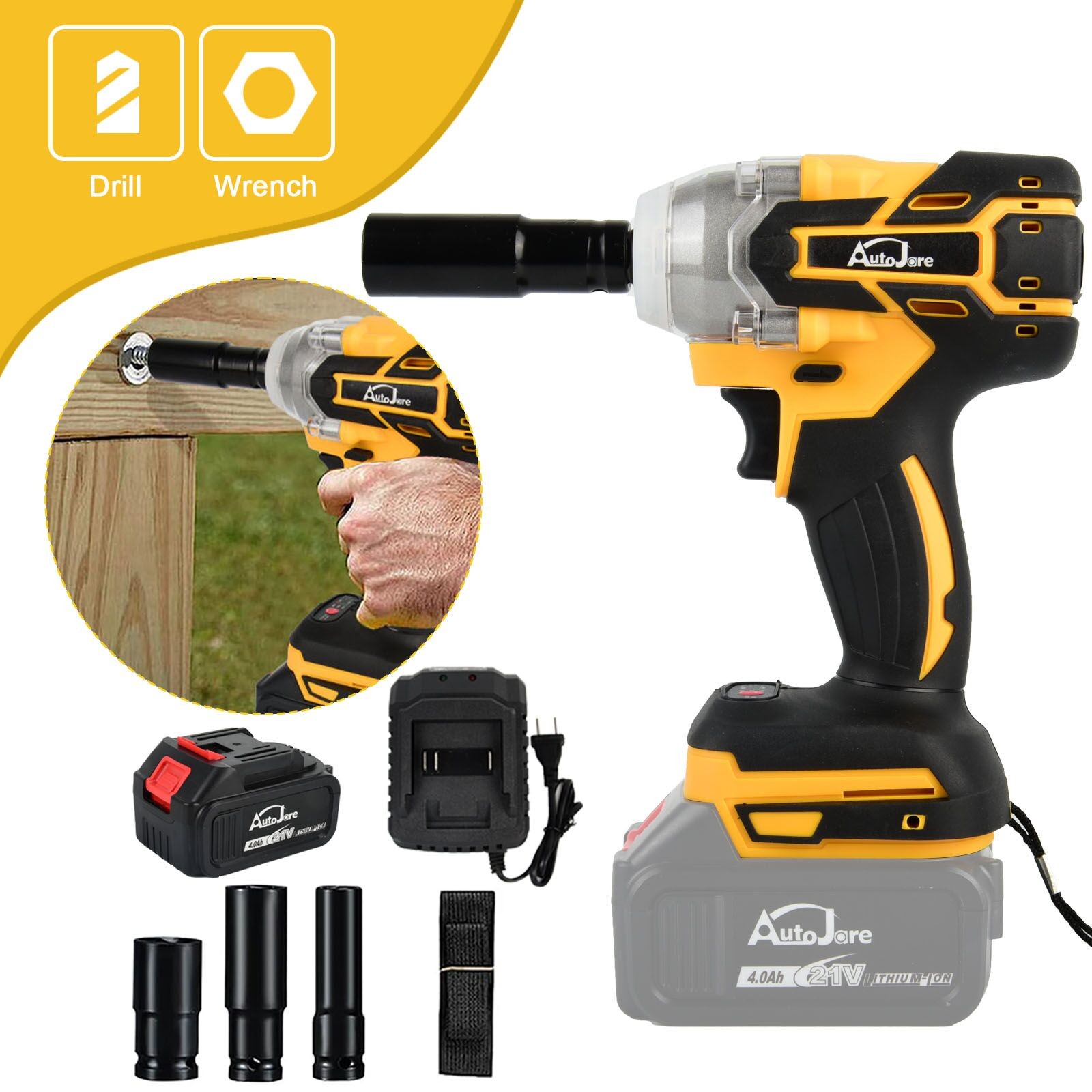
The Autojare makes sense for someone assembling a cordless setup around its 1/2-inch square anvil and the included 4 Ah lithium-ion battery. Its title specifically references car tire lug nut removal, while the description adds a brushless motor, all-aluminum head, and variable-speed trigger. The listed USD 37.59 price places it at the lower end of this two-tool comparison. Its key limitation is practical rather than hidden: the auxiliary-handle specification is "Without," so shoppers wanting that style of added support should account for it. The stated 4-5H charging time is another consideration when planning longer work sessions.
Milwaukee 2854-20 M18 FUEL 3/8-inch Compact Impact Wrench
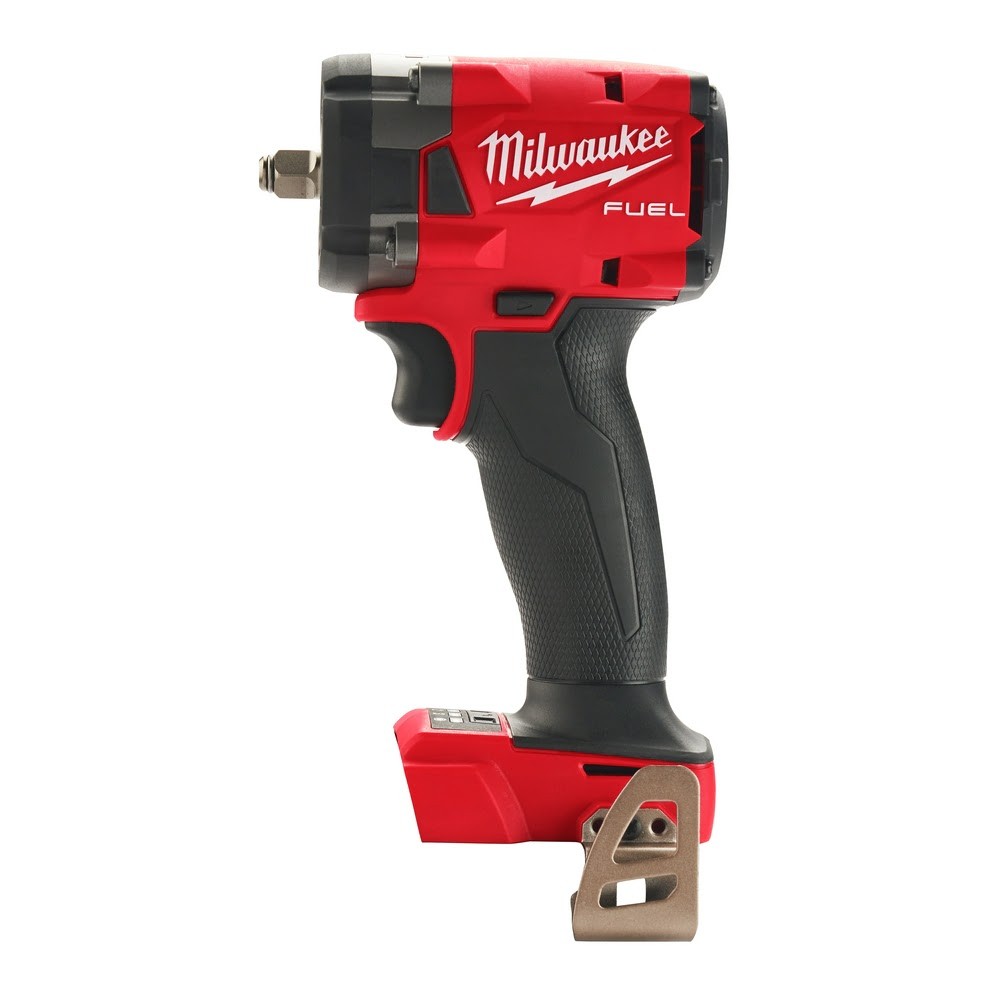
The Milwaukee is the fit for fastening work where its compact 3/8-inch friction-ring setup and detailed mode selection matter most. Beyond the four drive modes, its description calls out auto shut-off that applies no more than 20 ft-lbs of torque and a bolt-removal mode that slows RPM after breakaway. Those controls give it a clear reason to choose when avoiding overtightening or managing loosened bolts is central to the task. The listed USD 159.37 price is the higher of the pair, and a battery is not included. Plan around that battery arrangement if you are selecting the tool for an M18 setup.
Final choice by use case
Choose the Autojare for a 1/2-inch square-anvil format, an included battery, and work that aligns with the lug-nut-removal emphasis in its title. Choose the Milwaukee 2854-20 when a compact 3/8-inch friction ring, tight-space access, and selectable fastening modes are the more important priorities.