When a compression angle stop starts leaking, the hardest part is usually pulling the old compression ring off copper pipe. Cut the pipe and you shorten your stub; wrestle with the ferrule and you risk damaging the wall or the supply line. A sleeve puller solves that by pulling the nut and ferrule without cutting. The real buying question is whether you need just that tool or the full supporting kit: a single dedicated puller at $17.74 or a complete plumbing kit at $49.40. For a homeowner, choosing the wrong one means either overbuying or making an extra trip for a missing wrench. This head-to-head compares both so you can match the tool to the job.
Quick Verdict
If your repair is a one-time fix and you already have the basics on hand, the single Compression Ring Removal Tool is the straightforward pick. If you're starting fresh or replacing several angle stops, the kit gives you the accessories in the same purchase. Both are new condition and both handle the same 1/2-inch copper compression sleeve.
At a Glance
| Compression Ring Removal Tool | 6-Piece Plumbing Kit | |
|---|---|---|
| Price | $17.74 | $49.40 |
| Tool count | One | Six |
| Size handled | 1/2-inch compression sleeves | 1/2-inch compression sleeves |
| Kit contents | Sleeve puller/remover | Angle stop wrench, sleeve puller, sandpaper, storage bag |
Where Each Wins
The single Compression Ring Removal Tool wins when you already own the basics and just need the ferrule puller. At the lower end of the price spread, it solves the most frustrating step without padding the purchase with pieces you already have. It is the efficient choice for a focused repair.
The kit wins when you want a coordinated set ready for multiple angle-stop replacements. The included wrench covers both the valve side and the ferrule side of the job, so you do not need to track down a separate wrench for the angle stop.
Product Notes
Compression Ring Removal Tool
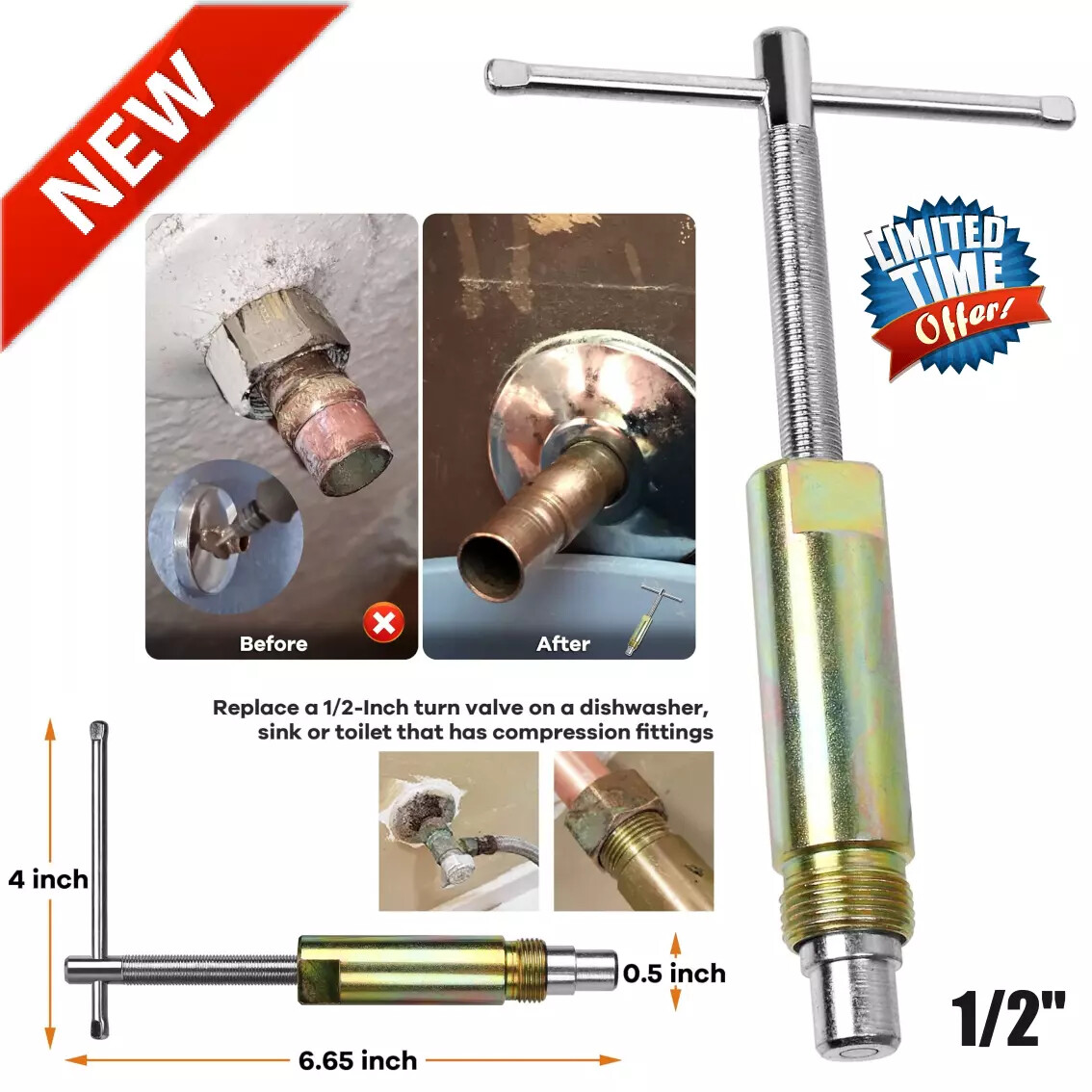
This yellow aluminum puller is the lower-priced route in this comparison. It is built for the 1/2-inch copper compression sleeve, and the procedure is straightforward: thread the nut onto the tool, tighten the screw, and the puller extracts the old ferrule while reforming the crimped pipe. That makes it a real time-saver when there isn't enough exposed copper to cut away. The reason to go with it is a focused repair on a single angle stop, especially if you already have the usual supporting pieces in your toolbox. The practical limitation is scope: it is a dedicated puller, so you will want those supporting pieces already available rather than relying on this one tool to carry the whole job.
6-Piece Plumbing Kit
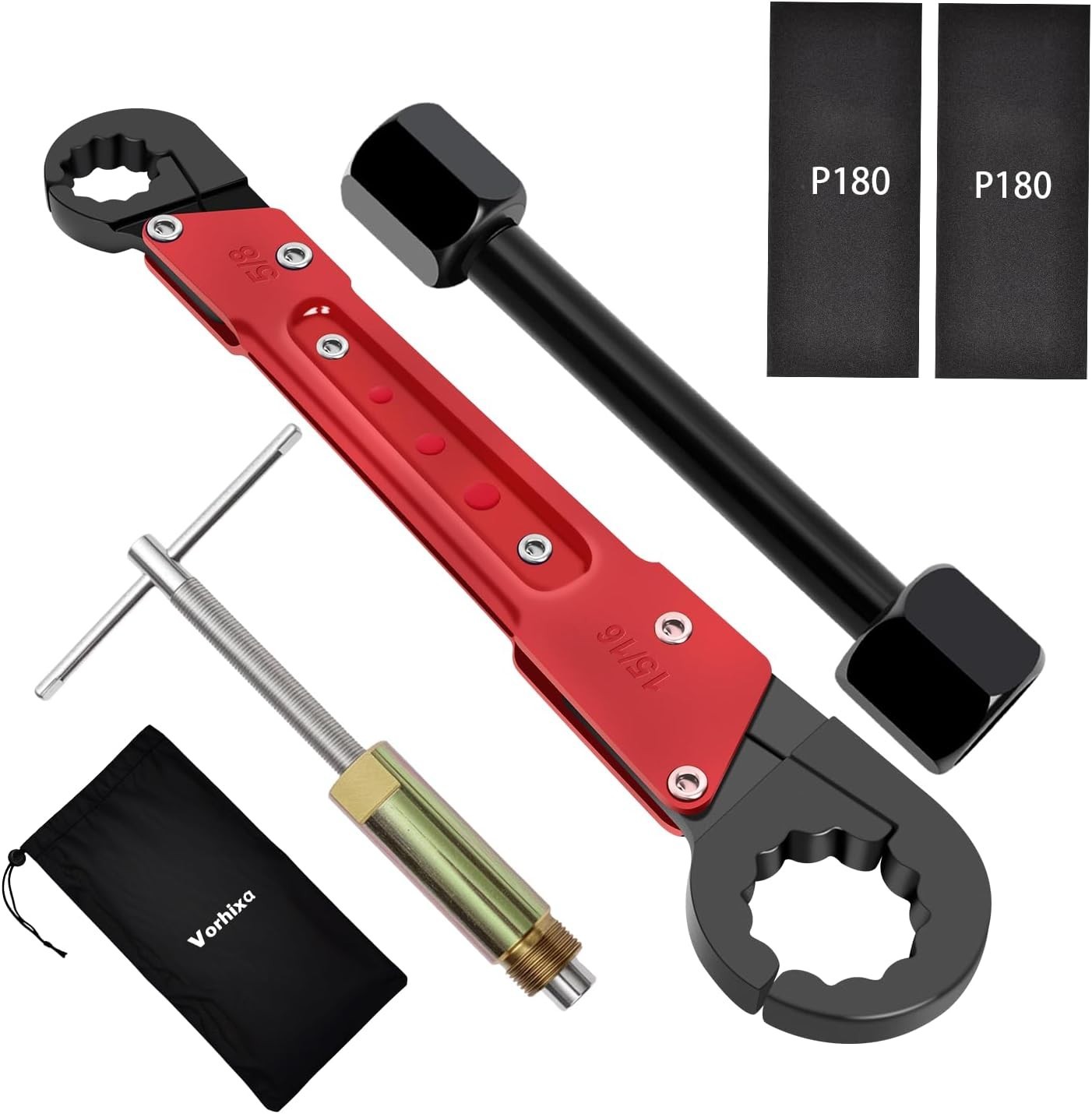
The opposing route is the higher-priced set that bundles the angle stop wrench, a 1/2-inch compression sleeve puller, sandpaper, and a storage bag into one kit. The wrench handles 15/16-inch and 5/8-inch nuts, and its threaded ends accept 3/8-inch or 1/2-inch MPT compression outlet threads, which makes it a practical match for common angle stops. It suits a DIYer or plumber working on multiple replacements who wants the complete set in one bag. The storage bag also keeps the pieces together between jobs, so nothing gets left behind. The trade-off is the price: you're paying more than the standalone puller, and the ferrule-removal function is still limited to 1/2-inch copper sleeves. That limitation matters if your project involves other pipe sizes.
Final Choice by Use Case
For a one-off repair with existing tools, the lower-priced puller is the efficient pick. If you're assembling a plumbing kit from scratch or replacing several angle stops, the kit is worth the extra cost. That concrete decision comes down to how many stops you're replacing and whether you already own the basics.