Choosing among nozzles, hotends & build plates is less about picking the most feature-filled option and more about matching the build surface to your printer. The key tension here is straightforward: the Creality plate is framed around the Ender-3/Pro family and a 235mm x 235mm flexible sheet, while the FLASHFORGE platform is designed around Adventurer 5M-series models and adds explicit magnetic and removal features. Pick by printer first, then use the surface details and price to break the tie.
Quick verdict
Choose the Creality plate if your printer is an Ender-3 or Ender-3 Pro and you want a flexible 235mm x 235mm format at the lower listed price. Choose FLASHFORGE if you use an Adventurer 5M, 5M Pro, or AD5X and want magnetic positioning, elevated-temperature adhesion, and bending-based model removal. The absolute price spread is $2.15, making printer fit the first decision.
Compact comparison
| Product | Listed price | Best fit |
|---|---|---|
| Creality flexible heated build plate | USD 15.85 | Ender-3/Pro and 235mm x 235mm flexible sheet |
| FLASHFORGE PEI PC replacement platform | USD 18.00 | Adventurer 5M, 5M Pro, or AD5X; magnetic platform |
Where each product wins
Creality wins for Ender-3/Pro simplicity
The Creality plate has the more direct printer-family match for Ender-3 and Ender-3 Pro owners. Its flexible sheet format, heated-bed adhesion focus, and stated ABS, PLA, and HIPS use make it the practical choice when those are the requirements.
FLASHFORGE wins on platform features
FLASHFORGE is the stronger fit for the named Adventurer models. Its magnetic positioning, resistance to displacement, elevated-temperature adhesion, and bending-based model removal give it a more feature-specific case for that printer family.
Product notes
Creality Flexible Heated Build Plate
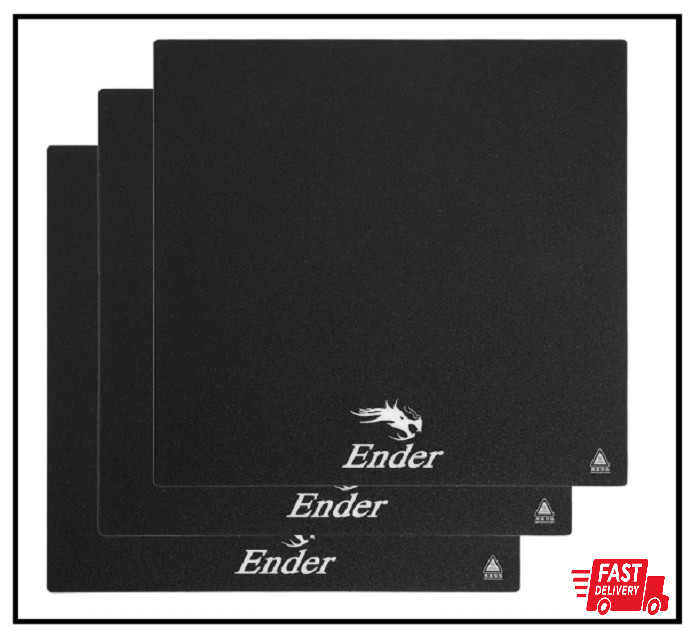
The Creality option makes the clearest case for a shopper with an Ender-3 or Ender-3 Pro who wants a flexible 235mm x 235mm sheet. The build sheet is intended to help filament adhere to the heated bed and to make model removal easier afterward; ABS, PLA, and HIPS are named uses. At USD 15.85, it is the lower-priced choice in this pairing. The limitation is fit scope: the product title centers on the Ender-3/Pro family and square 235mm format, so it is not the direct model match for the Adventurer 5M, 5M Pro, or AD5X platform. Its practical focus is heated-bed adhesion and model removal, so shoppers seeking the magnetic positioning and bending-removal features specified for FLASHFORGE have a different feature set to weigh.
FLASHFORGE PEI PC Replacement Platform
The FLASHFORGE option is the more direct choice for an Adventurer 5M, Adventurer 5M Pro, or AD5X. Notable features include powerful magnetism, resistance to displacement, adhesion at elevated temperatures, and model removal by bending. The title identifies a PEI PC replacement platform, giving this option a clearly named surface type alongside its printer-specific fit. The limitation is model specificity: its named fit is tied to the Adventurer models, so it is not the direct Ender-3/Pro match. That makes printer family the deciding constraint even before comparing surface preferences, and the platform's feature emphasis is more relevant to an Adventurer owner than to someone shopping for the 235mm Creality format.
Final choice by use case
- For an Ender-3 or Ender-3 Pro: choose the Creality flexible heated build plate because its title and 235mm x 235mm format align with that printer family.
- For an Adventurer 5M, 5M Pro, or AD5X: choose the FLASHFORGE replacement platform because those models are explicitly named and the product adds magnetic positioning and bending removal.
- For the lower-price route: Creality is the choice, while FLASHFORGE is the better match when its platform-specific features matter more than the $2.15 spread.