Choosing dust collection, sanding & finishing tools gets tricky when two purchases solve different problems. Do you need shop-wide control of dust and chips around machinery, or a hand-held tool for preparing a surface? The right choice depends less on a broad "best" label and more on whether your work starts with collection or ends with a smooth finish.
Quick verdict
These are not substitutes. The Delta 50-850 is a shop dust collection system intended for several machines, while the Electric 5-Inch Random Orbital Sander is a focused finishing tool. The listed-price gap is $354.16, but the more important distinction is the job each one is built to handle.
At a glance
| Product | Listed price | Best-fit job | Concrete details |
|---|---|---|---|
| Delta 50-850 Dust Collector | $395.00 | Shop dust and chip collection | 1.5 HP motor; wheeled base; large collection capacity |
| Electric Random Orbital Sander | $40.84 | 5-inch sanding | 6 speeds; 16 sanding discs; integrated dust collection |
Where each product wins
- Delta 50-850: It fits a workspace where dust and chips need to be collected from table saws, jointers, planers, sanders, and other shop equipment. Its role is broader than surface preparation.
- Electric Random Orbital Sander: It fits direct sanding work, with a woodworking and metal-finishing focus, dual-action operation, and a sanding-disc assortment. It is the more task-specific choice for preparing a workpiece.
Product notes
Delta 50-850 Dust Collector
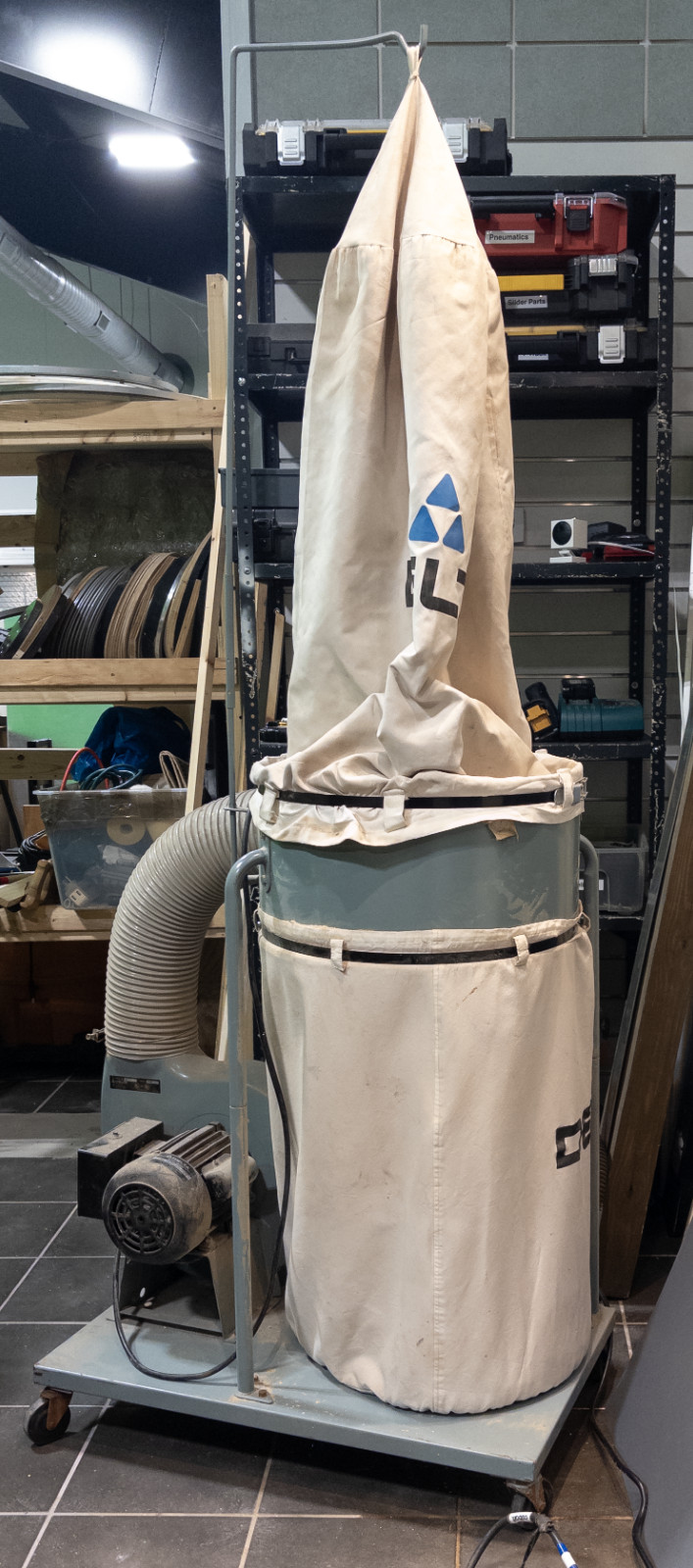
For a shop that needs collection around several machines, the Delta 50-850 has the clearest fit. It is suited to table saws, jointers, planers, sanders, and other shop equipment, so its purpose extends beyond one finishing task. The portable wheeled base is useful when a collector needs to move around a workspace, while the stated 115V/230V capability gives the system a defined electrical setup to consider. Its 1.5 HP motor and steel construction further identify it as a full shop unit. The concrete limitation is its Used condition, making it a different choice from a new hand-held tool. Choose it when machine-side collection is the priority and the $395 price fits the project.
Electric Random Orbital Sander
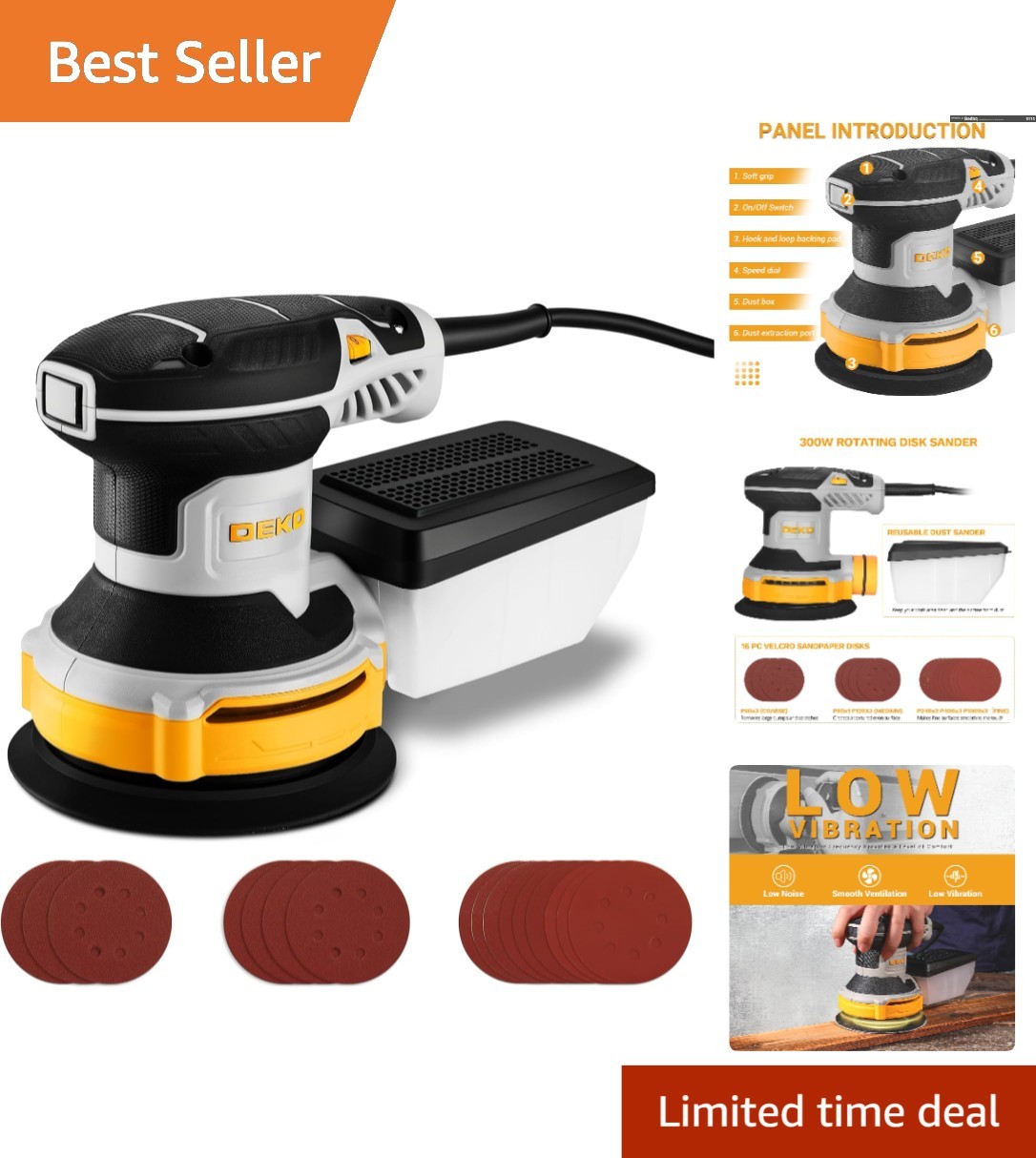
The Electric Random Orbital Sander is the more direct match for hands-on surface preparation. Its dual-action format, hook-and-loop paper changes, ergonomic rubber grip, and balanced counterweight all point to a tool designed to be controlled over a workpiece. The 2.5A electric setup keeps the choice focused on an electric tool rather than a dust-collection system. Its limitation is scope: it addresses sanding, while the Delta 50-850 is described for collecting dust and chips from multiple machines. The attributes also state Battery Included: No, so it is not a battery-included option. At $40.84, its concrete appeal is the sanding-specific format, not whole-shop collection.
Final choice by use case
- Choose the Delta 50-850 if your priority is collecting dust and chips from multiple woodworking machines, especially a table saw, jointer, planer, or sander. The 115V/230V capability and wheeled-base format are useful decision points, but the Used condition should fit your buying preference.
- Choose the Electric Random Orbital Sander if you need a dedicated tool for surface prep and want the six-speed format with 16 sanding discs. Its hook-and-loop system and electric operation suit a focused sanding workflow.
- If you are comparing the categories rather than just the products: the Delta is the shop-infrastructure choice; the Electric Random Orbital Sander is the workpiece-finishing choice. Pick based on which step is holding back your project.