If you're outfitting woodworking saws & planers, the central choice is whether you need another cutting machine or a better way to move material between workstations. The Folding Roller Conveyor is aimed at that second task: it uses gravity-fed rollers, folds for storage, and expands for workshop workflows. The practical question is whether that support role matches your layout.
Quick verdict
At USD 288.00, the Folding Roller Conveyor makes sense for a woodworking workshop that needs a movable surface for transporting materials without adding a motor. Its 660-lb load capacity, 360° swivel casters with locking brakes, and 30-50-inch expandable length give it a clear material-handling use case. The conveyor function supports a saw-and-planer workspace rather than performing the cutting or planing itself, so it should be considered for workflow support.
Product note
Folding Roller Conveyor
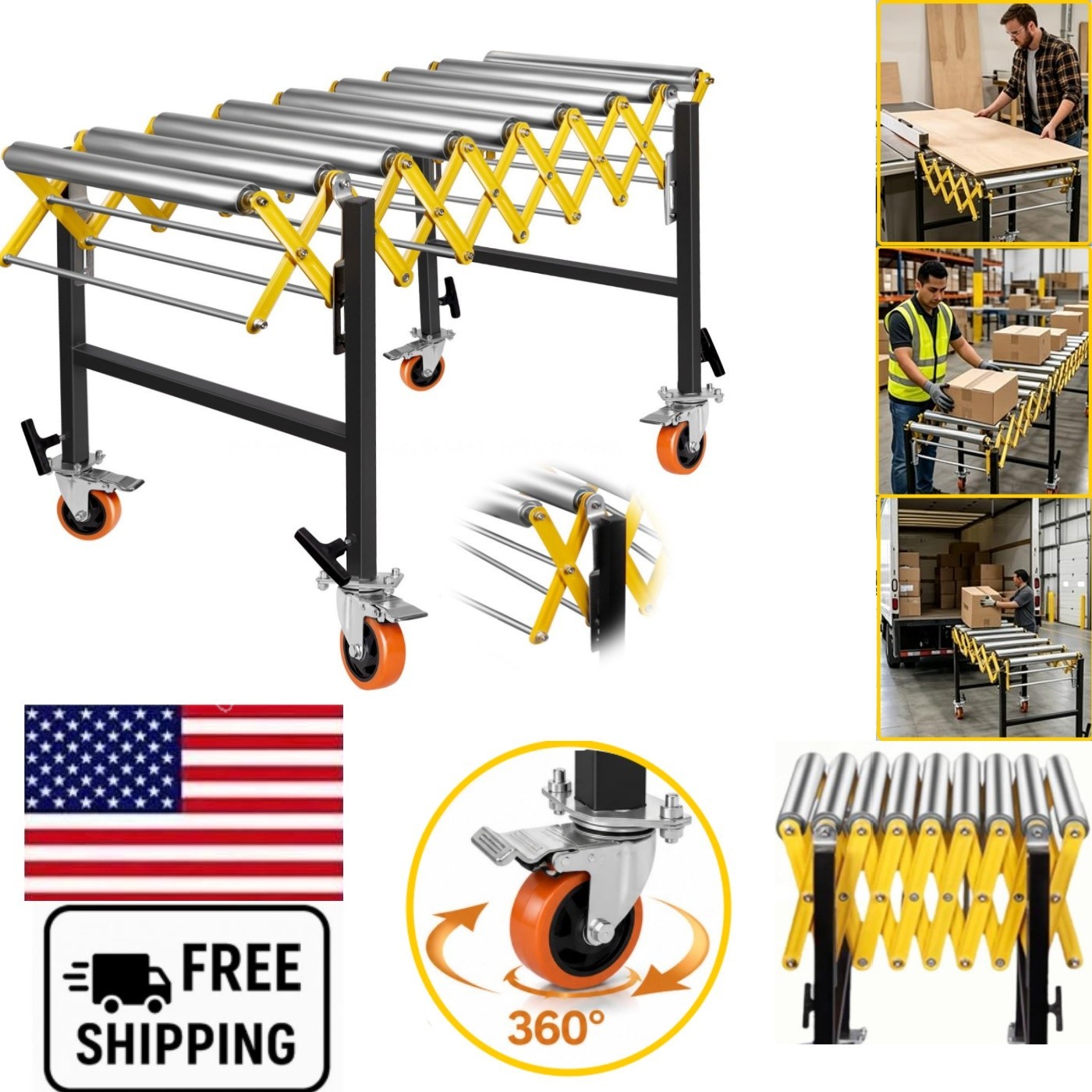
Choose the Folding Roller Conveyor when adjustable material handling is the priority. The scissor-expandable frame covers 30 to 50 inches for one unit, while built-in hooks allow multiple units to be connected when a longer run is useful. Smooth metal rollers and locking swivel casters also make repositioning part of the design.
The main limitation is that movement is gravity-powered, with no motor required. That suits a gravity-fed setup but does not address jobs that call for powered conveying. The single-unit span is also limited to the stated 30-50-inch range, which may not fit every workstation layout.
Who it suits
This conveyor is a reasonable fit for a woodworking workshop, warehouse, loading zone, logistics area, or factory that moves materials by hand or gravity. The folding frame and casters are particularly relevant when equipment needs to be moved or stored between tasks. It also suits a workspace where a 660-lb capacity is relevant to the materials being handled.
It is less aligned with a buyer whose immediate goal is a saw, jigsaw, miter saw, circular saw, or woodworking planer. The useful role here is transport support around those tools, not the cutting operation itself.
What stands out from the listed details
The clearest feature is the combination of adjustability and mobility. Eight connection points in the scissor frame are intended to improve stability, and the built-in hooks make it possible to join conveyor units. The 360° swivel wheels include locking brakes, giving the frame a way to be repositioned and held in place.
Gravity operation is another defining detail. Because no motor is required, the setup avoids adding a powered drive to the conveyor. That keeps the use case focused on moving materials through an appropriate layout, while the steel frame and smooth metal rollers support the stated handling design.
Meaningful trade-offs
The Folding Roller Conveyor's benefits depend on having enough room for its adjustable footprint and a workflow that can use gravity. A single unit does not provide a fixed, full-length conveyor run; it spans 30 to 50 inches and can be joined to another unit through its hooks. At USD 288.00, the purchase is easiest to justify when material movement is a recurring workshop need rather than an occasional task.
Bottom line
For woodworking saws & planers, the Folding Roller Conveyor is worth considering when the problem is moving materials between work areas. Its 660-lb capacity, locking casters, expandable frame, and gravity-powered operation make that purpose specific and clear. If the priority is a machine that cuts or planes wood, its conveyor role does not address that job.