Choosing resin 3d printers starts with a practical question: do you need industrial-scale capacity for large parts and batch work, or a desktop machine with a simpler starting routine? The OYOWOOA K1 and ELEGOO Mars 5 serve very different workflows. The K1 emphasizes a large format and extended height, while the Mars 5 focuses on desktop printing and one-click automatic leveling.
Quick verdict
Choose the OYOWOOA K1 when your projects genuinely call for large-format prototyping, detailed modeling, or multiple components in a production-oriented workflow. Choose the ELEGOO Mars 5 when a desktop resin printer and easier initial leveling are the more useful priorities. Their listed prices are also widely separated: $3,500.00 for the K1 versus $217.49 for the Mars 5, an absolute gap of $3,282.51.
Compact comparison
| Printer | Listed price | Condition | General format |
|---|---|---|---|
| OYOWOOA K1 Industrial Resin 3D Printer | USD 3,500.00 | Used | Industrial, large format |
| ELEGOO Mars 5 Resin 3D Printer | USD 217.49 | New | Desktop |
Where each printer wins
OYOWOOA K1
The K1 is the clearer fit for large-part prototyping and small-batch work because its description gives an approximate 302 × 162 × 380 mm build volume and an extended Z-axis. Its listed USB 2.0, USB 3.0, and Wi-Fi interfaces also provide several connection choices. The tradeoff is the practical setup: it is described as very heavy and pickup-only, and its 220V design requires a step-up transformer for a standard U.S. 120V outlet.
ELEGOO Mars 5
The Mars 5 suits desktop projects where one-click automatic leveling can simplify the start of a print. Its smart mechanical sensor is described as supporting residue detection, while alarms address resin shortages and leveling failures. The listed 5.65 × 3.53 × 5.91-inch printing size points to a more compact working envelope than the K1, so it is the more natural match for smaller individual pieces rather than large-format output.
Product notes
OYOWOOA K1 Industrial Resin 3D Printer
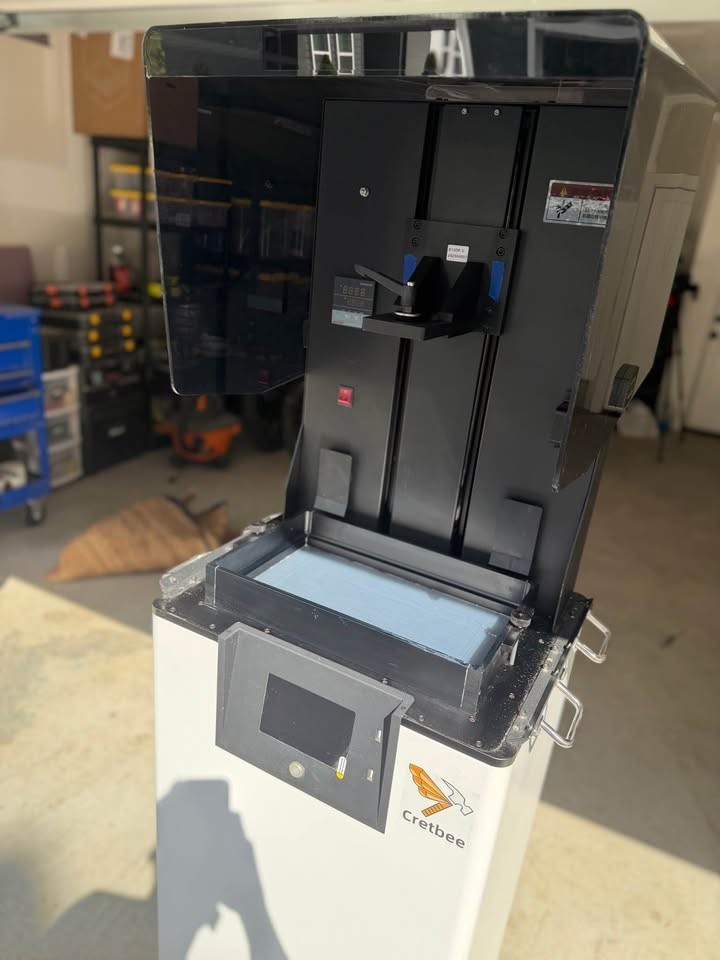
The OYOWOOA K1 makes a concrete case for shoppers who need scale: its title specifies a 13.6-inch 7K large-format LCD, and its description positions the machine for high-precision prototyping, detailed modeling, and small-batch production. The approximate 302 × 162 × 380 mm build volume and extended Z-axis are useful reasons to choose it when a smaller desktop printer would constrain the part. It also lists USB 2.0, USB 3.0, and Wi-Fi interfaces. The limitation is not subtle: the printer is used, very heavy, and must be picked up rather than shipped. Its 220V power requirement adds another setup consideration, although a step-up transformer is included.
ELEGOO Mars 5 Resin 3D Printer
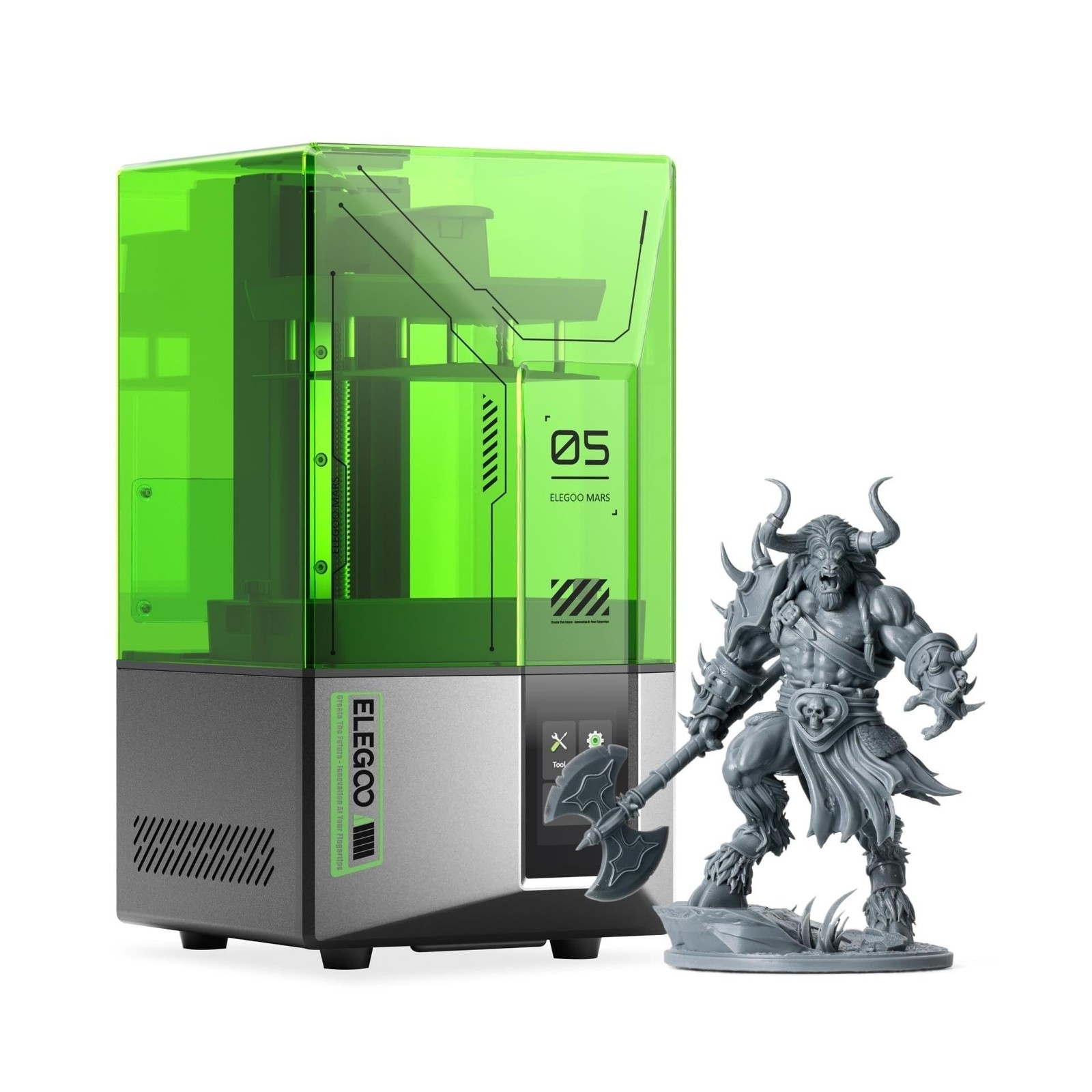
The ELEGOO Mars 5 is compelling for a desktop workflow that benefits from less manual leveling. The title calls out a 4K mono LCD and automatic leveling, while the description specifies one-click leveling designed to get users printing without tedious calibration. A smart mechanical sensor supports residue detection, and alarms cover resin shortages and leveling failures. Those controls give it a clear reason to choose for routine projects where straightforward startup matters. Its limitation is the listed 5.65 × 3.53 × 5.91-inch printing size, which is a considerably more compact working envelope than the K1's approximate build volume. The Mars 5 is therefore less suited to a single large-format part.
Final choice by use case
Pick the OYOWOOA K1 if your priority is large-format resin printing, extended vertical capacity, or small-batch prototyping and you can handle pickup, weight, and the 220V setup. Pick the ELEGOO Mars 5 for desktop projects where automatic leveling and print-monitoring alerts matter more than a large build area. For most shoppers deciding between these two, the right choice follows the intended project scale rather than the LCD number alone.