Choosing between resin 3D printers comes down to a practical split: do you need the OYOWOOA K1's explicitly described large-format capacity, or would the UniFormation GK3 PRO's lower listed price and 16K, 385nm UV SLA specification suit your work better? The K1 is aimed at large parts and small-batch production, but its used condition and 220V requirement add setup considerations. The GK3 PRO is the more cost-focused route for desktop resin printing.
Quick verdict
Choose the OYOWOOA K1 when large-format prototyping, tall parts, or multiple components are the priority. Its 13.6-inch 7K LCD design and approximate 302 × 162 × 380 mm build volume give that use case a clear fit.
Choose the UniFormation GK3 PRO when the purchase price is the main constraint and its title's 16K and 385nm UV SLA specifications match your requirements. It is listed as New, while the K1 is listed as Used.
Compact comparison
| Product | Listed price | Condition |
|---|---|---|
| OYOWOOA K1 Industrial Resin 3D Printer | USD 3,500.00 | Used |
| UniFormation GK3 PRO 16K Resin 3D Printer | USD 863.99 | New |
Where each product wins
The seller page may include additional marketing claims. Treat this page as a shopping reference, then confirm fit, price, delivery, and returns on the seller page.
- UniFormation GK3 PRO: The stronger fit for a price-led purchase, with a substantially lower listed cost and a clearly stated 16K, 385nm UV SLA identity.
Neither specification should be treated as an automatic quality verdict. The 16K and 7K figures are listed technical values, while the more meaningful choice depends on the type of parts, workspace, and setup you expect to use.
Product notes
OYOWOOA K1 Industrial Resin 3D Printer
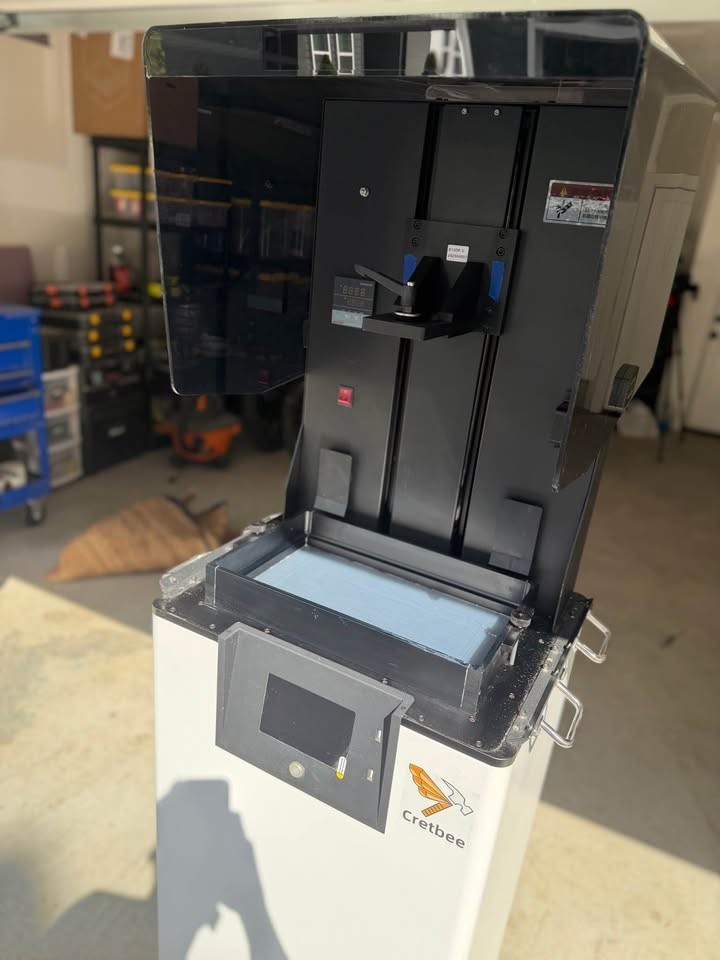
The OYOWOOA K1 makes the most sense for a shopper who specifically wants a large-format resin 3D printer. Its listed design combines a 13.6-inch 7K monochrome screen, an extended Z-axis, and an approximate 302 × 162 × 380 mm build volume. The description also targets detailed modeling, large parts, and small-batch production, giving the K1 a defined role beyond ordinary desktop printing. Its practical limitation is the setup: it is listed as Used and runs on 220V, so a standard U.S. 120V outlet requires a step-up voltage transformer. That power requirement, along with the machine's industrial scale, makes it a more involved choice for buyers who do not need the stated large-format capability.
UniFormation GK3 PRO 16K Resin 3D Printer
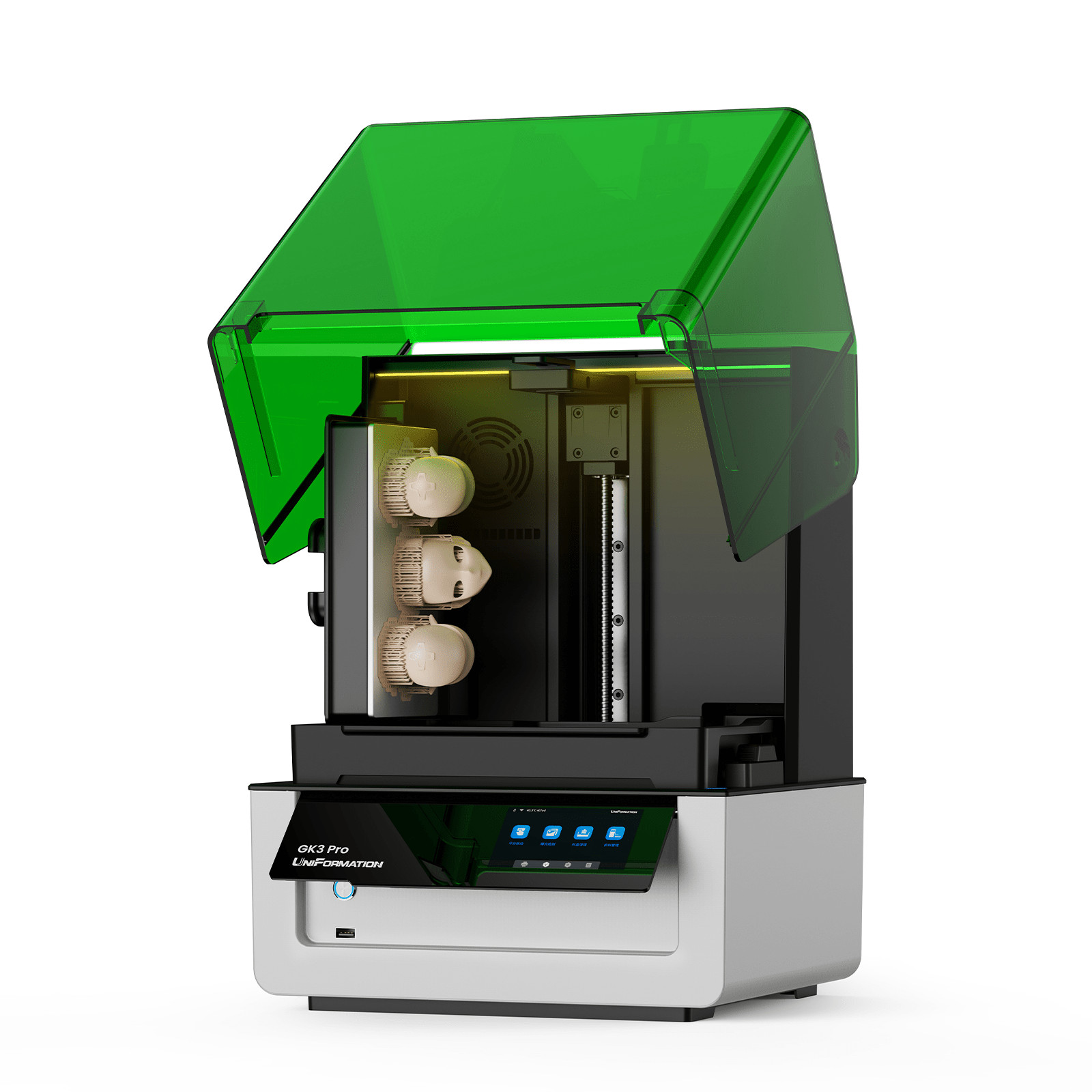
The UniFormation GK3 PRO is the more direct fit for a shopper whose decision starts with cost and a specific technical profile. Its title clearly identifies a 16K resin 3D printer using 385nm UV SLA, and its description frames it around desktop resin printing, precision engineering, and detailed output. The listed New condition is another concrete distinction from the Used K1. Its limitation is fit rather than a performance judgment: buyers whose project depends on the K1's explicitly described large-format workspace will find the GK3 PRO less directly matched, because its headline specification centers on resolution and wavelength instead. That makes the GK3 PRO appealing for cost-conscious desktop work, but less clearly targeted to large-part production.
Final choice by use case
- For large-part prototyping or small-batch production: choose the OYOWOOA K1, whose description explicitly targets those jobs and specifies a large-format build volume.
- For desktop resin printing with a price-first decision: choose the UniFormation GK3 PRO, whose listed price is lower and whose title gives clear 16K and 385nm UV SLA specifications.
- For a simpler power requirement: treat the K1's 220V requirement as a decisive constraint rather than a minor detail.
The choice is therefore straightforward: the K1 is the specialized large-format route, while the GK3 PRO is the lower-cost desktop resin option with a distinct 16K, 385nm SLA specification.