When shopping for resin 3D printers, the hard decision is whether to pay more for a printer-centered purchase or choose a lower-priced setup that adds equipment and supplies. The UniFormation GK3 PRO and ELEGOO Mars 2 Pro target those different priorities. The useful shortcut is to separate the printer's stated configuration from the package around it, then weigh the condition alongside the included equipment.
Quick verdict
UniFormation is the fit for a specification-led purchase. ELEGOO is the fit for a broader setup with finishing equipment, accessories, adjustable controls, and the lower listed price. The USD 563.99 spread makes this a configuration-and-package decision rather than a simple price ranking.
Price and feature snapshot
| Attribute | UniFormation GK3 PRO | ELEGOO Mars 2 Pro |
|---|---|---|
| Listed price | USD 863.99 | USD 300.00 |
| Condition | New | Used |
| Stated technology | 16k, 385nm UV SLA | MSLA, 405nm integrated UV light |
| Controls and features | - | Adjustable layer thickness and print speed; built-in 3D scanner; on-printer controls |
| Setup emphasis | Resin 3D printer | Wash and cure, accessories, and supplies |
Where each one wins
Where UniFormation wins
UniFormation wins for a printer-led brief. Its title is explicitly centered on a resin 3D printer, and the description frames the GK3 PRO around precision engineering, ease, and performance. Those descriptive claims should not be treated as measured outcomes; the concrete reason to choose this side is the focused machine specification rather than an all-in package. The trade-off is the USD 563.99 spread against the ELEGOO Mars 2 Pro, so shoppers should be comfortable paying more for that narrower purchase scope.
Where ELEGOO wins
ELEGOO wins when the purchase needs a broader starting setup. Its title pairs the printer with wash and cure, accessories, and supplies, making package breadth the concrete reason to choose it. The description also identifies a complete setup and lists adjustable layer thickness, adjustable print speed, a built-in 3D scanner, and on-printer controls. The lower price should be weighed alongside the condition rather than treated as a performance claim. The 405nm UV light is simply another listed specification, not an automatic advantage over 385nm.
Product notes
UniFormation GK3 PRO 16k
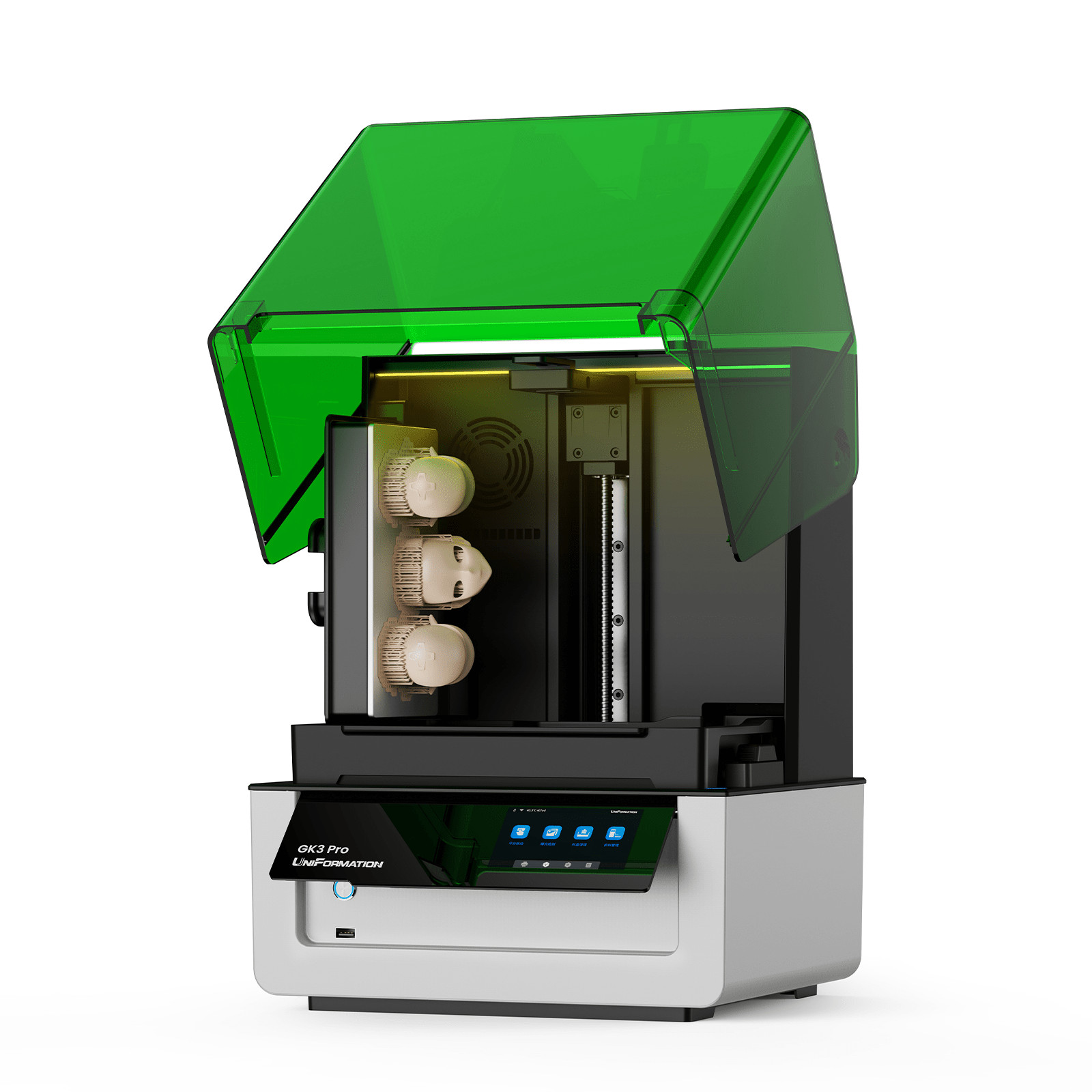
The GK3 PRO fits a shopper who wants the printer itself to be the centerpiece. Its title combines resin 3D printer, 16k, and 385nm UV SLA in one clear specification line, and its condition is New. Those are concrete reasons to select it without assuming that a larger technical number guarantees better print results. The description's references to precision engineering, ease, and performance add context, but they are not test results. The limitation is the USD 863.99 listed price, which makes this a bigger upfront commitment than the ELEGOO Mars 2 Pro. Pick UniFormation when a new, specification-led printer matters more than a package built around wash-and-cure equipment and supplies.
ELEGOO Mars 2 Pro
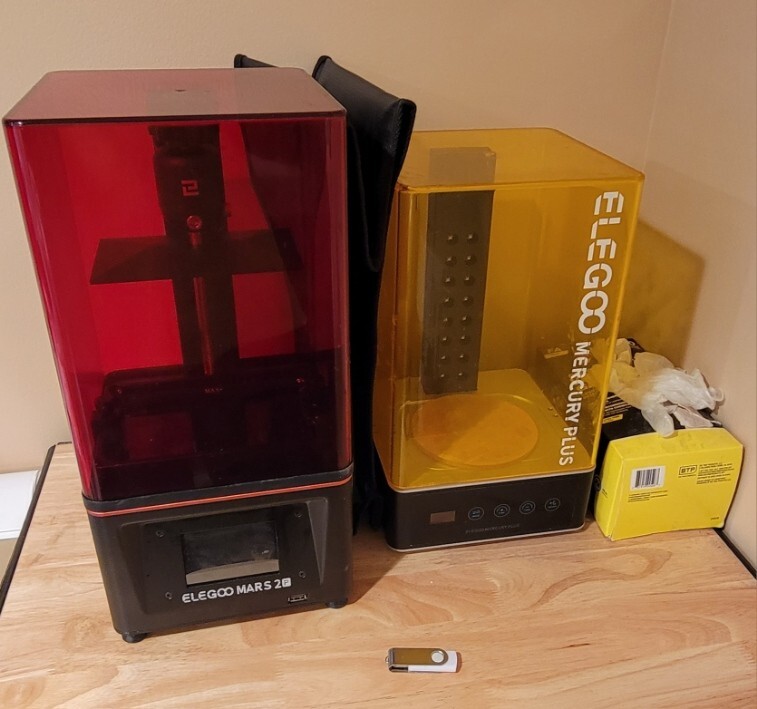
The Mars 2 Pro is the fit for a shopper prioritizing what comes around the printer. Its title and description make the complete setup concrete, and the feature list gives you adjustable layer thickness, adjustable print speed, a built-in 3D scanner, and on-printer controls to weigh. The limitation is its Used condition, which is materially different from the New UniFormation machine. Its 405nm integrated UV light is worth recording as a specification, not translating into a winner against 385nm. At USD 300.00, it is the lower-priced path. Choose it when that price and the included setup align with your brief; choose UniFormation instead when the GK3 PRO's printer-focused specification is the priority.
Final choice by use case
Choose the UniFormation GK3 PRO if the printer itself-and its named UV SLA configuration-is the center of the purchase. Choose the ELEGOO Mars 2 Pro if the USD 300.00 price, package scope, and adjustable controls are the more useful combination. The first path is a focused printer purchase; the second is a broader setup purchase with a different condition. Select by use case, not by assuming one technical number automatically means better output.