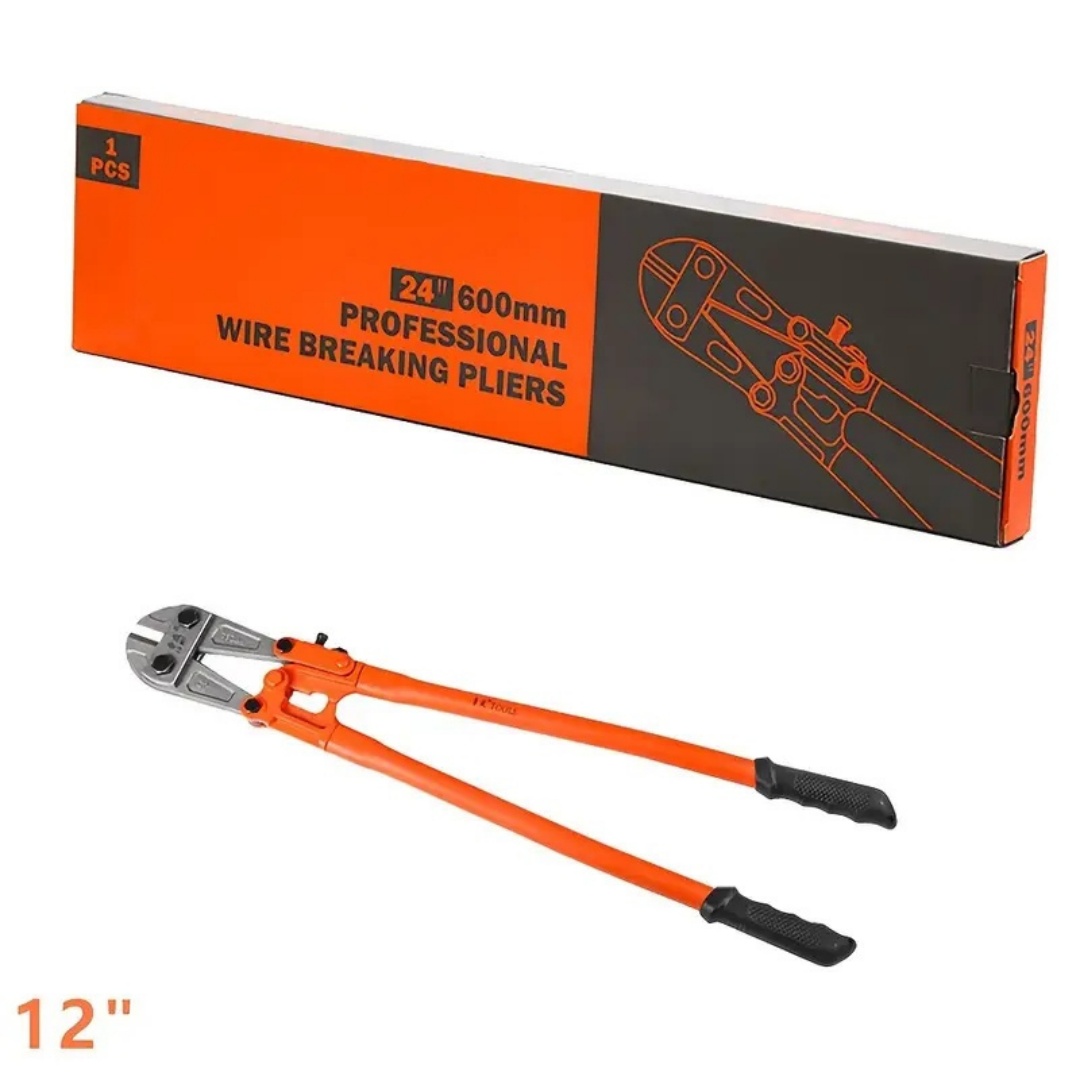

Photos from current listings. Actual item, color, and included accessories may vary.
Heavy Duty Bolt Cutter Buying Guide
Heavy-duty bolt cutters are leverage-driven cutting tools defined by jaw hardness, compound lever ratio, and handle length, not by marketing labels. The core trade-off is reach and power versus portability: longer handles multiply force but limit access in tight spaces. The decision rule is simple: match jaw grade and cutting capacity to the material hardness, and never accept a cutter whose rated capacity is below the actual bolt diameter or a jaw hardness below the workpiece.


At a glance
- Category
- Hand Tools
- Data updated
- Nov 20, 2026
Current offers
Highlights
- Compound leverage ratio typically ranges from 15:1 on compact 12-inch models to 40:1 or higher on 36–42-inch cutters, directly multiplying hand force into jaw pressure.
- Jaw hardness is the durability gate: chrome-molybdenum (Cr-Mo) or drop-forged steel jaws hardened to 45–60 HRC cut hardened chain and padlocks; softer jaws deform on grade-8 bolts.
- Cutting capacity is model-specific and stated in bolt diameter or padlock shackle thickness; exceeding it by even 1/16 inch risks jaw chipping or handle bend.
- Handle construction separates tiers: tubular steel with rubber grips is entry-level, while forged or I-beam handles with dual-compound grips resist flex and deliver full lever force without flex losses.
Best use cases
- Best fit: 12–18 inch compact cutters for fence wire, small chain, screws, and rivets in overhead or confined work—pick these when portability and one-hand control matter more than maximum bolt diameter.
- Best fit: 24–36 inch compound-lever cutters for padlocks, hardened chain, and rebar up to their rated capacity—choose this tier for property maintenance, job-site demolition, and emergency egress.
- Wrong fit: using a 12-inch mini cutter on grade-8 bolts or hardened padlock shackles—the short lever and lower jaw hardness will chip or deform before the material yields; step up to a 30-inch-plus Cr-Mo jaw model.
- Wrong fit: buying a 42-inch cutter for everyday wire and small chain—the extra length and weight reduce control in tight spaces and fatigue the user; reserve long-handle cutters for maximum-diameter hardened stock.
Buying tips
- Size by rated capacity, not handle length: a 24-inch cutter typically handles up to 5/16-inch bolts, a 36-inch up to 1/2-inch, and a 42-inch up to 5/8-inch—confirm the jaw rating matches your hardest workpiece.
- Demand Cr-Mo or drop-forged jaws at 45 HRC or higher for hardened chain and padlocks; standard carbon-steel jaws are only suitable for soft wire, screws, and non-hardened rod.
- Check the lever mechanism: compound linkage with a center pivot bolt and return spring cuts with less hand force than single-pivot designs; adjustable jaw gap prevents material roll-out on round stock.
- Handle ergonomics matter for repeated cuts: dual-compound or soft-grip rubber over steel reduces slip and vibration; avoid plain painted tubular handles on high-force models where grip under load is critical.
Specs
| Jaw Material | Cr-Mo / drop-forged steel / carbon steel |
|---|---|
| Handle Length | 12–42 in (compact to long-lever) |
| Cutting Capacity | Up to 5/8 in bolt / 1/2 in chain |
| Lever Type | Compound vs single-pivot |
Related searches
What to check before buying
- Measure the exact diameter and hardness of the hardest material you will cut (bolt grade, chain pitch, padlock shackle) and confirm the cutter's rated capacity exceeds it by at least 1/16 inch.
- Check access space: the jaw opening and handle spread at full cut require clearance; mini cutters need less swing room, while 36–42-inch models need a wide, unobstructed arc.
- Verify jaw replacement or sharpening support—quality cutters offer replaceable jaws or serviceable pivot bolts; sealed or non-serviceable heads become scrap after edge wear.
- Confirm grip and safety: rubber or dual-compound handles for wet or oily conditions, and ensure the return spring is shielded so it cannot pinch or catch on wire.
FAQ
Data sources: eBay / Amazon listings and product attribute feeds Data updated Nov 20, 2026.
Some links on this page are affiliate links. If you buy after clicking one, we may earn a commission at no extra cost to you. This does not change which products appear here or their order. Affiliate disclosure.