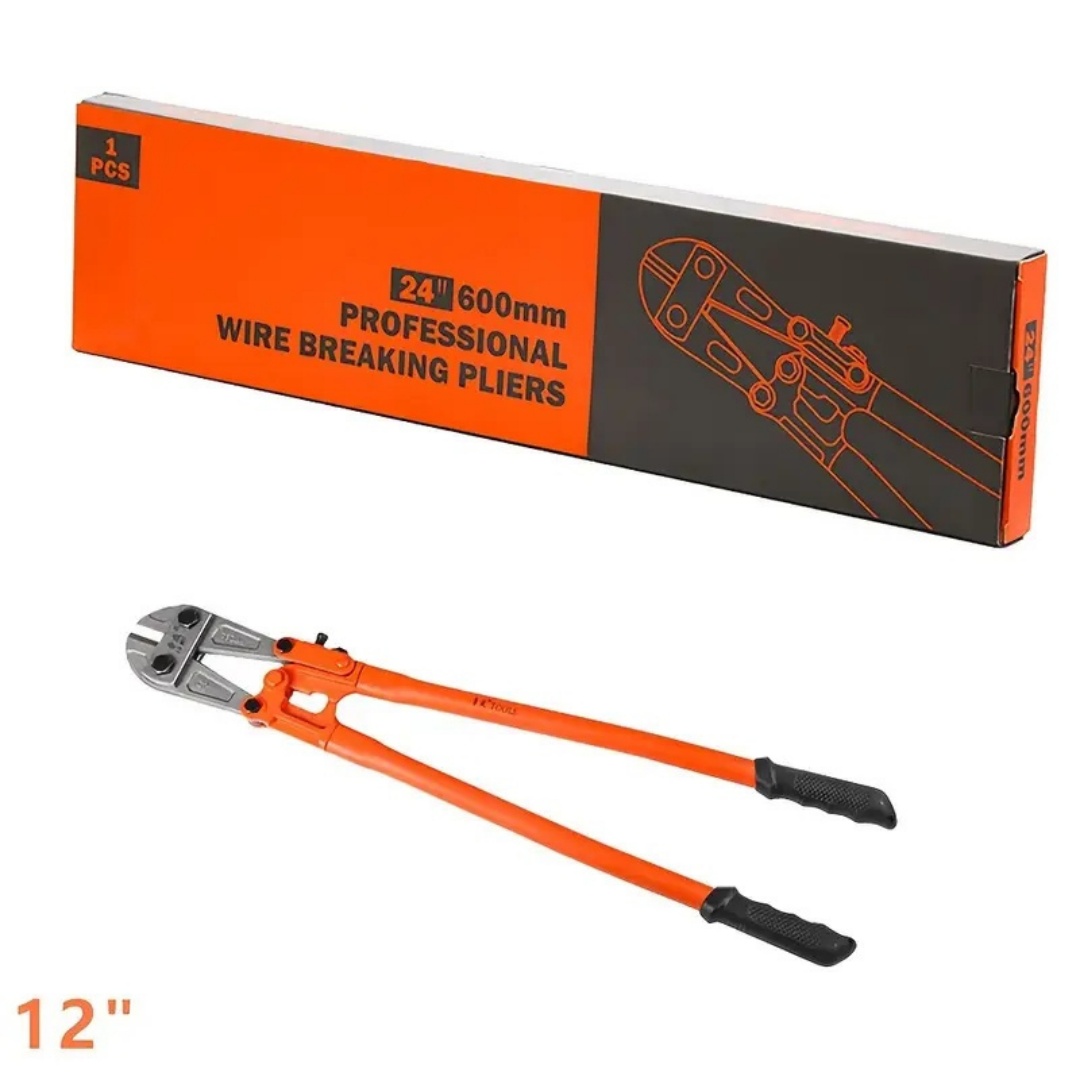

Photos from current listings. Actual item, color, and included accessories may vary.
Heavy Duty Wire Cutter Buying Guide
Heavy-duty wire cutters are lever-and-fulcrum cutting tools sized for hardened steel wire, chain, screws, and rivets rather than soft copper or craft wire. The core trade-off is compound leverage versus jaw hardness: longer handles and pivot geometry multiply hand force, but only through-hardened or induction-hardened jaws hold an edge under repeated hard-wire cuts. Buy compound-lever cutters sized to your wire gauge if you cut hardened stock weekly; choose single-pivot forged cutters only for soft wire and light fencing.


At a glance
- Category
- Hand Tools
- Data updated
- Nov 20, 2026
Current offers
Highlights
- Compound-lever (toggle) geometry multiplies handle force roughly 3-8x over single-pivot cutters, which is why 12" bolt cutters cut hardened chain that a 7" diagonal cutter cannot.
- Jaw hardness determines service life: induction-hardened chrome-vanadium or chrome-molybdenum jaws in the 58-62 HRC range resist denting on hardened steel; untreated carbon steel jaws roll and chip.
- Center-cut jaws (symmetrical V) suit bolts, chain, and rivets; shear-cut or flush-cut jaws suit wire and fencing where a flat, burr-free end matters.
- Handle-to-jaw ratio is the real sizing math: 12-14" compound cutters handle up to roughly 1/4" hardened chain, while 18-24" models are needed above 5/16".
Best use cases
- Fencing and agricultural wire (woven wire, barbed wire, high-tensile): pick 10-14" compound-lever cutters with shear-cut jaws and soft-grip handles; skip 7-8" diagonal pliers, which lack leverage and jaw mass.
- Chain, bolts, screws, and rivets in repair work: pick 12-18" center-cut bolt cutters with compound linkage and hardened jaws; skip flush-cut wire snips, which cannot seat a chain link.
- Electrical and soft-wire work (copper, aluminum, thin mild steel): pick 8-10" forged single-pivot cutters with induction-hardened edges; skip 24" bolt cutters, whose jaw gap deforms fine wire.
- Daily heavy industrial or rebar-grade cutting: pick 24-36" compound cutters or hydraulic/hydraulic-assist cutters with replaceable jaws; skip mini 8-12" bolt cutters, which are for occasional light-hardened stock only.
Buying tips
- Match cutter length to material hardness: 8-10" for soft wire up to 1/8", 12-14" for hardened chain to about 1/4", 18-24" for 5/16" and above.
- Demand induction-hardened or through-hardened jaws rated 58-62 HRC; chrome-vanadium (CrV) or chrome-molybdenum (CrMo) steel is the minimum grade for hardened wire.
- Choose compound-lever linkage for any cut requiring more than hand strength; single-pivot forged cutters are lighter and faster but limited to soft or thin stock.
- Check jaw type before buying: center-cut for chain/bolts/rivets, shear-cut or flush-cut for fencing and wire where a clean end is needed.
Specs
| Leverage Type | Compound-lever vs single-pivot |
|---|---|
| Jaw Material | CrV / CrMo, 58-62 HRC hardened |
| Jaw Cut Style | Center-cut vs shear/flush-cut |
| Cut Capacity | 1/8" soft to 5/16" hardened chain |
Related searches
What to check before buying
- Measure your thickest regular cut (wire gauge or chain pitch) and buy at least one size tier above it so jaws are not maxed out on every cut.
- Confirm handle length fits your hand and workspace: 12-14" cutters are one-hand/portable, 18-24" need two hands and clearance to swing.
- Verify the jaw is replaceable or resharpenable if you cut hardened stock daily; non-replaceable jaws are a consumable tool.
- Check grip material and shape for glove use: soft rubber or dual-compound grips reduce slip, but bulky grips can reduce leverage on smaller cutters.
FAQ
Data sources: eBay / Amazon listings and product attribute feeds Data updated Nov 20, 2026.
Some links on this page are affiliate links. If you buy after clicking one, we may earn a commission at no extra cost to you. This does not change which products appear here or their order. Affiliate disclosure.