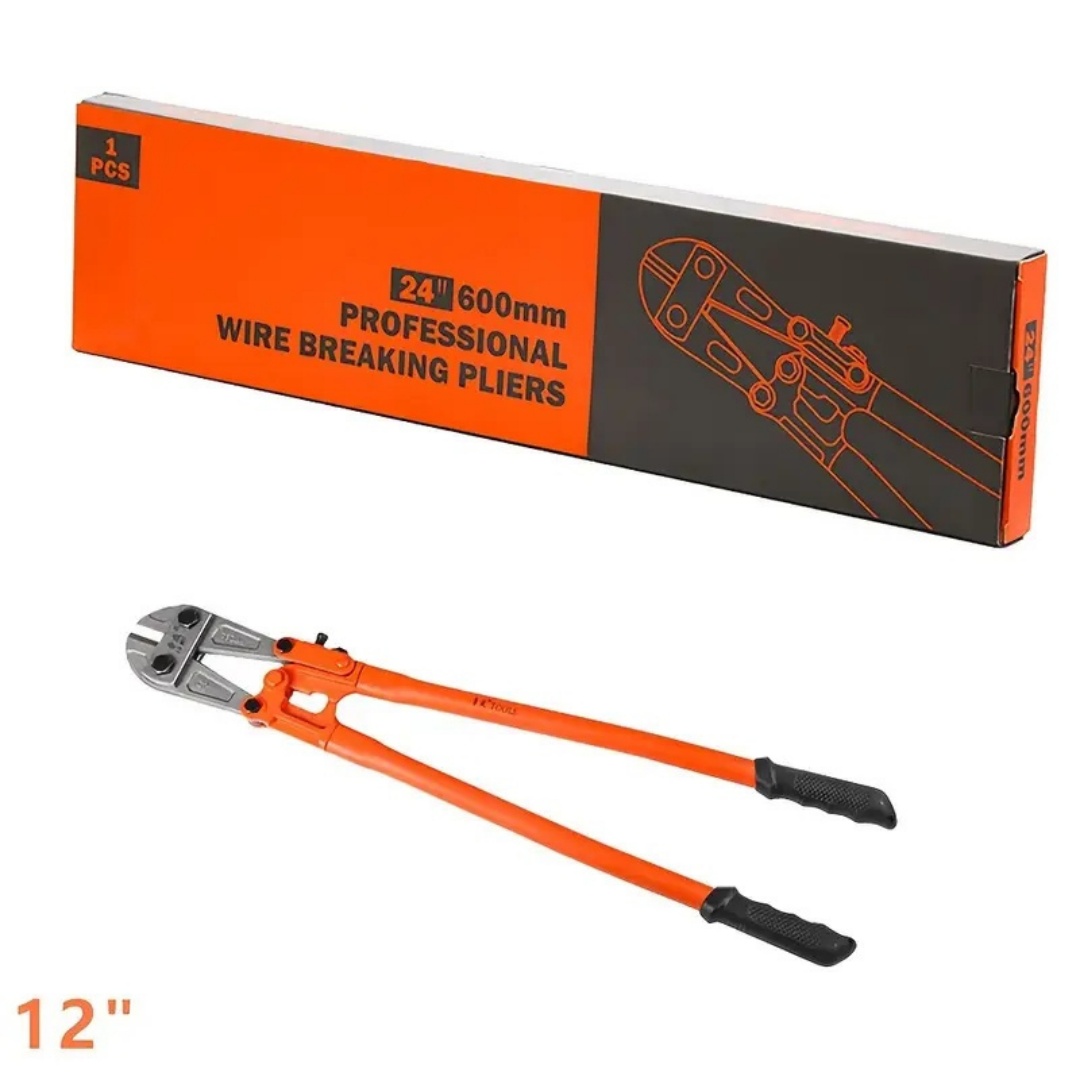

Photos from current listings. Actual item, color, and included accessories may vary.
Mini Bolt Cutter Buying Guide
Mini bolt cutters (typically 8–14 inches) are compact lever-action shears for cutting hardened wire, small chain, screws, and rivets where a full-size 24-inch+ cutter cannot fit or travel. The core trade-off is compound-leverage ratio versus jaw hardness: longer handles multiply force, but only properly hardened and aligned jaws survive hard steel without chipping or spreading. Choose a model with drop-forged Cr-V or chrome-moly jaws, a compound pivot, and a stated cutting capacity; skip any cutter that lists no capacity or uses cast jaws.


At a glance
- Category
- Hand Tools
- Data updated
- Nov 20, 2026
Current offers
Highlights
- Compound-leverage pivot multiplies handle force roughly 3–6× at the jaw; a 12-inch mini delivers about 1/3 the cutting force of a 24-inch full-size cutter.
- Jaw hardness matters more than length: 55–62 HRC drop-forged Cr-V or chrome-moly steel resists chipping on hardened screws and chain.
- Stated cutting capacity (e.g., 1/8-inch HRC 40 bolt, 3/16-inch mild wire) is the only reliable performance spec; cast jaws and unlisted caps are the common failure point.
- Rubber or TPR ergonomic grips reduce hand fatigue but do not change leverage—handle length and pivot geometry determine actual cutting force.
Best use cases
- Best fit: 10–12-inch compound mini cutter for fencing, wire mesh, small chain, and rivets in tight spaces or a toolbag—pick drop-forged jaws with a stated capacity.
- Best fit: 8-inch pocket/compact model for light wire and zip ties only; skip it for bolts, screws, or chain, which require 12 inches or more.
- Wrong fit: using a mini cutter on hardened padlock shackles, thick Grade 8 bolts, or 1/4-inch+ hardened chain—step up to a full-size 24–36-inch bolt cutter or an angle grinder.
- Wrong fit: buying the cheapest 12-inch unit with cast jaws for repeated screw cutting; jaw chipping and pivot loosening appear within moderate use.
Buying tips
- Match cutter length to material: 8-inch for wire and ties, 10–12-inch for small chain and screws, 14-inch mini when you need near full-size force in a compact body.
- Demand a stated capacity for hardened steel (HRC 40+); a cutter rated only for 'mild steel wire' will chip on screws and chain.
- Check jaw material: drop-forged Cr-V or chrome-moly with 55–62 HRC hardness; cast steel or unspecified 'high-carbon' jaws are the compromise tier.
- Prefer compound pivot with adjustable jaw alignment and a return spring; loose or non-adjustable pivots cause jaw spread and poor cutting after modest use.
Specs
| Overall Length | 8 / 10 / 12 / 14 in |
|---|---|
| Jaw Material | Drop-forged Cr-V or chrome-moly |
| Jaw Hardness | 55–62 HRC |
| Cutting Capacity | Up to 3/16 in mild steel |
Related searches
What to check before buying
- Measure the largest material diameter you will cut and compare it to the cutter's stated capacity, not the handle length.
- Confirm the cutter fits your space: 12-inch models need roughly 12–14 inches of swing clearance around the jaws.
- Check handle grip material and diameter for glove compatibility; TPR or rubber over-mold beats bare painted steel for repeated use.
- Verify replacement jaws or a warranty exist for the model—jaw wear is the primary end-of-life point for mini bolt cutters.
FAQ
Data sources: eBay / Amazon listings and product attribute feeds Data updated Nov 20, 2026.
Some links on this page are affiliate links. If you buy after clicking one, we may earn a commission at no extra cost to you. This does not change which products appear here or their order. Affiliate disclosure.