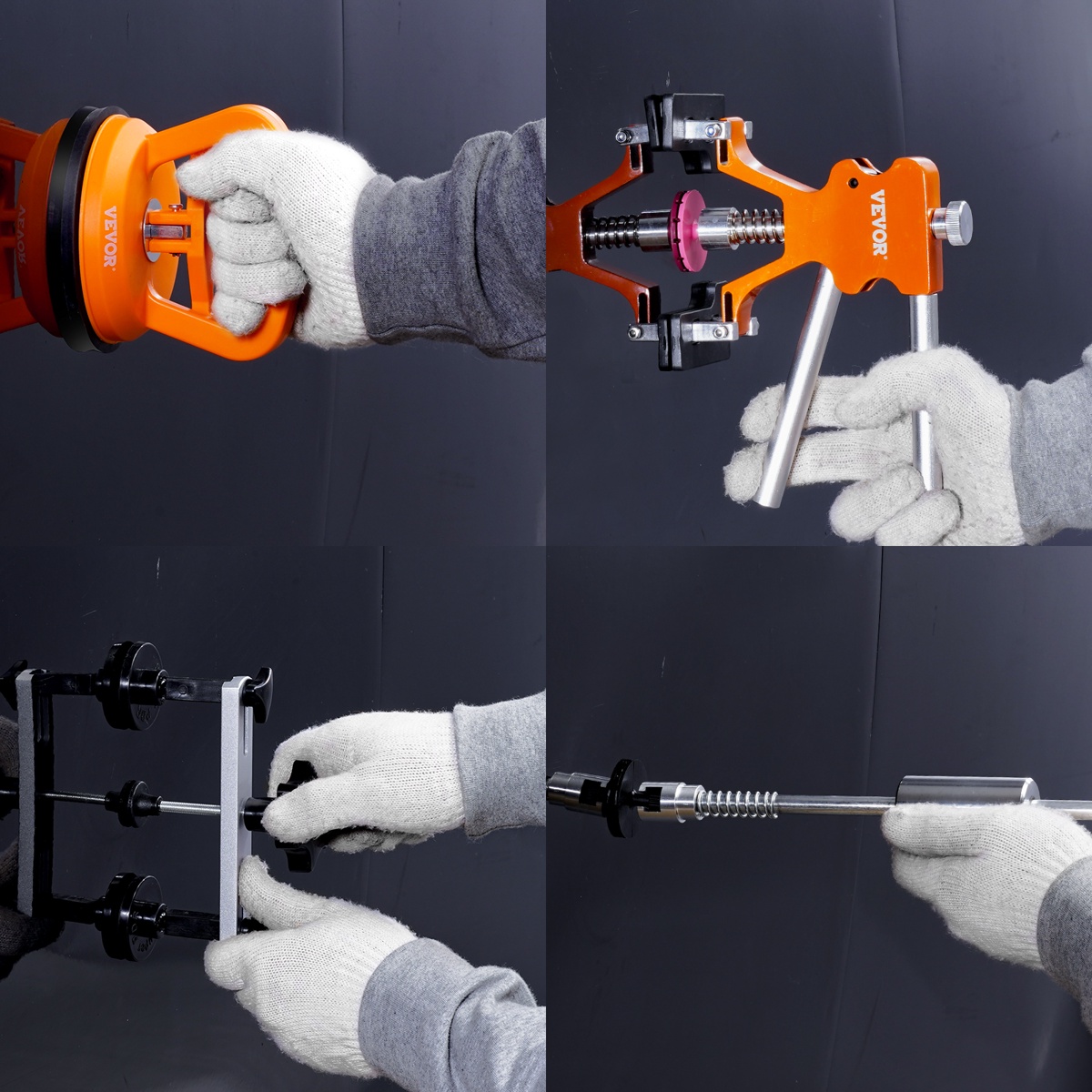

Photos from current listings. Actual item, color, and included accessories may vary.
Paintless Dent Kit Buying Guide
A paintless dent kit uses specialized rods, bridges, and glue-pulling tabs to lift dents without damaging factory paint, trading off between flexible rod access and rigid bridge pulling power. The core decision is whether you need glue-pull tabs for broad, shallow dents or precision rods for sharp creases—most durable kits combine both, while cheap single-tool kits compromise on steel hardness and tab adhesion.


At a glance
- Category
- Hand Tools
- Data updated
- Nov 20, 2026
Current offers
Highlights
- Rod steel hardness: 55-60 HRC spring steel resists bending and holds shape; softer rods flex permanently and lose leverage
- Bridge puller design: dual-leg adjustable bridges with 2-3 inch suction bases distribute force evenly; single-leg bridges concentrate stress and can distort panels
- Glue tab material: POM or nylon tabs with high-temp hot glue (180-220°F melt point) release cleanly; cheap plastic tabs crack and leave residue
- Kit completeness: a full kit includes 5-10 rods (0.2-0.6 inch diameter), 10-20 glue tabs, a bridge puller, hot glue gun, and knockdown tool; missing knockdowns force improvisation
Best use cases
- Best fit: glue-pull bridge kit for broad door and fender dents over 2 inches—choose one with 10+ tabs and a dual-leg bridge for even pressure; skip rod-only kits that cannot reach shallow panel centers
- Best fit: long-reach rod kit (24-36 inch rods) for door dings and creases near edges—pick 0.25-0.35 inch diameter rods for access behind braces; avoid short kits under 18 inches that cannot span door skins
- Wrong fit: single-tool suction pullers for sharp creases or hail damage—these cannot apply localized force; step up to a multi-rod kit with precision tips and a knockdown hammer
Buying tips
- Match rod diameter to dent depth: 0.2-0.3 inch rods for tight creases and edges, 0.4-0.6 inch rods for broad shallow dents—kits with only one diameter limit your repair range
- Check bridge base size: suction cups under 2 inches diameter slip on curved panels; 2.5-3 inch cups hold seal on doors and fenders without repositioning mid-pull
- Verify glue melt point: hot glue sticks rated 180-220°F bond to cold panels and release without paint pull; low-temp craft glue fails below 150°F and leaves residue
- Count glue tabs by shape: round tabs for broad dents, oval and crease tabs for edges—a kit with fewer than 10 mixed-shape tabs forces you to buy extras immediately
Specs
| Rod Material | 55-60 HRC spring steel |
|---|---|
| Rod Diameter Range | 0.2-0.6 in (5-15 mm) |
| Glue Tab Count | 10-20 mixed-shape tabs |
| Bridge Base Size | 2.5-3 in suction cups |
Related searches
What to check before buying
- Measure panel access: confirm at least 1.5 inches of gap behind the dent for rod insertion—remove door panels or taillights if needed before buying short rods
- Check paint condition: factory paint or intact clear coat is required; repainted or cracked panels can lift with glue tabs regardless of kit quality
- Verify power for hot glue gun: most kits include a 110-120V US-plug gun; confirm your outlet voltage and whether a cordless gun is needed for outdoor work
- Confirm bridge compatibility: ensure included tabs match your bridge hook size (typically 5/16 or 3/8 inch threads); mismatched tabs render the puller unusable
FAQ
Data sources: eBay / Amazon listings and product attribute feeds Data updated Nov 20, 2026.
Some links on this page are affiliate links. If you buy after clicking one, we may earn a commission at no extra cost to you. This does not change which products appear here or their order. Affiliate disclosure.