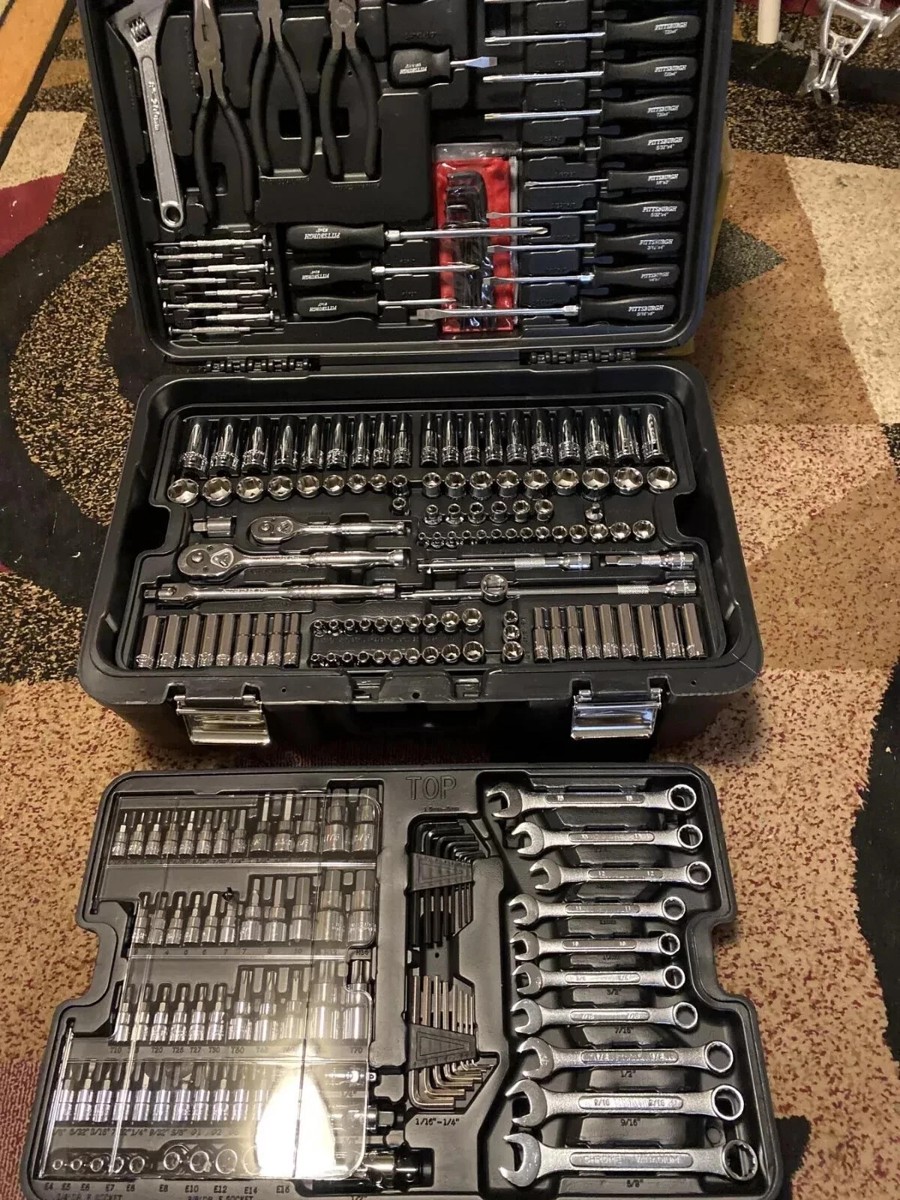

Photos from current listings. Actual item, color, and included accessories may vary.
Professional Mechanic Tool Set Buying Guide
A professional mechanic tool set is a pre-organized collection of hand tools—ratchets, sockets, wrenches, screwdrivers, pliers—built for daily automotive and industrial repair. The core trade-off is chrome vanadium (CrV) versus chrome molybdenum (CrMo) steel and 6-point versus 12-point socket geometry: CrV handles general fastening, while CrMo and 6-point drive survive high-torque impact and rounded-fastener work. The decision rule: buy sets that specify steel grade, drive size, and point count per tool; skip any set that hides material or mixes low-grade CrV into impact-rated sockets.


At a glance
- Category
- Hand Tools
- Data updated
- Nov 20, 2026
Current offers
Highlights
- Chrome vanadium (CrV) sockets suit hand ratchets up to ~200 ft-lb; chrome molybdenum (CrMo) is required for impact wrench use to resist shatter.
- 6-point sockets grip flat fastener walls for maximum torque; 12-point sockets offer 30-degree re-indexing but round soft bolts faster.
- Drive size dictates torque ceiling: 1/4-inch for interior trim and small fasteners, 3/8-inch for general engine bay work, 1/2-inch for suspension and lug nuts.
- Ratchet tooth count separates tiers: 72-tooth gives 5-degree swing, 90-tooth gives 4-degree, and 120-tooth gives 3-degree for tight engine compartments.
Best use cases
- Daily automotive tech: pick a 3/8-inch drive master set with 6-point and 12-point sockets, 72-tooth-plus ratchet, and CrV steel; skip 1/4-inch-only kits that lack torque for suspension.
- Impact-heavy fleet or diesel work: choose 1/2-inch impact socket sets explicitly labeled CrMo and 6-point; skip any set marketing CrV sockets as impact-rated.
- Mobile mechanic or road-call kit: select a blow-molded case with 1/4-inch and 3/8-inch drive plus combination wrenches; skip open trays that spill and lack locking latches.
Buying tips
- Match drive size to torque: 1/4-inch drive for fasteners under 15 ft-lb, 3/8-inch for 15–80 ft-lb, 1/2-inch for 80–250 ft-lb; never exceed the ratchet's rated torque.
- Demand CrMo steel and 6-point geometry on every socket labeled impact; CrV impact sockets can crack and eject shards under load.
- Count ratchet teeth before buying: 72-tooth is the pro minimum for 5-degree swing; below 60-tooth ratchets need too much arc in tight engine bays.
- Verify socket retention: ball-detent or pin-detent on impact sockets prevents drops; friction-ball hand sockets wear and slip after repeated use.
Specs
| Socket Steel | CrV (hand) vs CrMo (impact) |
|---|---|
| Drive Sizes | 1/4, 3/8, 1/2 in (full master) |
| Socket Points | 6-point vs 12-point |
| Ratchet Tooth Count | 72T / 90T / 120T (5°/4°/3° swing) |
Related searches
What to check before buying
- Measure your toolbox drawer depth and width; blow-molded master sets often exceed 18 inches wide and won't fit shallow chests.
- Confirm fastener sizes on your primary vehicle or equipment: metric-only sets fail on SAE hardware and vice versa.
- Check ratchet handle length against clearance: long-handle 1/2-inch ratchets need 15+ inches of swing room under fenders.
- Verify case latch type and hinge material; metal latches and steel hinges survive shop-floor drops better than molded plastic tabs.
FAQ
Data sources: eBay / Amazon listings and product attribute feeds Data updated Nov 20, 2026.
Some links on this page are affiliate links. If you buy after clicking one, we may earn a commission at no extra cost to you. This does not change which products appear here or their order. Affiliate disclosure.