Photos from current listings. Actual item, color, and included accessories may vary.
Ratcheting Screwdriver Buying Guide
A ratcheting screwdriver is a hand tool that converts wrist rotation into continuous bit drive in one direction, eliminating the need to regrip after every turn. The core trade-off is ratchet mechanism quality versus ergonomics and bit compatibility: a coarse, low-tooth ratchet or a stamped steel pawl wears quickly and slips under load, while a fine-tooth, hardened mechanism delivers smooth, low-backdrag action for years. The decision rule is simple: buy a tool with a serviceable or hardened ratchet, a standard 1/4-inch hex bit receiver, and a comfort grip; skip anything with a sealed, non-replaceable ratchet and proprietary bits.


At a glance
- Category
- Hand Tools
- Data updated
- Nov 20, 2026
Current offers
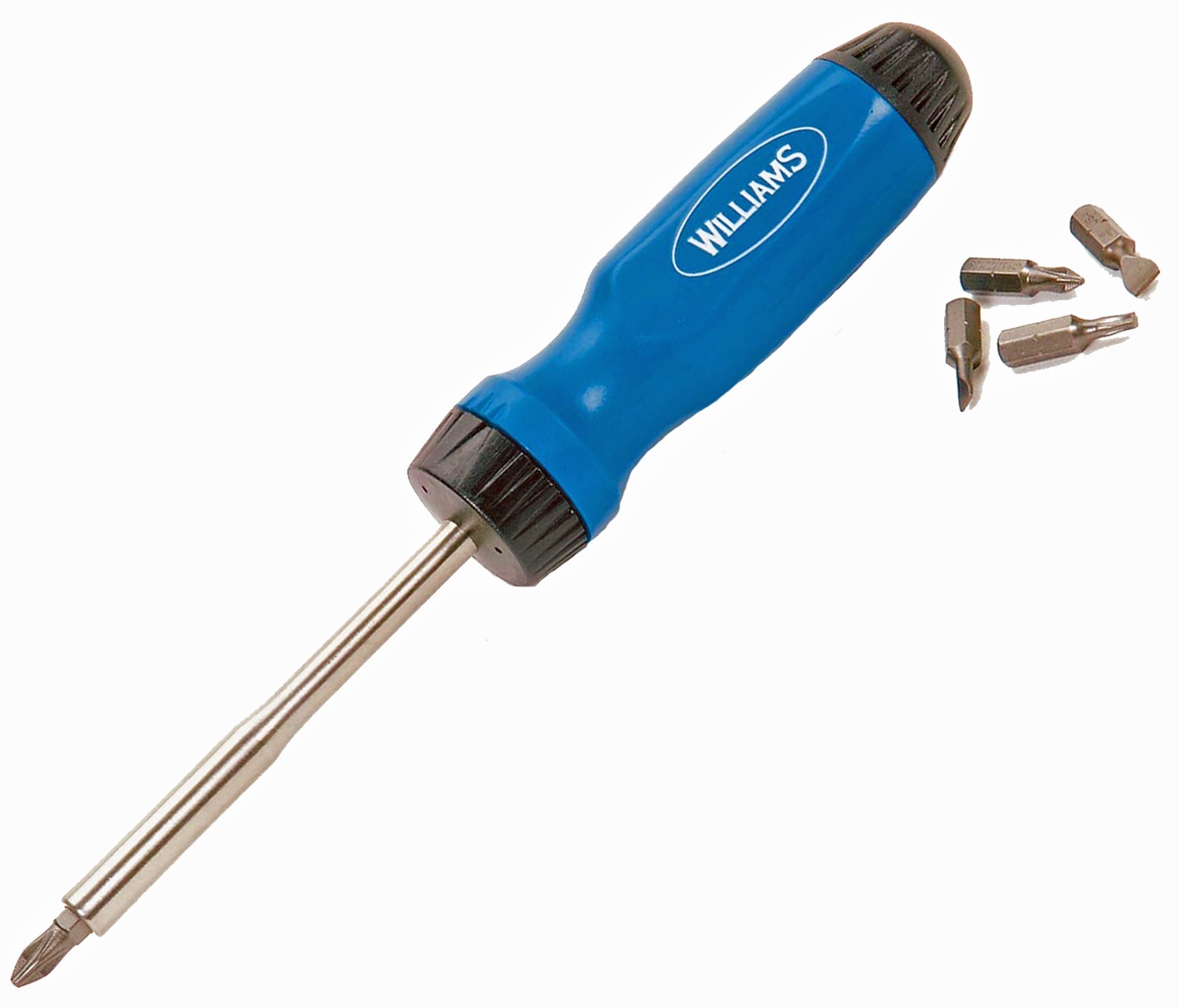 JH Williams Magnetic Ratcheting ScrewDriver with Comfort Grip 9"Length USA WRS-1$37.04
 View on eBay
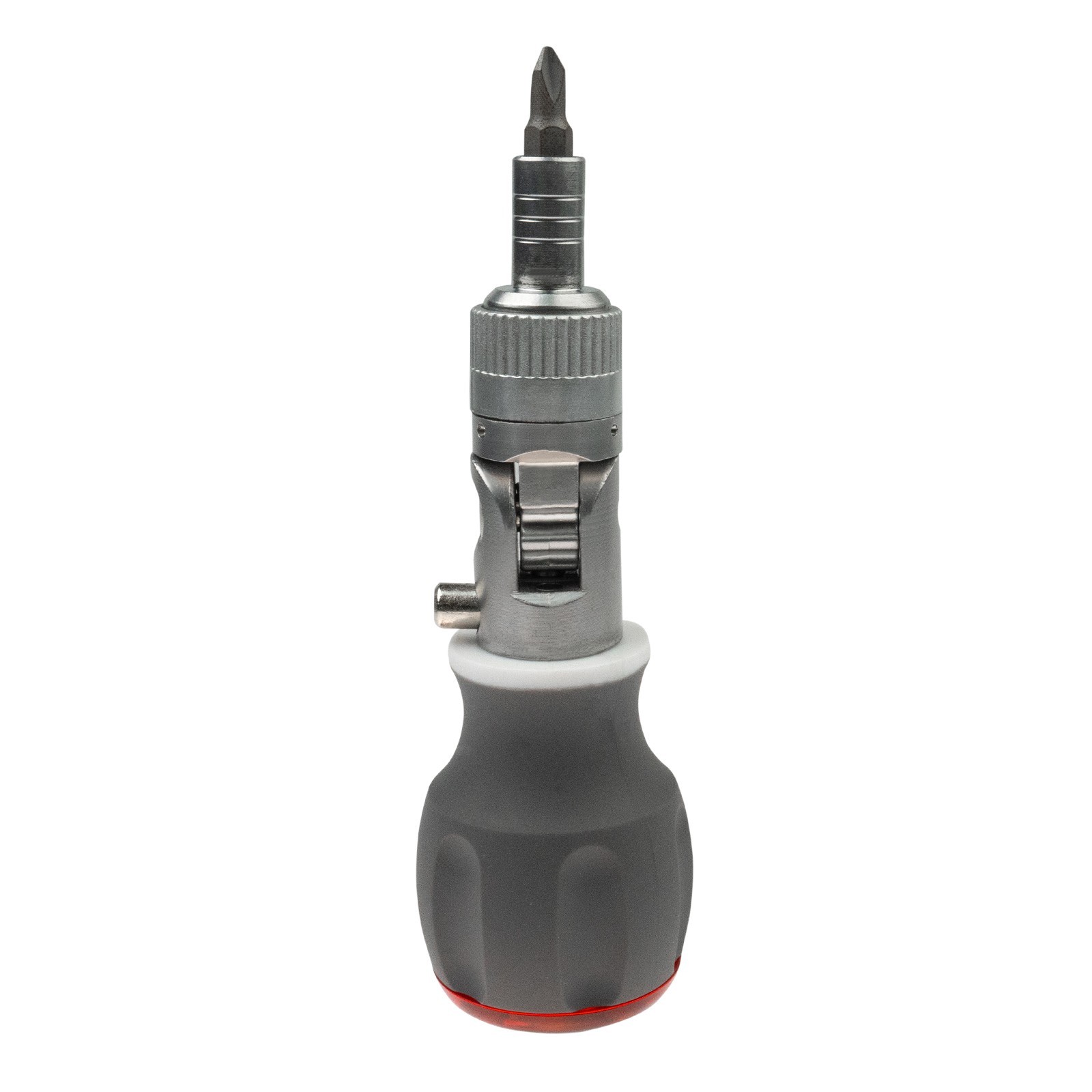 8-in-1 Ratcheting Compact Multi-Bit Screwdriver$3.99View on eBay
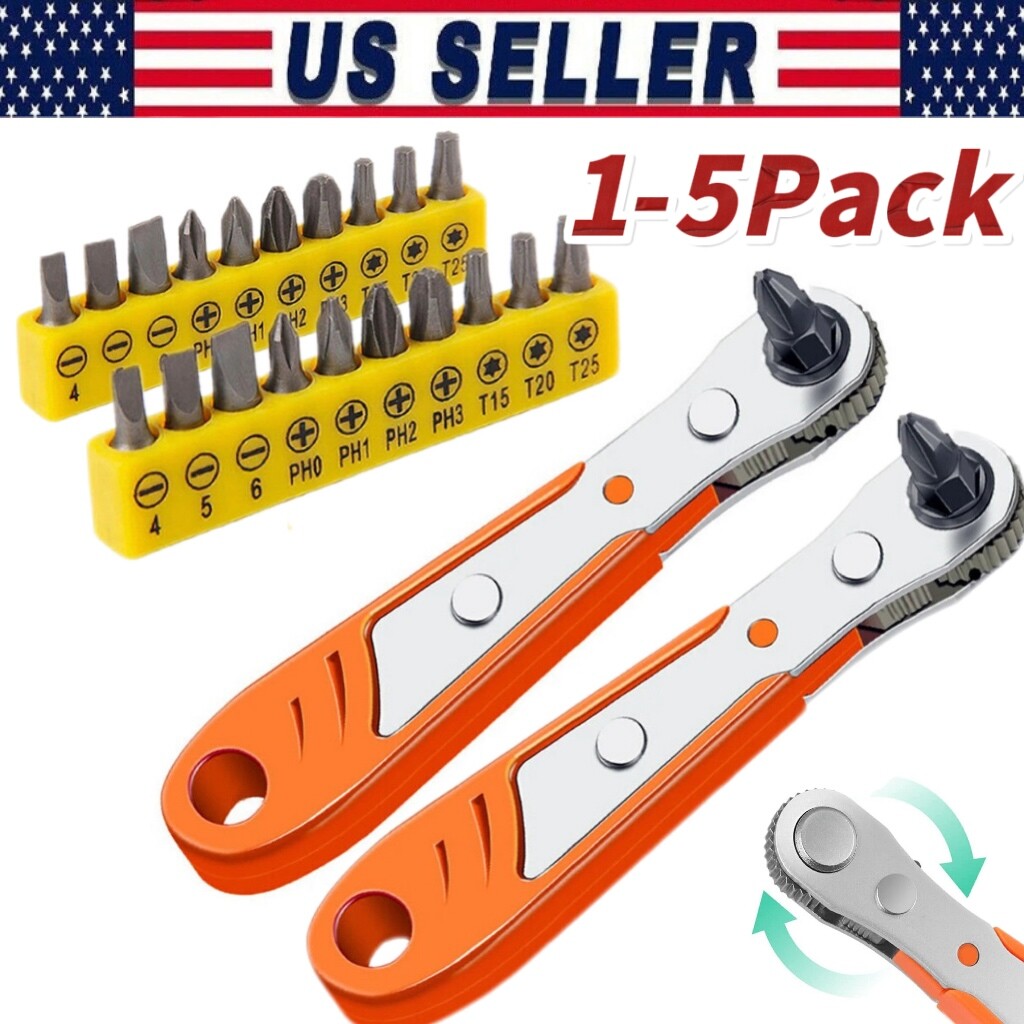 Ratcheting Right Angle Screwdriver Hex Drive 90 Degree Offset + 10PCS Bits Set$6.98View on eBay
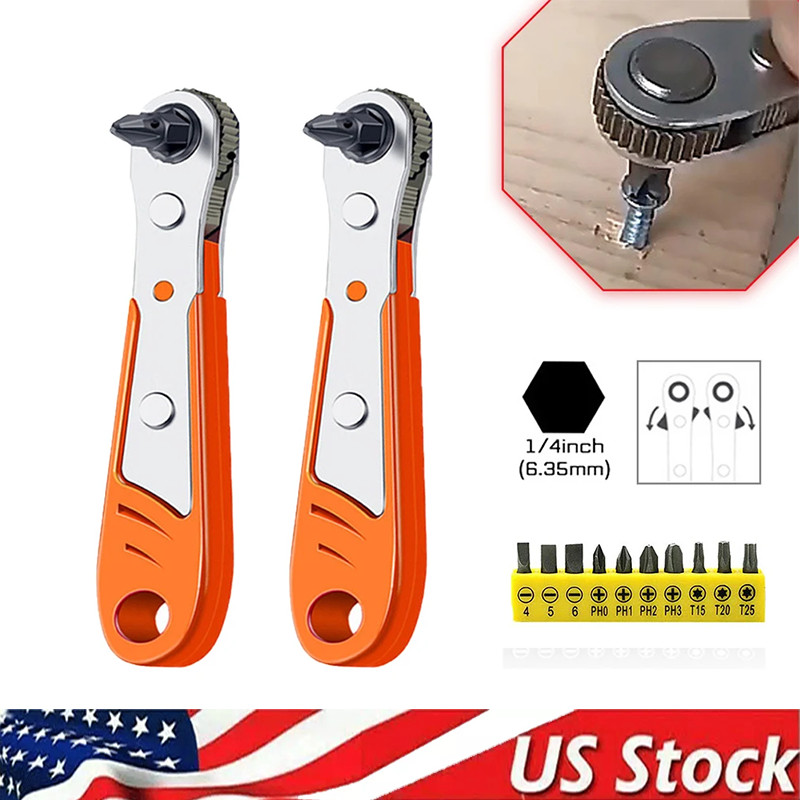 Ratcheting Right Angle Screwdriver Hex Drive 90 Degree Offset + 10pc Bits Set!$6.98View on eBay
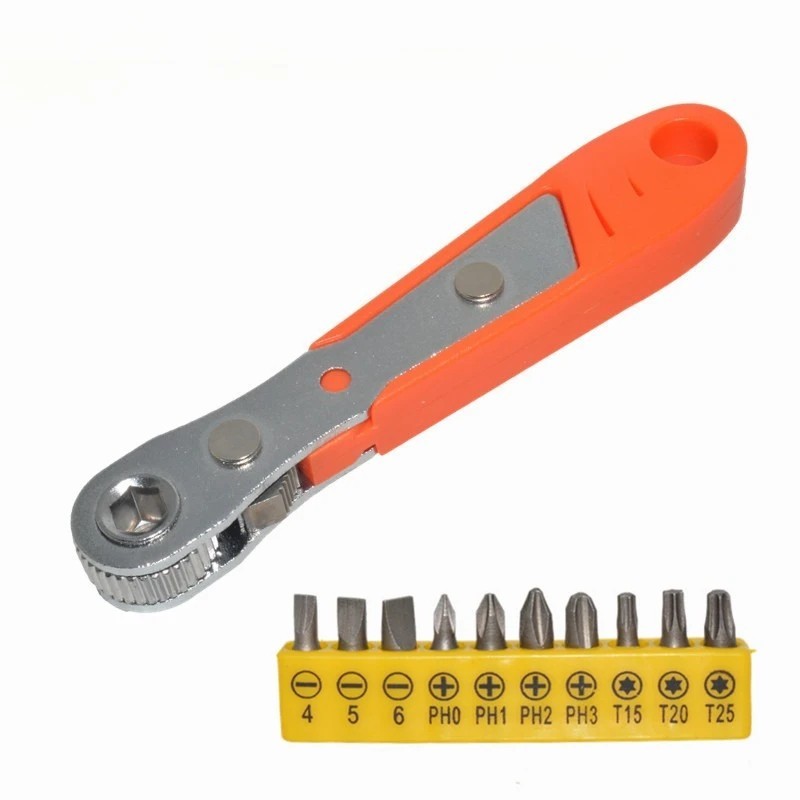 Ratcheting Right Angle Screwdriver Hex Drive 90 Degree Offset + 10pc Bits Set!$7.38View on eBay
 Ratcheting Right Angle Screwdriver Hex Drive 90 Degree Offset + 10pc Bits Set$8.49View on eBay
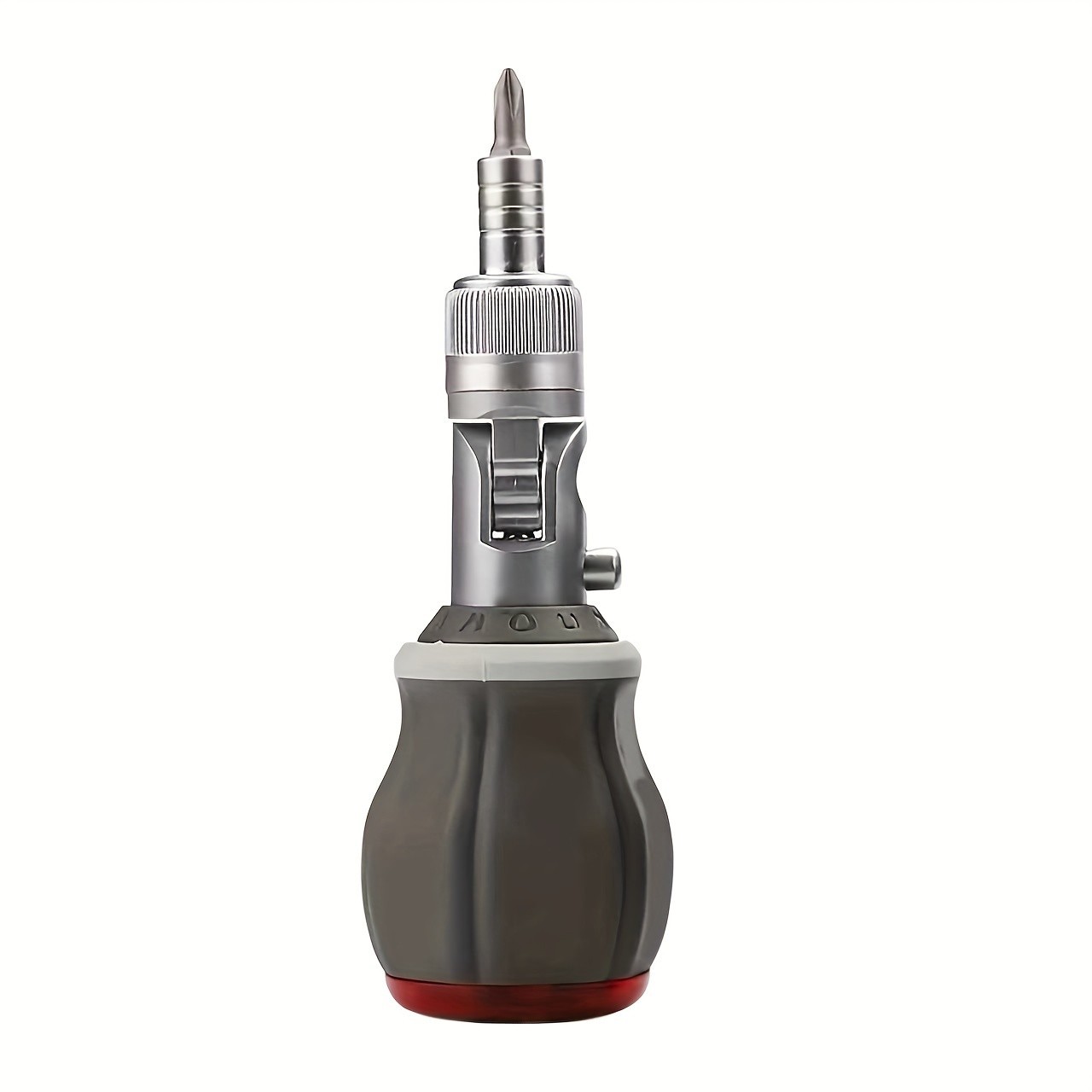 8-in-1 Ratcheting Compact Multi-Bit Screwdriver$13.49View on eBay
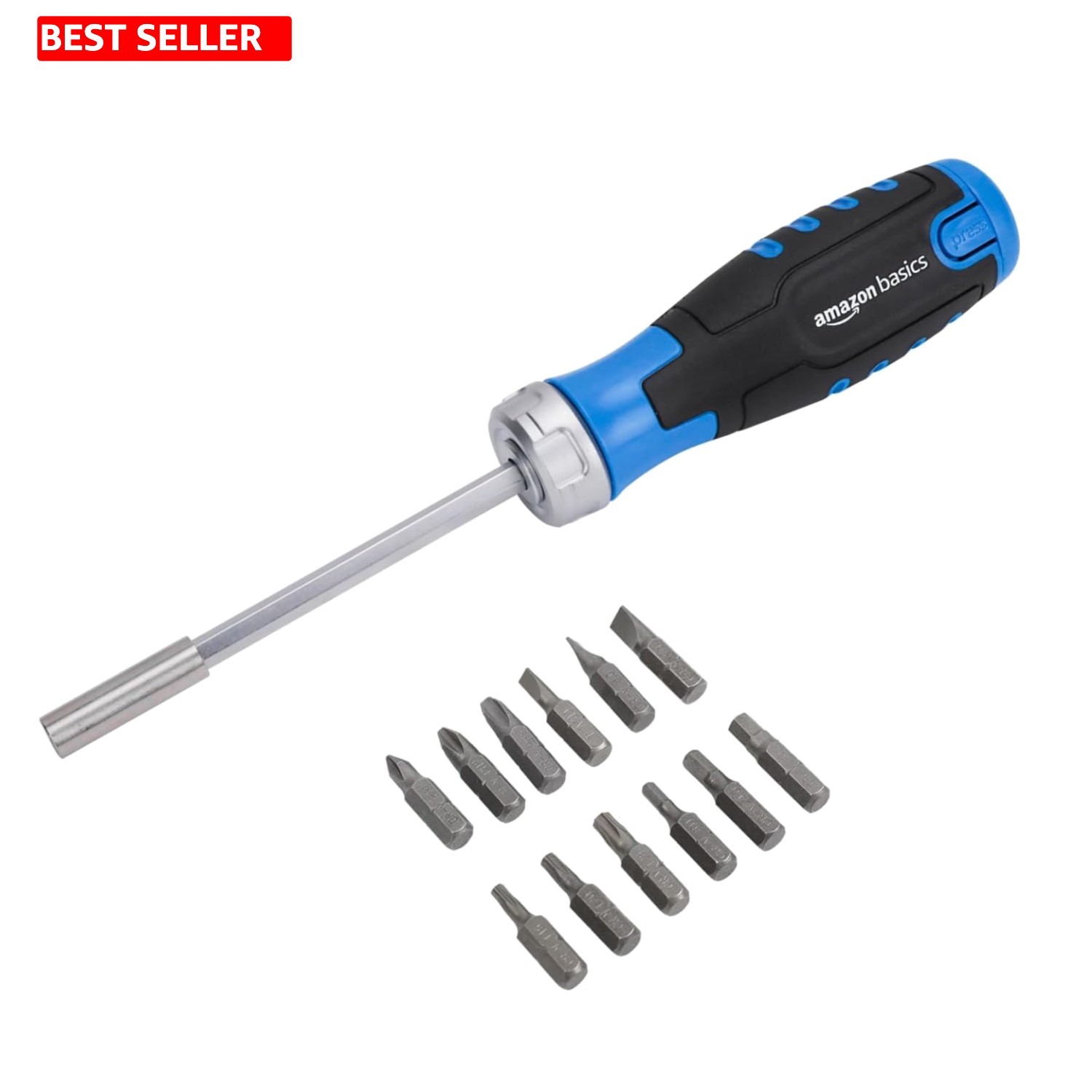 12-in-1 Ratcheting Magnetic Screwdriver with Bit Storage - Chrome Steel$13.99View on eBay
 25PC Hex Screwdriver Bit Set 1/4" Ratcheting Magnetic Bit Driver Metric and SAE$13.99View on eBay
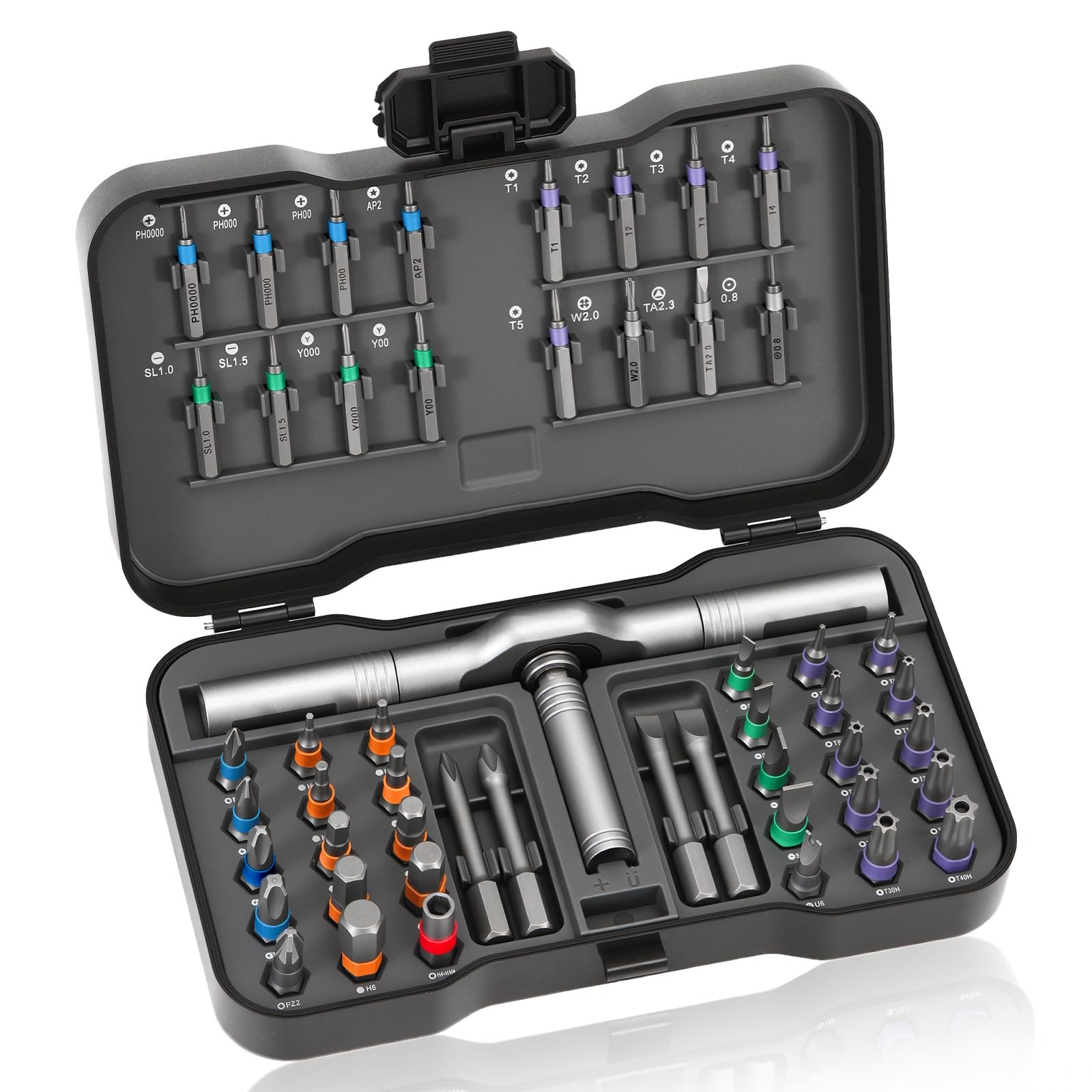 50 in 1 Magnetic Ratchet Screwdriver Set, Multi Bit Ratcheting Black$16.90View on eBay
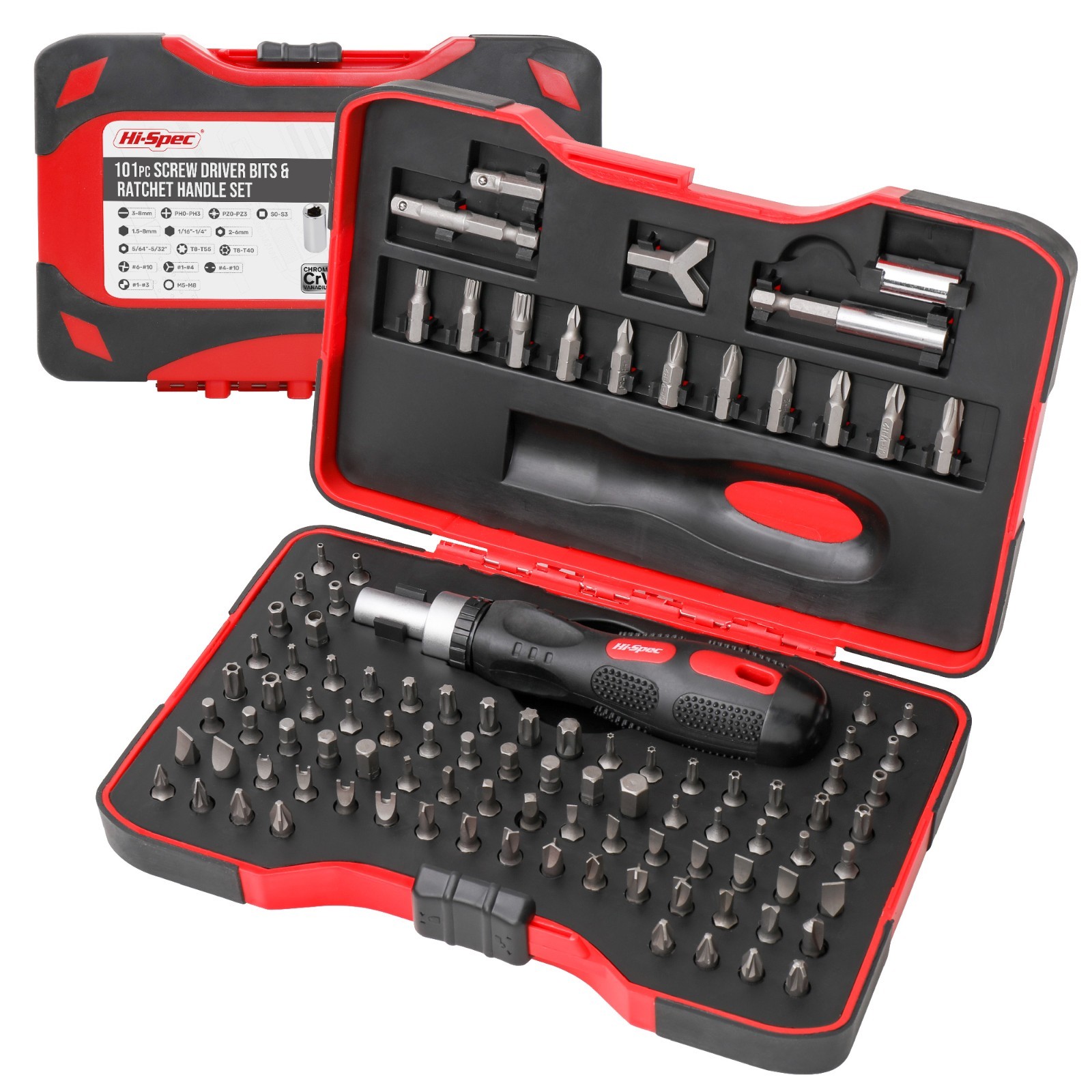 Hi-Spec 101pc 1/4” Hex Multi Bits Screwdriver & Ratcheting Handle Tool Set Kit.$23.68View on eBay
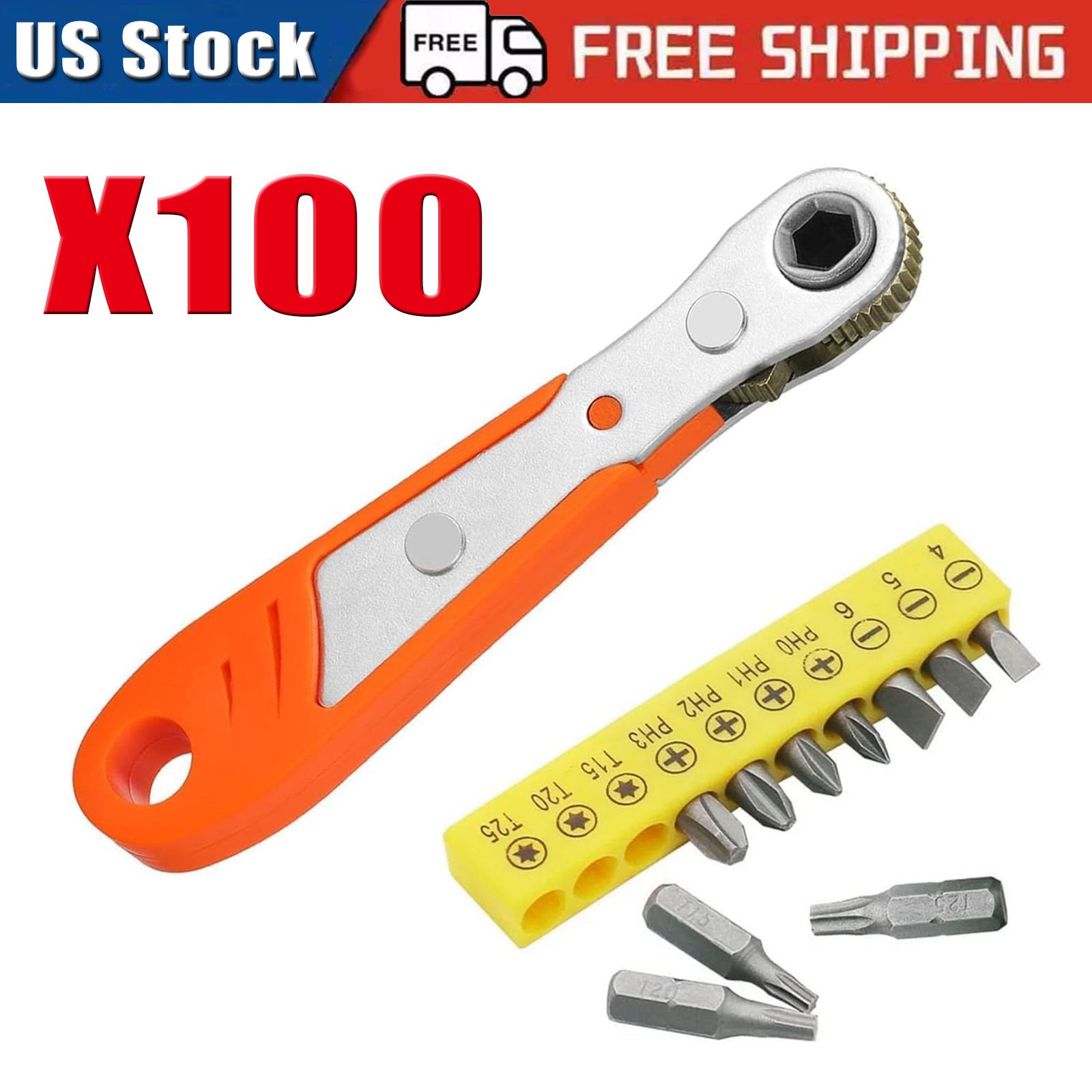 Ratcheting Right Angle Screwdriver Hex Drive 90 Degree Offset + 10pc Bits Set!$405.79Last checked Nov 16, 2026View on eBay
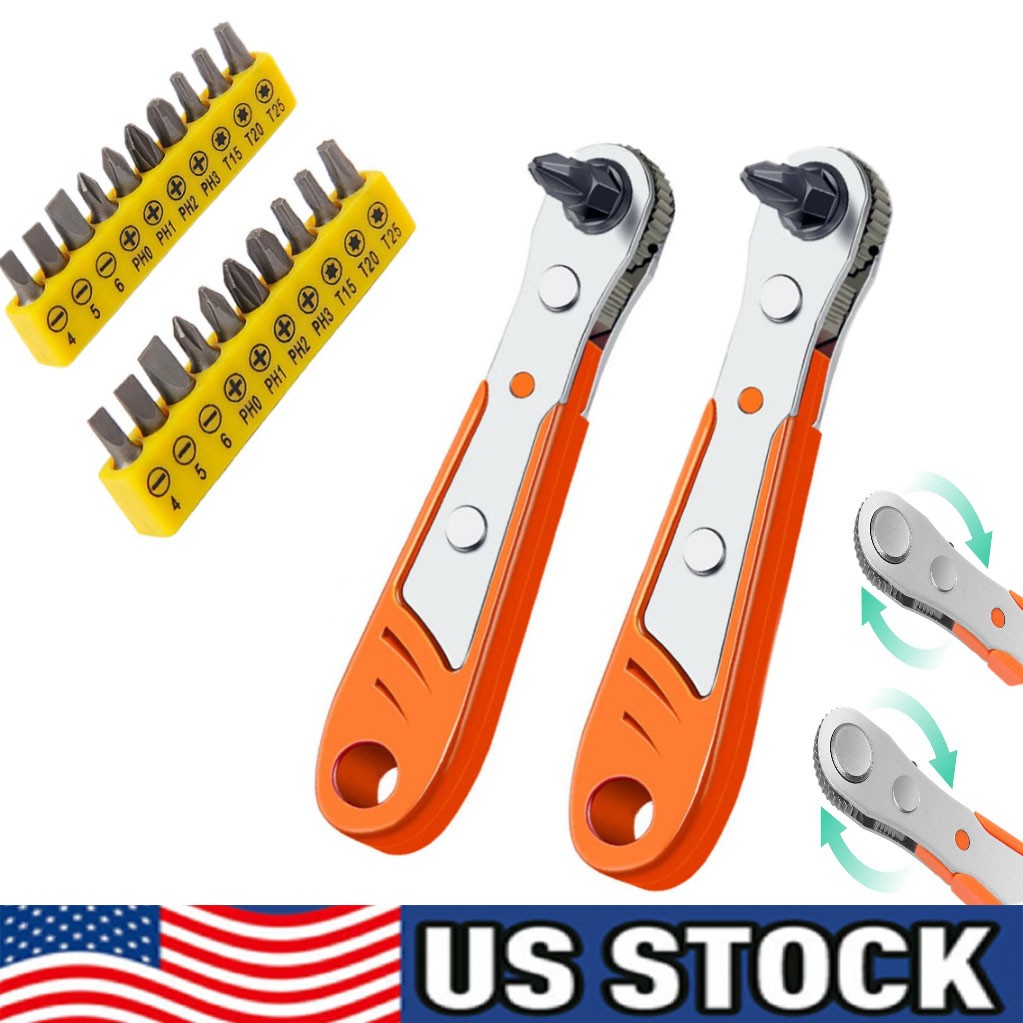 Ratcheting Right Angle Screwdriver Hex Drive 90 Degree Offset + 10PCS Bits Set$450.59Last checked Nov 17, 2026View on eBay
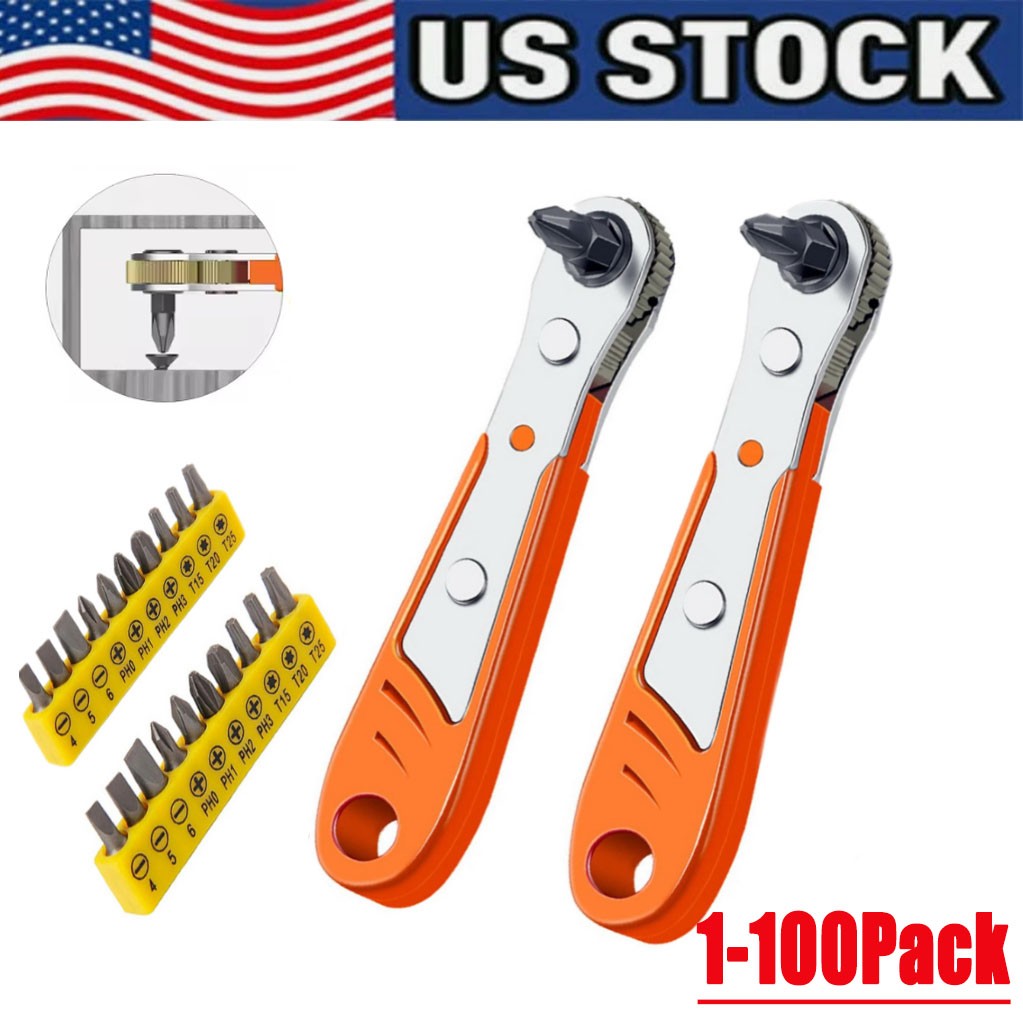 Ratcheting Right Angle Screwdriver Hex Drive 90 Degree Offset + 10PCS Bits Set$450.59Last checked Nov 16, 2026View on eBay
Highlights
- Ratchet tooth count determines swing arc: 20-24 teeth need ~15-18° of swing, while 40-60 teeth reduce that to ~6-9° for tight spaces.
- 1/4-inch hex (6.35 mm) is the universal bit standard; tools using proprietary or 4 mm bits lock you out of the largest bit ecosystem.
- Hardened S2 steel or chrome-vanadium bits resist cam-out and tip wear far better than soft carbon steel bits included with budget drivers.
- Multi-bit and right-angle models trade torque capacity for reach: right-angle 90° heads excel in confined spaces but are not built for high-torque fastening.
Best use cases
- Best fit: general home repair and furniture assembly — pick an 8-in-1 or 12-in-1 ratcheting driver with on-board bit storage and a comfort grip; skip right-angle models here because they lack straight-line torque.
- Best fit: cabinet, appliance, and automotive confined-space work — choose a right-angle 90° offset ratcheting driver with a 1/4-inch hex drive and a bit set; skip compact multi-bit drivers that cannot reach behind panels.
- Best fit: mechanics and repeated high-torque use — select a USA-made or hardened-steel ratcheting driver with a serviceable ratchet; skip low-tooth, sealed-ratchet budget drivers that slip under load.
Buying tips
- Match ratchet teeth to your workspace: choose 40+ teeth for tight cabinets and electronics, and accept 20-24 teeth only for open, high-torque fastening.
- Confirm the bit receiver is standard 1/4-inch hex so any replacement or specialty bit fits; avoid 4 mm micro-bit drivers unless you work exclusively on precision electronics.
- Look for S2 steel or chrome-vanadium bits and a hardened ratchet pawl; soft carbon steel bits cam out and round screw heads quickly.
- For multi-bit drivers, count usable bits and check that storage is on-board; loose bits in a pouch get lost and slow down every job.
Specs
| Ratchet Teeth | 20-24 coarse / 40-60 fine |
|---|---|
| Bit Drive Standard | 1/4-inch hex (6.35 mm) |
| Bit Steel Grade | S2 / Cr-V vs carbon steel |
| Handle / Grip Type | Comfort grip / multi-bit storage |
Related searches
What to check before buying
- Measure the clearance in your tightest work area: a right-angle head needs about 1.5-2 inches of offset room, while a straight driver needs full handle length.
- Verify your existing bit collection is 1/4-inch hex; if you own 4 mm precision bits, buy a separate precision driver rather than an adapter.
- Check handle diameter and grip material against your hand size; oversized smooth handles slip when hands are oily or gloved.
- Confirm the ratchet is reversible with a clear selector and that the tool ships with the bit sizes your fasteners actually use (Phillips #1/#2, Torx, hex).
FAQ
Data sources: eBay / Amazon listings and product attribute feeds Data updated Nov 20, 2026.
Some links on this page are affiliate links. If you buy after clicking one, we may earn a commission at no extra cost to you. This does not change which products appear here or their order. Affiliate disclosure.