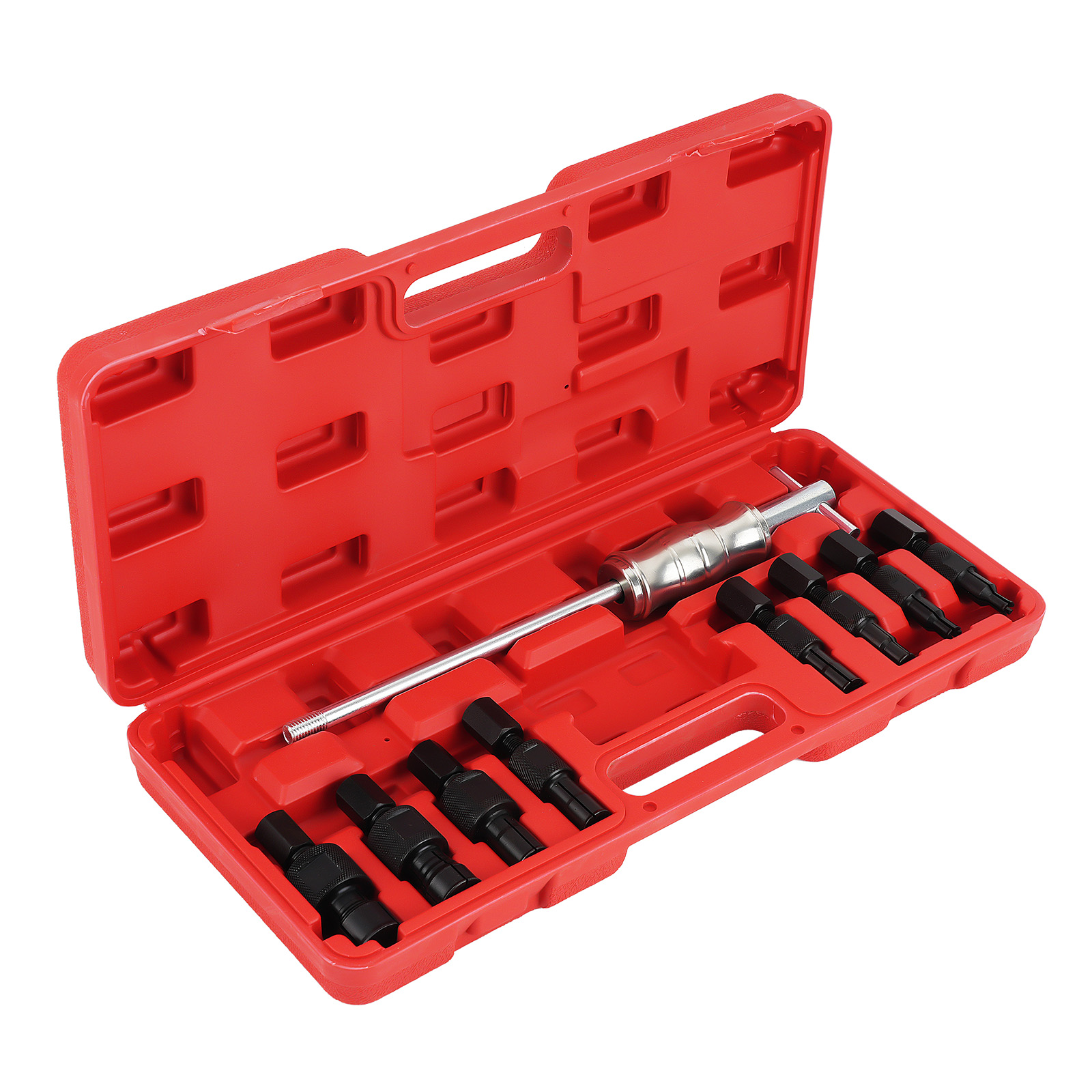

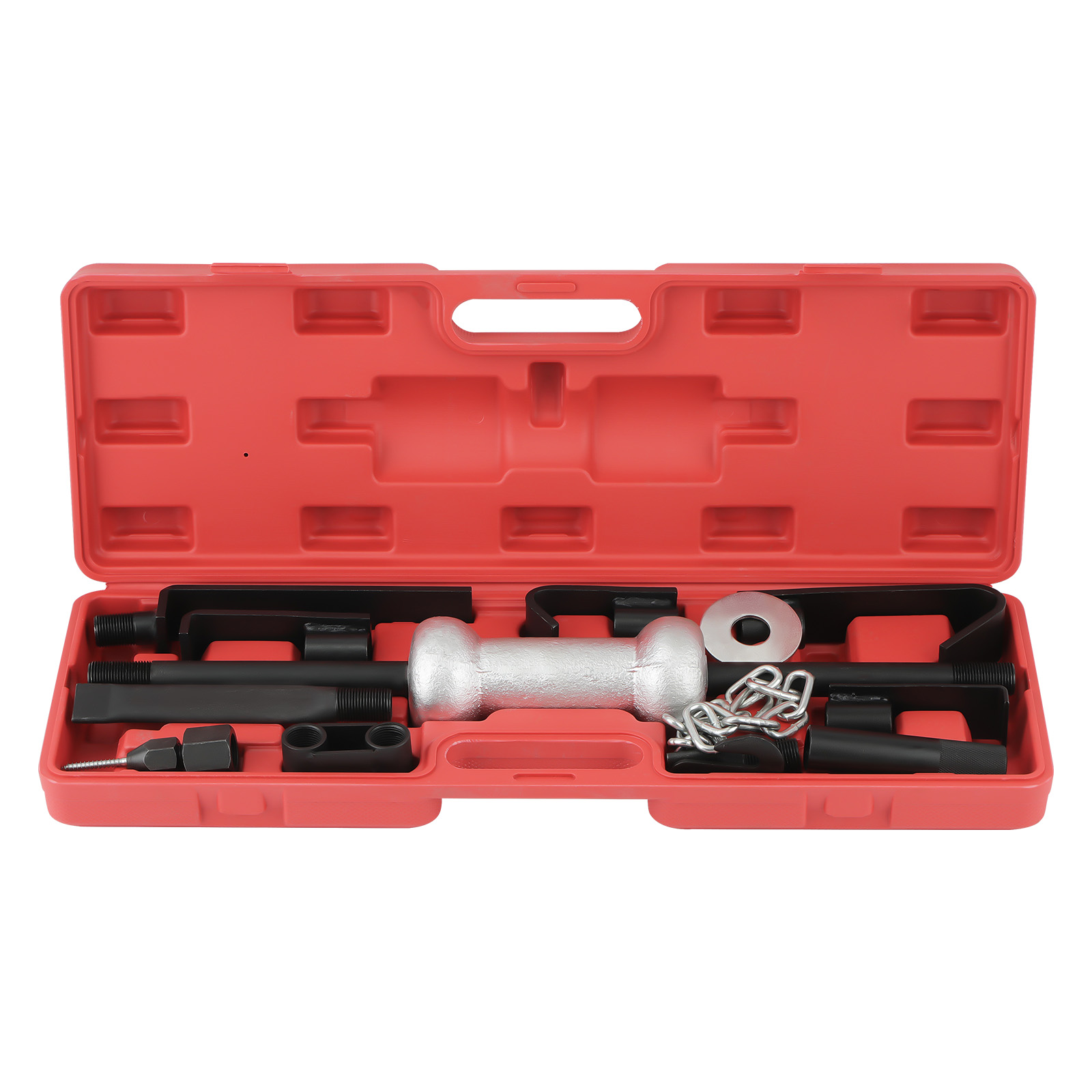
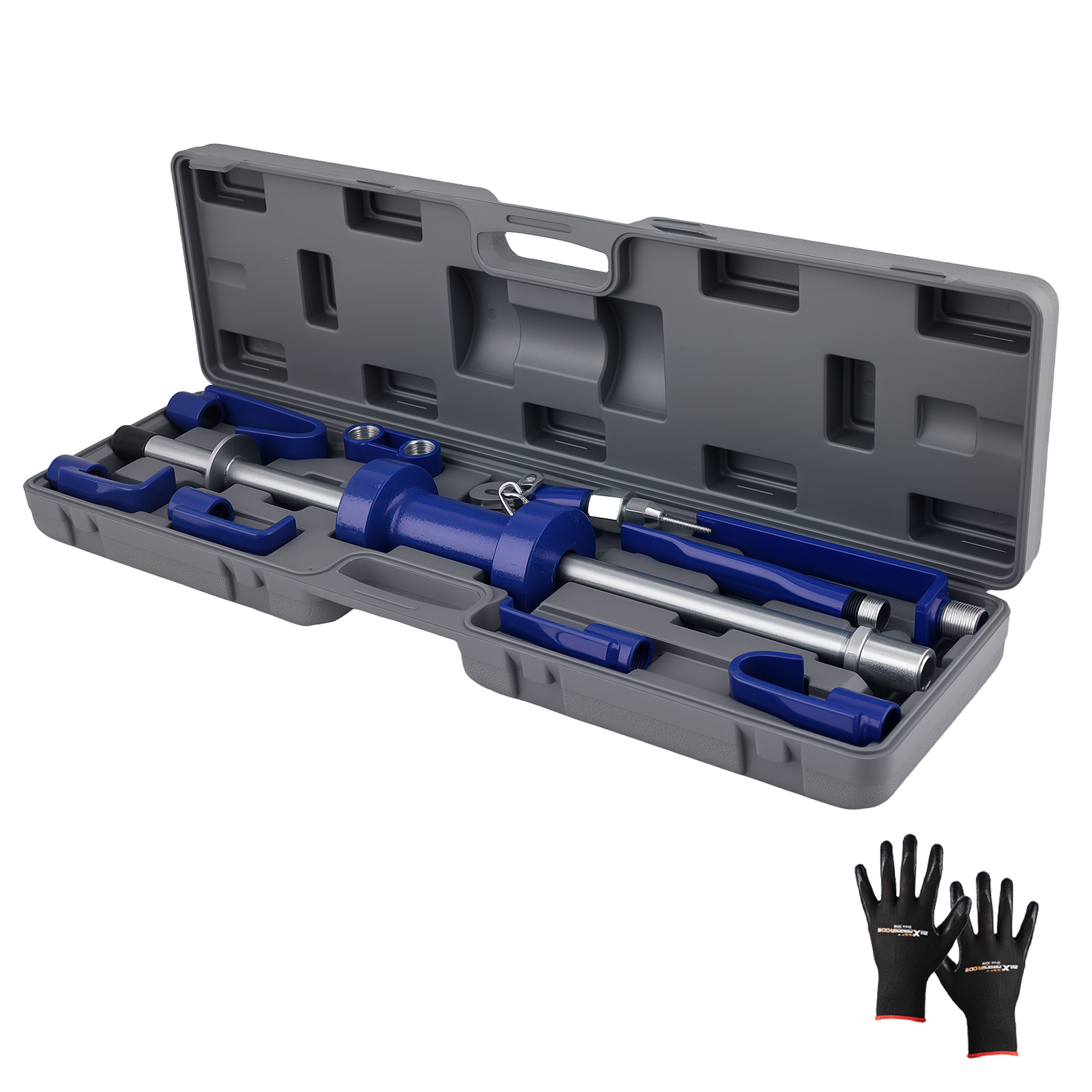
Photos from current listings. Actual item, color, and included accessories may vary.
Slide Hammer Bearing Puller Buying Guide
A slide hammer bearing puller converts a sliding weight's kinetic energy into a sharp axial pull, letting you extract press-fit bearings, hubs, and seals without a hydraulic press. The decisive trade-off is jaw reach and thread durability versus kit breadth: 3-jaw internal pullers cover blind holes, while 2-jaw and hub adapters handle exposed races and axle bearings. Buy by jaw spread range and slide-hammer mass, not by piece count—cheap kits skimp on heat-treated steel and shear at the jaw pivot.


At a glance
- Category
- Hand Tools
- Data updated
- Nov 20, 2026
Current offers
Highlights
- Internal 3-jaw pullers are sized by jaw spread (commonly 8-32mm or 12-38mm blind-hole ranges) and require the jaws to expand behind the bearing race, not grip its bore.
- Slide hammer mass drives extraction force: 1-2 lb hammers suit small pilot bearings and seals, 5 lb and up is required for axle hubs and seized races.
- Thread standards matter: 5/8-18 UNF and M14x1.5 are the common slide-hammer shank threads; adapters must match or you cannot swap attachments across kits.
- Heat-treated chrome-vanadium or S2 steel jaws with hardened tips resist spreading and chipping; mild-steel jaws deform under load and lose grip on tight races.
Best use cases
- Blind-hole bearings (wheel hubs, transmission, alternator): pick a 3-jaw internal set with 8-32mm spread and a 3-5 lb slide hammer; skip 2-jaw-only kits that cannot reach behind the race.
- Axle hubs and wheel bearings on cars: choose a kit with hub/axle adapters, 5 lb+ slide hammer, and 5/8-18 or M14 shank; skip light 1 lb dent-puller hammers that stall on press-fit hubs.
- Auto-body dent pulling: a dedicated dent-puller slide hammer with stud welder adapter is the right tool; skip bearing-puller jaw sets—they mar panels and lack the fine pulling control.
- Small engine and RC bearings: a compact 1-2 lb hammer with 8-20mm jaws is sufficient; skip full 18pc kits whose oversized jaws cannot fit small housings.
Buying tips
- Match jaw spread to bearing OD: jaws must open past the bore and hook behind the race—measure the bearing bore and pick a range that brackets it with 2-4mm margin.
- Choose slide-hammer mass by task: 1-2 lb for seals and small bearings, 3-5 lb for general automotive bearings, 5 lb+ for axle hubs and seized races.
- Confirm shank thread (5/8-18 UNF or M14x1.5) and that adapters, not just jaws, are included—kits without hub/axle adapters cannot pull wheel bearings.
- Prefer chrome-vanadium or S2 steel jaws and a hardened, ground slide rod; avoid cast or mild-steel jaws that mushroom at the pivot under load.
Specs
| Jaw Type | 3-jaw internal / 2-jaw / hub adapter |
|---|---|
| Jaw Spread Range | 8-32mm / 12-38mm blind-hole |
| Slide Hammer Mass | 1-2 lb light / 3-5 lb std / 5 lb+ heavy |
| Shank Thread | 5/8-18 UNF or M14x1.5 |
Related searches
What to check before buying
- Measure the bearing bore and the housing depth: jaw spread must exceed bore diameter, and the puller rod must be long enough to reach the race.
- Check access around the bearing—blind holes need 3-jaw internal pullers; through-holes and exposed races can use 2-jaw or hub adapters.
- Confirm your existing slide hammer thread matches the kit's shank if buying attachments only; mismatched threads render adapters useless.
- Verify slide-hammer weight versus task: a 1 lb hammer will not break free a rusted axle hub, and a 5 lb hammer can damage delicate small-engine cases.
FAQ
Data sources: eBay / Amazon listings and product attribute feeds Data updated Nov 20, 2026.
Some links on this page are affiliate links. If you buy after clicking one, we may earn a commission at no extra cost to you. This does not change which products appear here or their order. Affiliate disclosure.