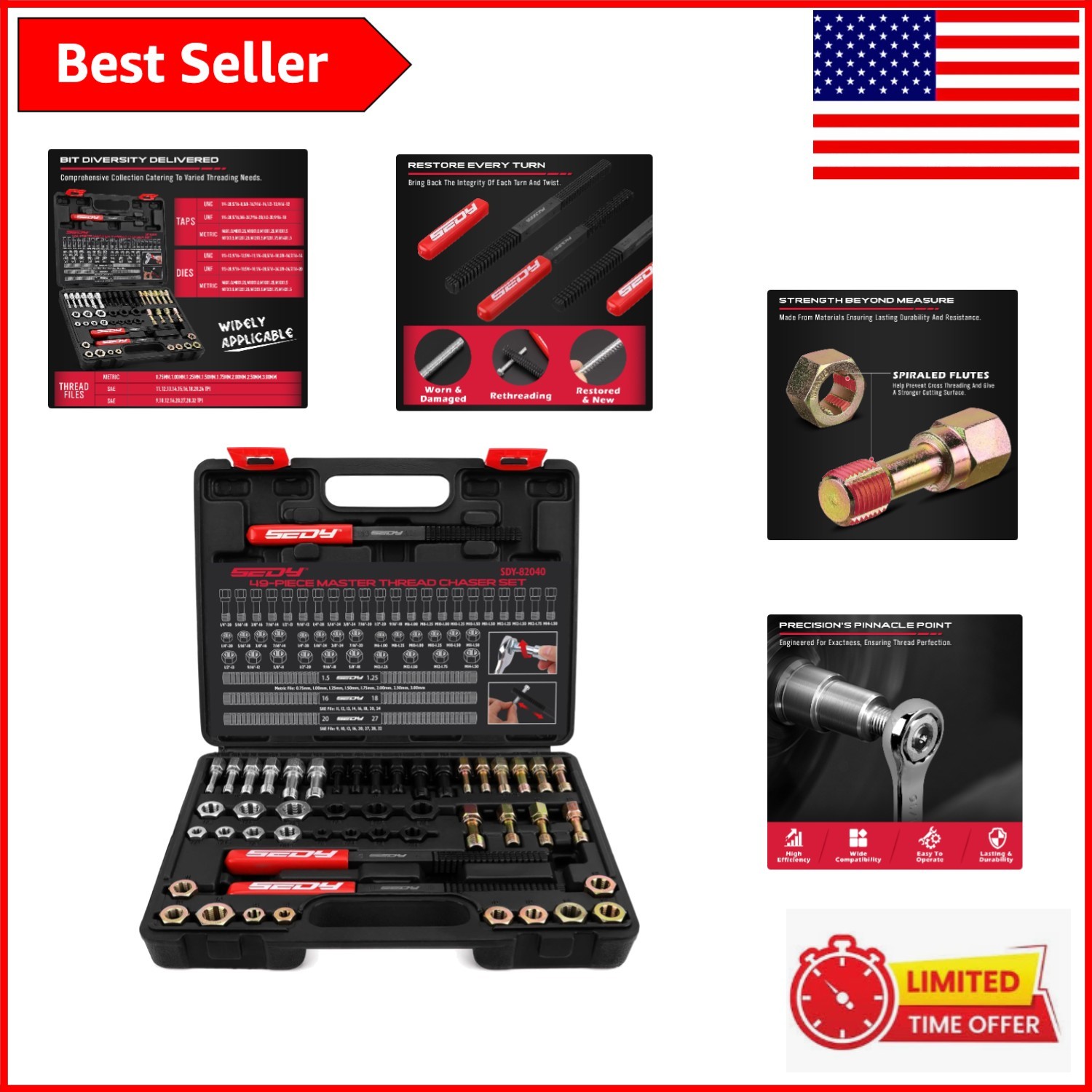

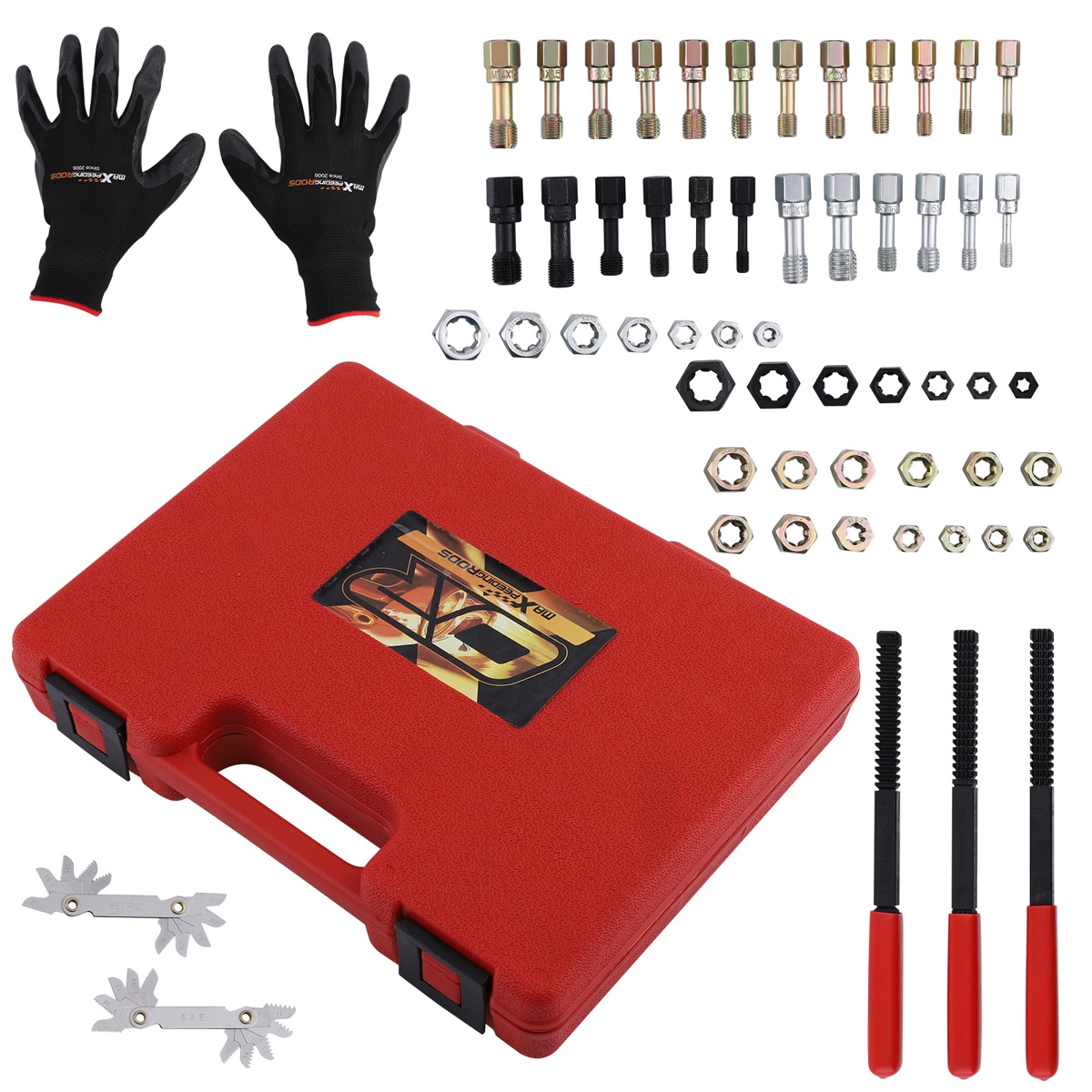
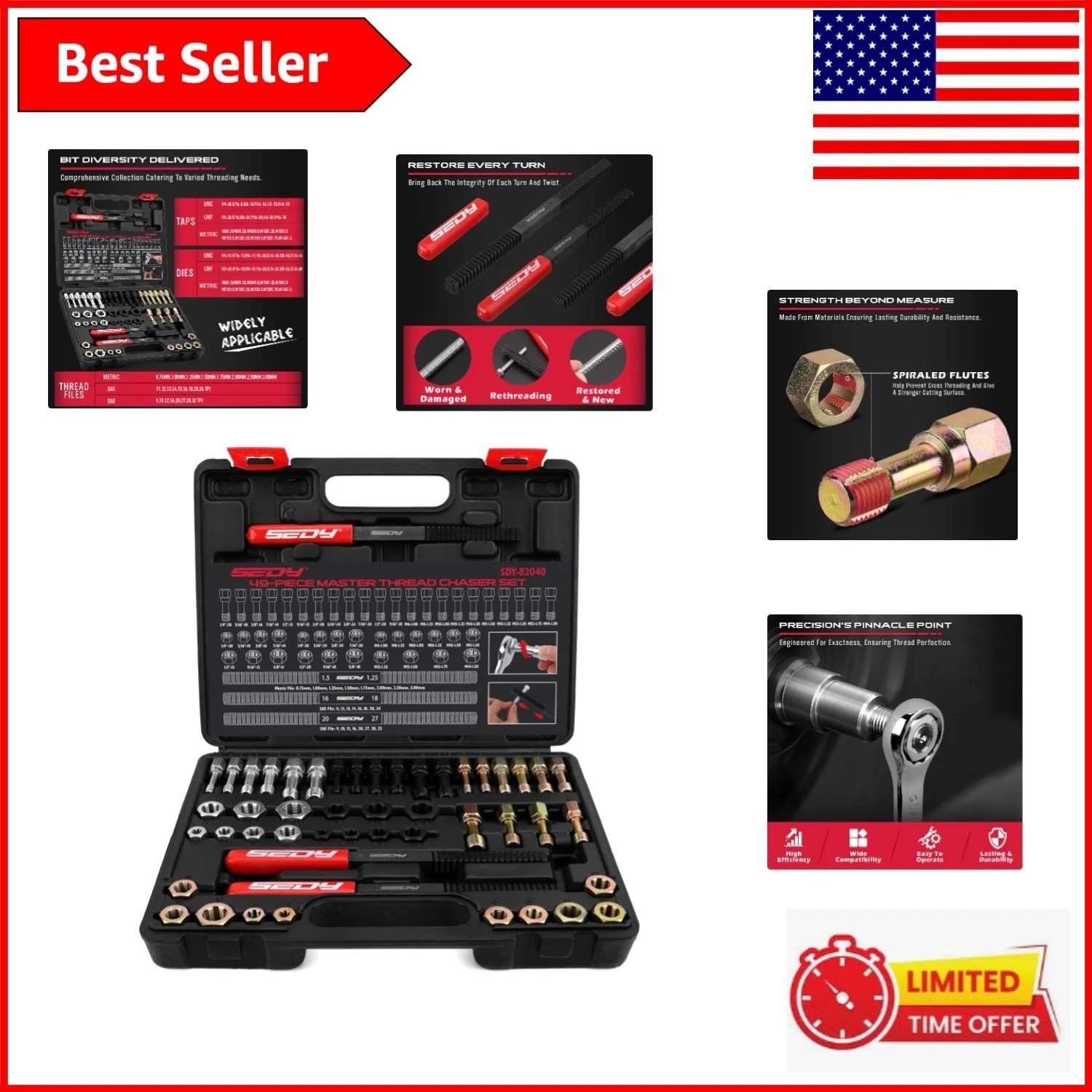
Photos from current listings. Actual item, color, and included accessories may vary.
Thread Chaser Kit Buying Guide
A thread chaser kit is a set of cleaning and reforming taps and dies designed to restore damaged or corroded threads without cutting new metal, unlike standard cutting taps that remove material. The primary trade-off is between hardened chaser-grade steel that reforms threads safely and cheap carbon-steel cutting taps that weaken fasteners. The decision rule is simple: buy chaser-specific tools with correct thread pitch coverage for your application, and skip any kit that lists standard cutting taps as thread repair tools.


At a glance
- Category
- Hand Tools
- Data updated
- Nov 20, 2026
Current offers
Highlights
- Chaser taps and dies are thread-forming (roll-forming) tools that compress and realign existing threads; cutting taps have sharp flutes that remove material and reduce fastener strength.
- Metric and SAE thread pitch coverage defines kit usefulness: a complete 49-piece set typically includes coarse and fine pitches across M6–M12 and 1/4–1/2 inch sizes.
- Chaser-grade tool steel (often hardened chrome-vanadium or HSS) resists galling and maintains pitch geometry better than carbon steel, which dulls and can cross-thread soft aluminum.
- Thread files in a kit handle external threads on studs and bolts where a die cannot reach; internal chasers handle spark plug, lug nut, and sensor ports.
Best use cases
- Best fit: automotive restoration and maintenance — pick a metric and SAE dual-scale chaser kit with spark plug and lug nut sizes to clean rusted exhaust studs, head bolt holes, and wheel studs without replacing hardware.
- Best fit: bicycle, motorcycle, and small engine repair — choose a compact kit with M5–M10 fine and coarse pitches plus thread files for derailleur hangers and engine case bolts.
- Wrong fit: production machining or cutting new threads in solid stock — chaser kits reform existing threads only; use a dedicated tap and die set with cutting flutes instead.
- Skip: any kit marketed as thread repair using standard cutting taps or helical inserts — those are rethreading or insert kits, not chasers, and will remove base material.
Buying tips
- Match pitch, not just diameter: a chaser labeled M10-1.5 restores only 1.5 mm pitch; confirm your vehicle or equipment uses that pitch (M10-1.25 is common on Japanese motorcycles).
- Choose hardened HSS or chrome-vanadium chasers over carbon steel; carbon steel chasers dull quickly and can gall aluminum threads during repeated use.
- Prefer kits that include both internal chasers (tap-style) and external chasers (die-style) plus a thread file — that trio covers bolt holes, studs, and damaged shaft threads.
- Verify SAE coverage includes both NC (coarse) and NF (fine) pitches; many 49-piece kits cover 1/4-20 through 1/2-20 plus M6 through M12 coarse and fine.
Specs
| Tool Type | Thread chaser (reforming) vs cutting tap |
|---|---|
| Material Grade | HSS or chrome-vanadium vs carbon steel |
| Thread Coverage | Metric M6–M12 + SAE 1/4–1/2 |
| Kit Contents | Internal + external chasers + thread file |
Related searches
What to check before buying
- Measure the fastener thread diameter and pitch with a thread pitch gauge before buying; kits missing your pitch add no value even if piece count is high.
- Confirm the kit includes a tap wrench or die stock handle sized for the chaser shanks; bare chasers without holders cannot be turned by hand.
- Check that the case or holder fits your toolbox drawer depth; 49-piece sets typically ship in a molded case around 12–14 inches long.
- For aluminum heads or soft castings, select chasers with rolled rather than cut threads to avoid removing base material from spark plug or sensor ports.
FAQ
Data sources: eBay / Amazon listings and product attribute feeds Data updated Nov 20, 2026.
Some links on this page are affiliate links. If you buy after clicking one, we may earn a commission at no extra cost to you. This does not change which products appear here or their order. Affiliate disclosure.