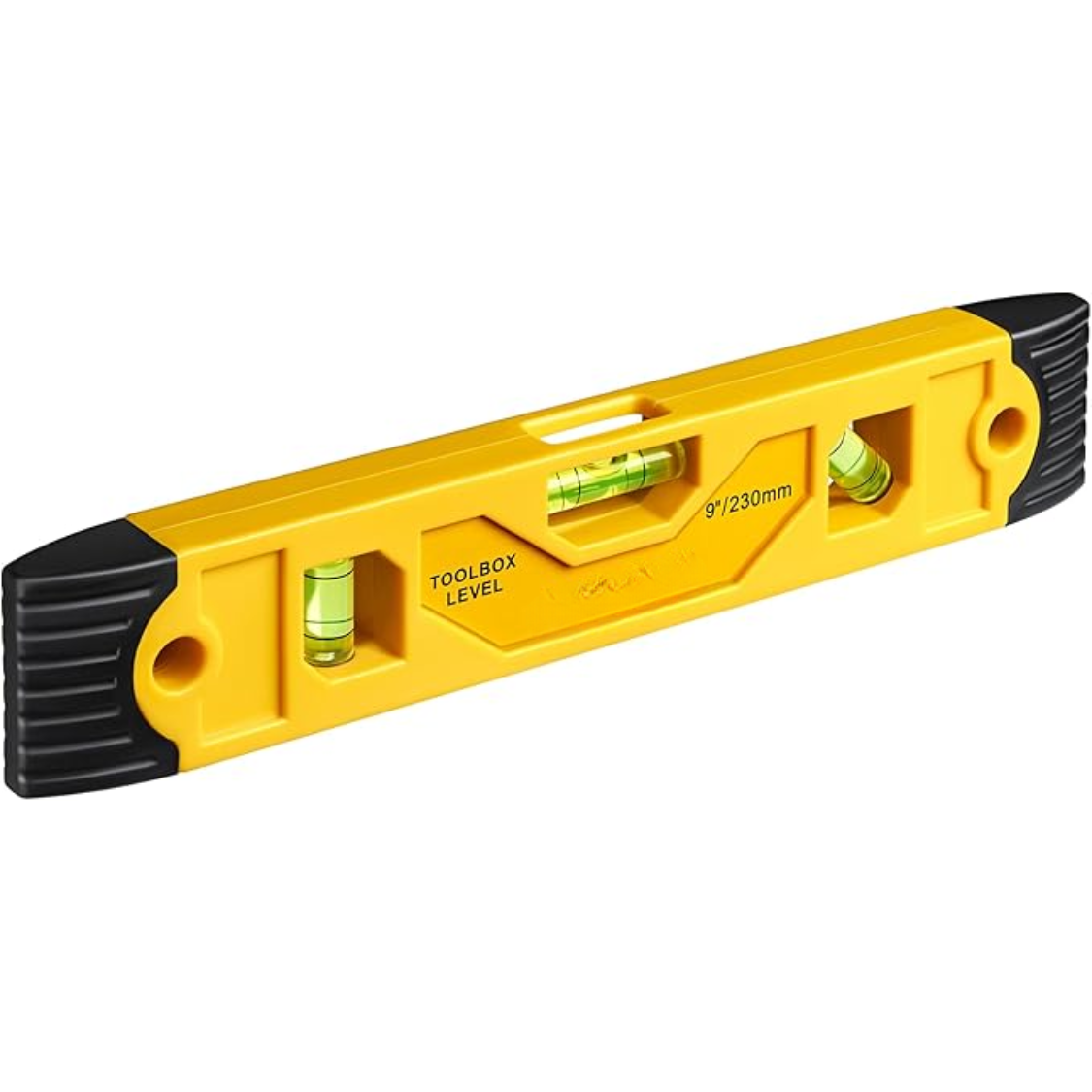

Photos from current listings. Actual item, color, and included accessories may vary.
Spirit Level Buying Guide
A spirit level is a precision reference tool whose accuracy hinges on vial sensitivity, frame rigidity, and calibration stability—not on cosmetic features. The core trade-off is machined aluminum or die-cast frames with adjustable, shock-mounted vials versus plastic or stamped bodies that drift after a single drop. The decision rule: buy a frame you can recalibrate and a vial rated to at least 0.5 mm/m; skip anything sealed, plastic, or unrated for accuracy.
At a glance
- Category
- Measuring & Layout Tools
- Data updated
- Nov 21, 2026
Current offers
Highlights
- Vial accuracy is graded in mm/m: 0.5 mm/m (approx. 0.029°) is the reliable standard for finish carpentry; 1.0 mm/m or unrated vials are layout-grade only.
- Machined aluminum frames resist twist and stay in calibration after drops; die-cast is acceptable, but plastic and stamped steel flex and lose truth.
- Adjustable vial assemblies with accessible screws let you recalibrate after impacts; sealed non-adjustable vials turn a dropped level into scrap.
- Small 9-inch levels trade length for portability—use them for hanging, shelf alignment, and tight spaces, not for checking long spans or slab flatness.
Best use cases
- Best fit: a 9-inch magnetic torpedo or small box level with 3 vials (45°/90°/180°) for hanging frames, aligning cabinet doors, and leveling appliances—pick adjustable, shock-mounted vials.
- Best fit: a 24- to 48-inch aluminum box level with 0.5 mm/m vials for framing, door/window installs, and countertop work—longer length reduces false reads on uneven surfaces.
- Wrong fit: a plastic or sealed-vial mini level for professional framing or repeated job-site abuse—it will not hold calibration and cannot be corrected.
- Wrong fit: a 9-inch level for checking a 6-foot wall or floor flatness—the short body bridges defects and gives a false 'level' read; use a 4-foot or longer straightedge level.
Buying tips
- Match level length to the span: use a level at least 2/3 the length of the surface being checked; a 9-inch level cannot validate a 36-inch cabinet run.
- Demand adjustable vials: look for visible screw mounts on the vial housing so you can recalibrate after drops rather than replacing the tool.
- For magnetic levels, verify the magnet grade holds on vertical steel—neodymium magnets in the frame base are the benchmark for hanging work on metal studs.
- Check vial sensitivity rating: 0.5 mm/m for finish work, 1.0 mm/m acceptable for rough layout; avoid unrated or 'high precision' claims without a mm/m figure.
Specs
| Vial Accuracy | 0.5 mm/m finish / 1.0 mm/m layout |
|---|---|
| Frame Material | Machined aluminum vs die-cast vs plastic |
| Vial Adjustability | Adjustable screws vs sealed non-adjustable |
| Level Length Class | 9 in small / 24-48 in box / 72 in+ |
Related searches
What to check before buying
- Measure the longest run you need to check and buy a level at least two-thirds that length; add a small 9-inch level only as a secondary tight-space tool.
- Confirm the frame has visible calibration screws or access ports on each vial—if the vials are sealed in plastic, reject it.
- For magnetic use, verify the base is flat and the magnets sit flush; a raised or gapped magnet strip weakens hold on steel studs and beams.
- Check vial readability: bright contrast fluid and clear magnified lenses matter more than vial count—three vials are useless if the bubble is hard to read outdoors.
FAQ
Data sources: eBay / Amazon listings and product attribute feeds Data updated Nov 21, 2026.
Some links on this page are affiliate links. If you buy after clicking one, we may earn a commission at no extra cost to you. This does not change which products appear here or their order. Affiliate disclosure.