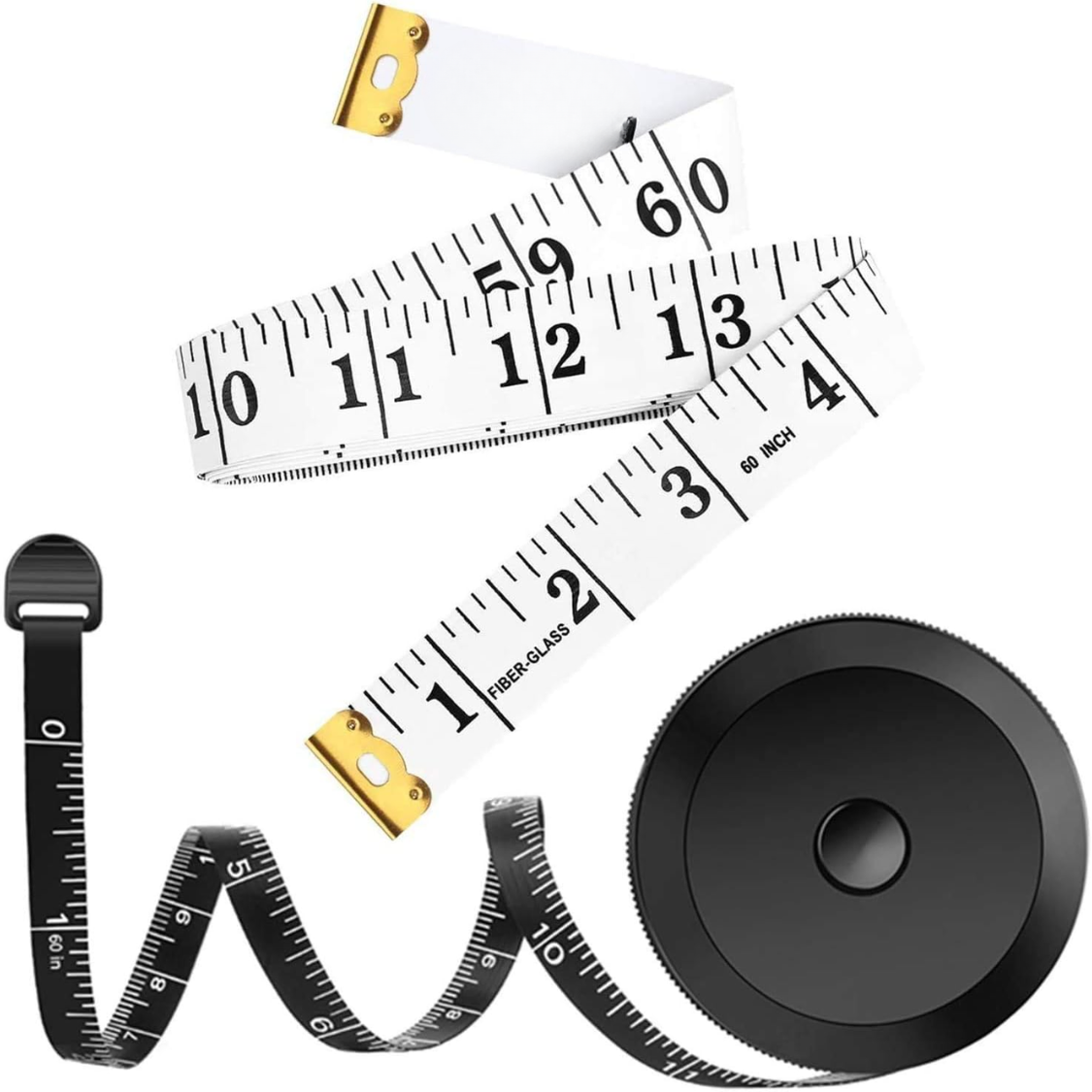

Photos from current listings. Actual item, color, and included accessories may vary.
Body Measuring Tape Buying Guide
Body measuring tapes are flexible, retractable tools for taking circumference and length measurements on the human body, tailored for fitness tracking, tailoring, and health monitoring. The core trade-off is between thin, stretch-prone vinyl tapes that lose accuracy and spring-loaded retractable units with locking pins and firm, non-stretch fiberglass or reinforced plastic blades. Choose a retractable, lockable tape with dual-unit markings and a secure pin-and-slot end fitting; skip flat, unmarked sewing tapes for body work.


At a glance
- Category
- Measuring & Layout Tools
- Data updated
- Nov 20, 2026
Current offers
Highlights
- Retractable body tapes use a spring-loaded internal reel with a push-button lock; non-locking tapes require a second hand and drift during self-measurement.
- Blade material determines accuracy: fiberglass-reinforced or coated plastic resists stretching; plain vinyl or cloth tapes stretch over time and read long.
- Dual-scale markings (inches and centimeters) with clear 1/8-inch or 1-millimeter graduations are standard for body and tailoring use.
- End fittings vary: pin-and-slot, snap-hook, or simple metal tab; a pin-and-slot or snap-hook secures the tape to itself for solo circumference readings.
Best use cases
- Best fit: self-tracking waist, hips, chest, and arm measurements — pick a retractable locking tape with a pin-and-slot end so you can tension the loop one-handed.
- Best fit: sewing and tailoring — choose a dual-scale flexible tape with fine graduations and a firm, non-stretch blade; retractable is optional but convenient.
- Wrong fit: measuring curved furniture or pipe — use a contour gauge or outside caliper instead; a body tape flexes and cannot hold a rigid profile.
- Wrong fit: heavy daily trade use — body tapes have thin blades and light springs; a steel-blade retractable tape (e.g., 16-25 ft) is the correct tool.
Buying tips
- Match tape length to body circumference: 60-inch (150 cm) covers most limb and waist needs; 80-inch (200 cm) is safer for chest and hip measurements on larger frames.
- Check blade width: 0.5-inch (12-13 mm) is common and flexible; wider blades resist twisting but are bulkier in the retractor.
- Prefer fiberglass-reinforced or coated blades over plain vinyl; vinyl stretches and reads long after repeated tension.
- For solo use, require a locking button and a pin-and-slot or snap end; friction-only retractors slip and give inconsistent readings.
Specs
| Blade Material | Fiberglass-reinforced vs vinyl/cloth |
|---|---|
| Tape Length | 60 in (150 cm) / 80 in (200 cm) |
| Retractor Lock | Push-button lock vs friction-only |
| End Fitting | Pin-and-slot / snap-hook / tab |
Related searches
What to check before buying
- Confirm the tape length exceeds your largest circumference by at least 6 inches (15 cm) so the end fitting can overlap and lock.
- Verify the retractor case has a locking mechanism and a belt clip or lanyard if you plan one-handed self-measurement.
- Check unit markings on both edges (inches and centimeters) with 1/8-inch or 1-millimeter graduations for tailoring accuracy.
- Ensure the end fitting type (pin-and-slot, snap-hook, or tab) matches how you will anchor the tape around a body part.
FAQ
Data sources: eBay / Amazon listings and product attribute feeds Data updated Nov 20, 2026.
Some links on this page are affiliate links. If you buy after clicking one, we may earn a commission at no extra cost to you. This does not change which products appear here or their order. Affiliate disclosure.