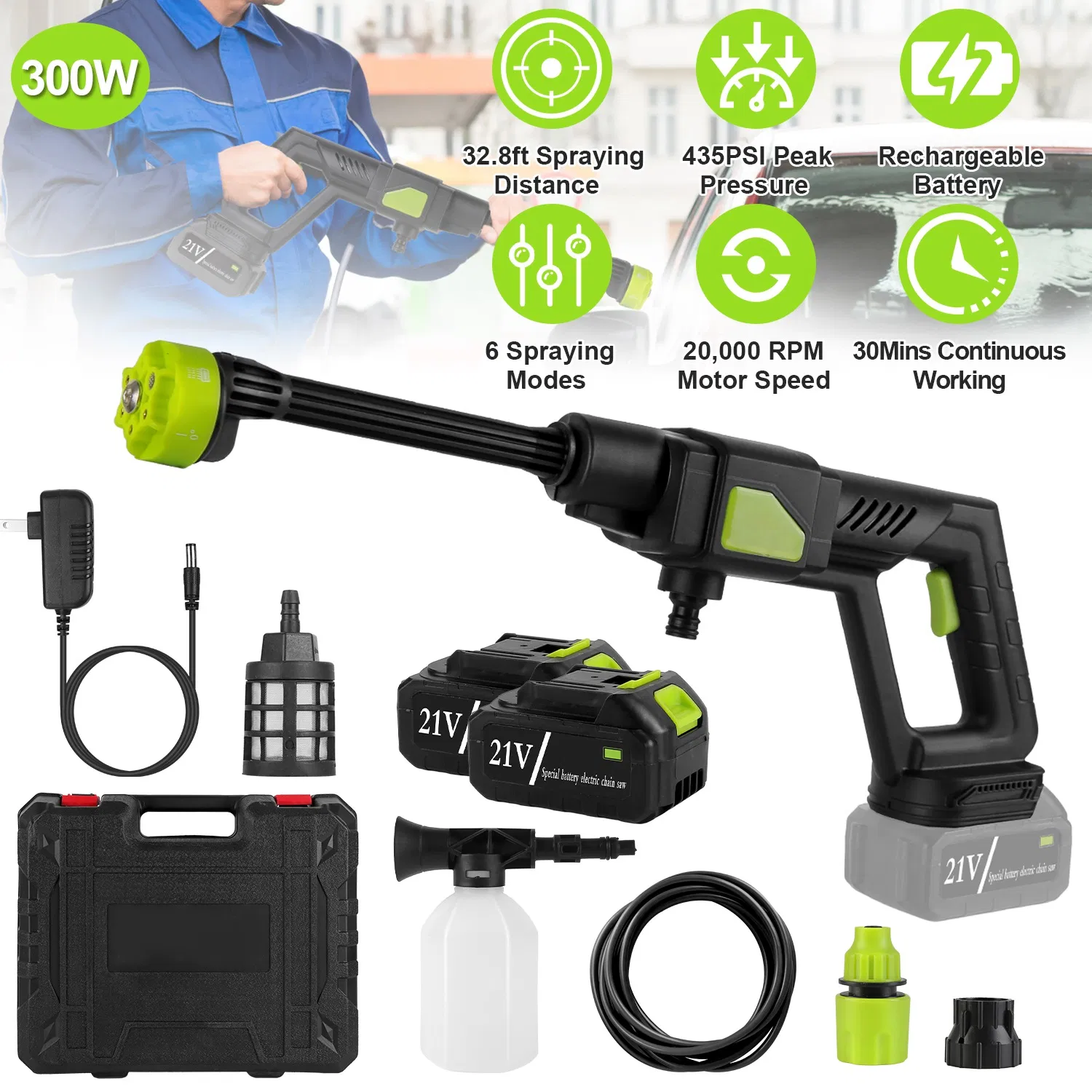

Photos from current listings. Actual item, color, and included accessories may vary.
Power Washer Buying Guide
Power washers (pressure washers) are motorized sprayers that use a high-pressure water stream to strip dirt from vehicles, siding, decks, and equipment. The core trade-off is PSI/GPM capability versus portability and power source: corded electric units deliver sustained pressure for heavy cleaning, while battery and portable units trade pressure and run time for freedom from outlets. The decisive rule: match PSI, GPM, and power source to the job scale — sustained 2000+ PSI corded for home exteriors, 1000–1800 PSI electric for cars and patios, and battery portables only for light rinse-and-spot work where a hose is unavailable.


At a glance
- Category
- Power Tools
- Data updated
- Nov 20, 2026
Current offers
Highlights
- Corded electric units typically sustain 1300–3000 PSI and 1.2–2.5 GPM; gas units reach 2800–4400 PSI, but battery portables usually cap near 400–800 PSI with far lower flow.
- Cleaning power is PSI × GPM (cleaning units), not PSI alone — a 2000 PSI / 1.2 GPM unit outperforms a 3000 PSI / 0.8 GPM unit on broad surfaces.
- Pump construction separates tiers: axial cam pumps suit occasional light use, while triplex plunger pumps with ceramic pistons and brass heads handle daily or commercial duty.
- Battery portables draw from 18–21V packs (often 4.0–6.0Ah) and sip from any bucket or bottle; they are rinse tools, not strippers, and run 15–30 minutes per charge.
Best use cases
- Best fit: cars, patio furniture, and small decks — pick a 1600–2000 PSI corded electric with adjustable nozzle and detergent tank; skip 3000+ PSI gas units that can etch paint and concrete.
- Best fit: driveways, siding, and fences — choose 2800–3200 PSI gas or 2000+ PSI corded electric with 2.0+ GPM and a turbo nozzle; skip battery portables that lack sustained flow for large areas.
- Best fit: apartment balconies, campers, and hose-free rinse jobs — a 21V battery portable with bucket draw and 6-in-1 nozzle is correct; skip it for paint prep, mold removal, or anything needing 1500+ PSI.
- Wrong fit: heavy daily commercial cleaning — homeowner axial-pump units burn out; step up to a triplex-pump unit rated for continuous duty and serviceable parts.
Buying tips
- Size by cleaning units: for home exteriors target 2000+ PSI at 1.8+ GPM (3600+ CU); for cars target 1200–1800 PSI at 1.4+ GPM to avoid paint damage.
- Prefer triplex plunger pumps with brass or ceramic internals over axial cam pumps when the unit will run more than a few hours monthly.
- Check hose length and nozzle set: 25–35 ft high-pressure hose plus 0°, 15°, 25°, 40°, and soap nozzles covers stripping through rinsing without add-ons.
- For battery portables, confirm the pack voltage and Ah (18–21V, 4.0Ah+) and that the intake draws from any bucket; proprietary batteries limit replacement options.
Specs
| Power Source | Corded electric / Gas / Battery |
|---|---|
| Pressure Range | 400–4400 PSI by class |
| Flow Rate | 0.8–2.5 GPM |
| Pump Type | Axial cam vs triplex plunger |
Related searches
What to check before buying
- Measure your outdoor outlet distance and hose reach — corded electric needs a GFCI outlet within cord-plus-hose length of the work area.
- Confirm water supply: most corded units need 3–4 GPM household flow; battery portables need only a bucket or bottle.
- Check surface compatibility: concrete and brick tolerate 2500+ PSI; car paint, wood decks, and siding need 1200–2000 PSI with wider nozzles.
- Verify storage and weight: gas units run 50–80 lb and need ventilated storage; electric and battery units are lighter but require dry storage for pump and battery life.
FAQ
Data sources: eBay / Amazon listings and product attribute feeds Data updated Nov 20, 2026.
Some links on this page are affiliate links. If you buy after clicking one, we may earn a commission at no extra cost to you. This does not change which products appear here or their order. Affiliate disclosure.