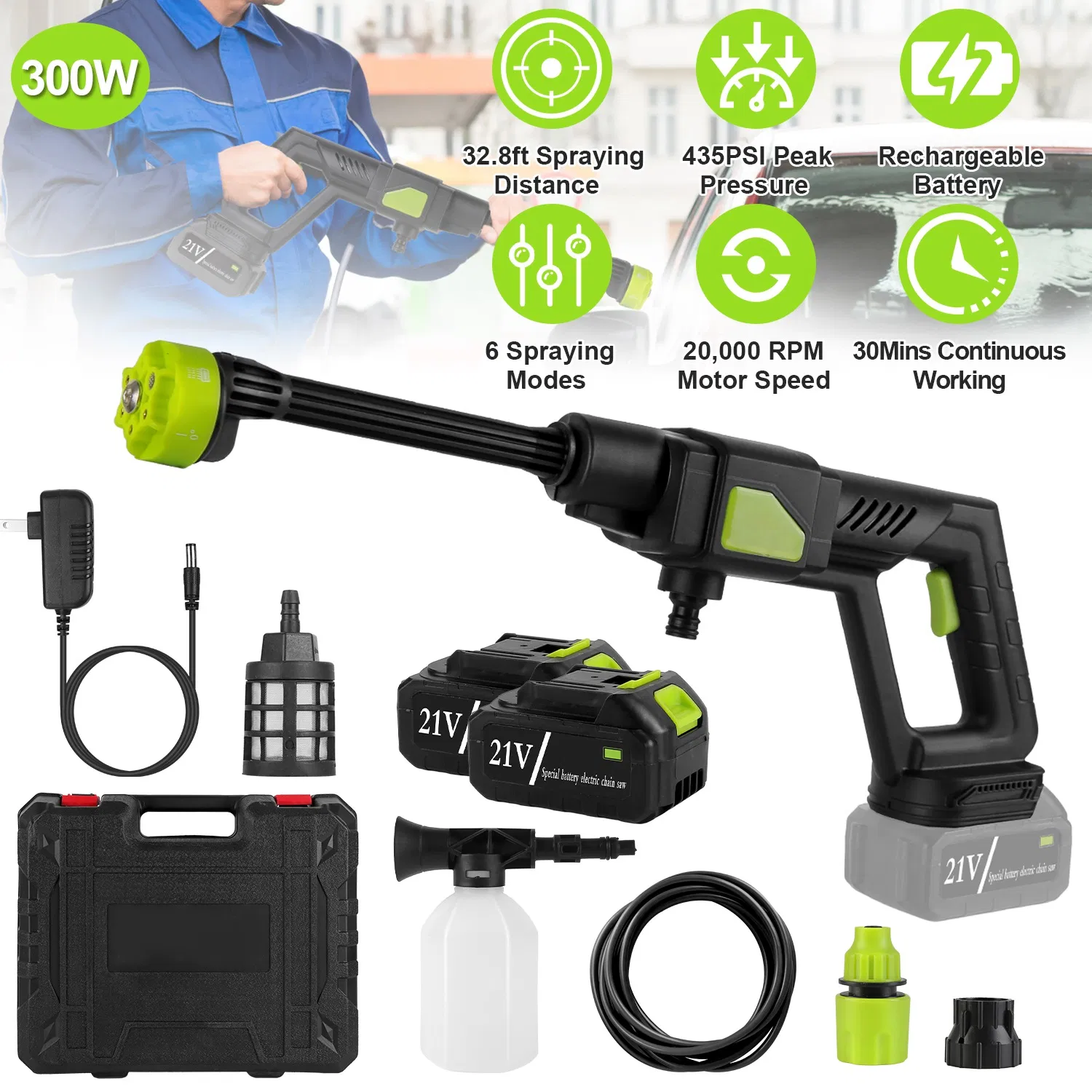

Photos from current listings. Actual item, color, and included accessories may vary.
Pressure Washer Buying Guide
Pressure washers split into two real architectures: corded electric units with metal axial or triplex pumps delivering 1,800–3,200 PSI at 1.2–2.4 GPM, and battery-powered portables moving 300–800 PSI from 18–21V packs. The core trade-off is cleaning power versus portability — corded delivers true stripping and patio cleaning, while cordless handles rinsing, car spray-downs, and remote jobs where no outlet exists. Decide by job intensity: sustained concrete/fence/siding work demands a corded metal-pump machine; occasional rinse-and-go tasks justify only a sealed battery sprayer.


At a glance
- Category
- Power Tools
- Data updated
- Nov 20, 2026
Current offers
Highlights
- Corded electric pumps come in axial cam (1,800–2,500 PSI, shorter duty life) versus triplex (2,800–3,200 PSI, serviceable, 2–3x lifespan) — triplex is the durability line for weekly use.
- Battery sprayers are pressure-limited by physics: 21V packs yield roughly 300–600 PSI at 0.8–1.2 GPM, enough for car soap and light rinsing but not paint stripping or deep grout cleaning.
- Flow rate (GPM) determines rinse speed more than PSI: 1.4+ GPM at 2,000+ PSI clears a driveway noticeably faster than 1.0 GPM at 3,000 PSI.
- Metal pump heads and brass or stainless quick-connect fittings resist mineral scaling and thread wear; plastic pump housings and M22 plastic couplers are the failure point on budget units.
Best use cases
- Best fit: homeowner with a driveway, siding, and patio — choose a corded 2,800–3,200 PSI triplex unit with 1.4+ GPM, 25-ft hose, and onboard detergent tank; skip any sub-1,800 PSI corded or battery model.
- Best fit: car detailing and apartment/balcony rinsing — a 21V battery sprayer with 6-in-1 nozzle and foam bottle at 400–600 PSI is the right tool; skip triplex corded units that are overkill and need an outdoor outlet.
- Wrong fit: stripping paint, cleaning 2,000+ sq ft of concrete, or unclogging drains — battery portables cannot sustain it; wrong fit: relying on a corded 1,600 PSI axial unit for weekly commercial use.
- Best fit: remote jobs (fence lines, boat ramps, campsites) — battery unit with swappable 4.0–5.0Ah packs; skip 1.5Ah micro packs which finish in under 10 minutes of trigger time.
Buying tips
- Match PSI to surface: 1,800–2,200 PSI for cars/furniture, 2,500–2,800 PSI for siding and fences, 3,000–3,200 PSI for concrete and stripping — higher PSI on soft surfaces etches wood and strips car clear coat.
- Size the pump by duty cycle: axial cam pumps suit 20–30 minutes of use per session; triplex pumps with oil baths handle 1–2 hour continuous runs and are rebuildable.
- For battery models, buy into a 20–21V platform with 4.0Ah+ packs and a 1.0+ GPM rating; 1.5Ah starter packs yield under 10 minutes of trigger time and force constant recharges.
- Check the hose and fittings before PSI: a 25-ft rubber hose with brass quick-connects and a metal wand outlasts 20-ft vinyl hoses with plastic M22 threads that cross-thread and leak.
Specs
| Power Source | Corded 120V vs 18-21V battery |
|---|---|
| Pump Type | Axial cam vs triplex (serviceable) |
| Pressure / Flow | 1,800-3,200 PSI / 1.0-2.4 GPM |
| Hose & Fittings | 25-ft rubber / brass quick-connect |
Related searches
What to check before buying
- Confirm an outdoor GFCI outlet within cord-plus-hose reach (typically 35 ft total) for corded units; otherwise commit to the battery platform.
- Measure your water supply: most corded units need 2.0+ GPM feed at 20+ PSI inlet; gravity tanks and weak spigots starve the pump and cause cavitation.
- Check surface hardness and area: concrete and brick tolerate 3,000+ PSI; wood decks, car paint, and vinyl siding need 40-degree nozzles and under 2,200 PSI.
- Verify the battery platform is shared with your other tools (same 18V/20V/21V family) so packs and chargers are interchangeable.
FAQ
Data sources: eBay / Amazon listings and product attribute feeds Data updated Nov 20, 2026.
Some links on this page are affiliate links. If you buy after clicking one, we may earn a commission at no extra cost to you. This does not change which products appear here or their order. Affiliate disclosure.