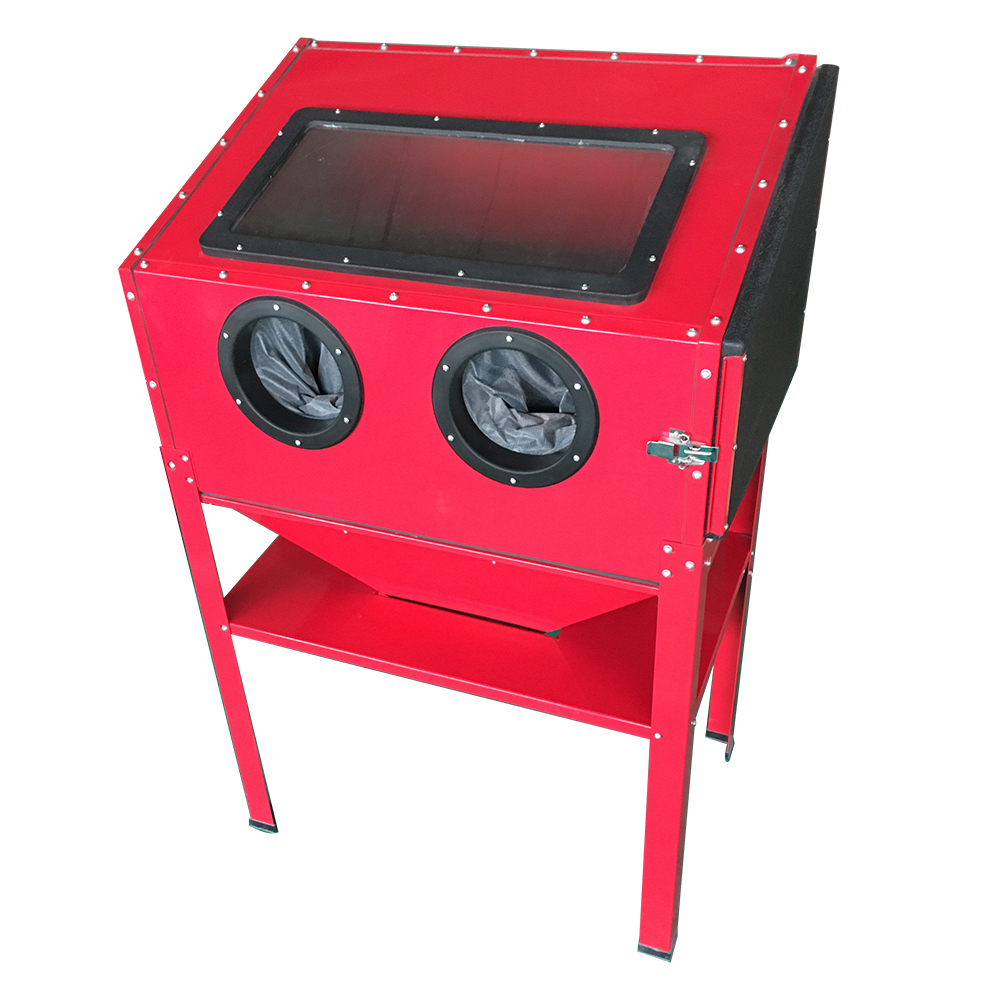

Photos from current listings. Actual item, color, and included accessories may vary.
Blast Cabinet Buying Guide
A blast cabinet is a sealed enclosure that uses compressed air to propel abrasive media at a workpiece for cleaning, deburring, or surface prep while containing dust and recycling grit. Buyers face a core trade-off between cabinet size, media-handling architecture, and dust extraction—cheap units skimp on seals, view windows, and abrasive recovery, which shortens media life and creates hazardous dust leaks. The decision rule: prioritize a welded or rigid frame, a proper dust-collection port, and glove-port geometry over raw gallon capacity; a well-sealed small cabinet outperforms a leaky large one.


At a glance
- Category
- Workbenches & Shop Equipment
- Data updated
- Nov 20, 2026
Current offers
Highlights
- Cabinet shell construction: rotationally molded plastic resists rust but flexes under vacuum; welded steel or ABS-paneled units hold glove-port alignment and seal better long-term.
- Abrasive recovery: siphon (suction) guns are budget-standard and clog with fine media; pressure-blast or metering-valve setups deliver consistent grit flow and cut cycle time on hard scale.
- Dust extraction: cabinets need a shop-vac or dedicated collector port rated for fine particulate; a 2-inch port with a 600–1000 CFM vacuum prevents media dust from escaping glove seals.
- View window and gloves: replaceable sacrificial glass or polycarbonate lenses (typically 1/8–3/16 inch) and gauntlet-style gloves sized to the port flange determine visibility and user fatigue.
Best use cases
- Best fit: small bench-top cabinet (roughly 20–40 gallon class) with siphon gun and shop-vac port for home shops restoring small parts, carburetor bodies, and fasteners—skip if blasting long stock or full frames.
- Best fit: floor-standing cabinet with pressure-blast upgrade and dedicated dust collector for repeated production deburring of brackets and welds—choose over bench-top when parts exceed 18 inches.
- Wrong fit: open-blast or plastic-tub kit without a sealed dust port for indoor garage use—media dust and silica exposure make it a health and cleanup liability; require a vented collector or outdoor placement.
- Wrong fit: large-capacity cabinet with a weak siphon gun and no media metering valve when blasting heavy rust or powder coat—grit flow stalls; step up to pressure-blast or choose a smaller well-sealed unit.
Buying tips
- Size by workpiece diagonal, not gallon rating: measure your longest part and add 4–6 inches clearance on each side; a 60-gallon cabinet still fails if the door opening is narrower than the part.
- Match media to gun type: siphon guns handle 80–120 grit glass bead and aluminum oxide; pressure-blast and metering valves are required for coarse 36–60 grit or heavy steel shot.
- Check glove-port flange diameter (commonly 6–8 inches) and confirm replacement gloves and window lenses are standard sizes—proprietary sizes make the cabinet disposable.
- Verify the dust port matches your vacuum hose (1.5-inch, 2-inch, or 2.5-inch) and that the cabinet has a bottom hopper or drain for media recovery; flat-floor cabinets waste grit.
Specs
| Cabinet Material | Plastic vs Welded Steel |
|---|---|
| Blast System | Siphon vs Pressure-Blast |
| Dust Port | 1.5–2.5 in to Shop Vac |
| Glove Port Size | 6–8 in Flange, Replaceable |
Related searches
What to check before buying
- Measure bench or floor footprint and door swing; confirm assembled height clears overhead storage and that the cabinet fits your workbench depth with vacuum hose routing.
- Confirm compressed-air supply delivers the gun's required CFM at 90 PSI (typically 10–15 CFM for siphon, higher for pressure-blast); undersized compressors cause weak blasting.
- Check electrical: most cabinets need no power, but dust collectors and lighting require a grounded 120V outlet within cord reach; confirm plug standard for your region.
- Plan for companion parts: replacement window lenses, glove pairs, and a fine-particulate shop vac or dust collector are required for safe operation and must be sourced in standard sizes.
FAQ
Data sources: eBay / Amazon listings and product attribute feeds Data updated Nov 20, 2026.
Some links on this page are affiliate links. If you buy after clicking one, we may earn a commission at no extra cost to you. This does not change which products appear here or their order. Affiliate disclosure.