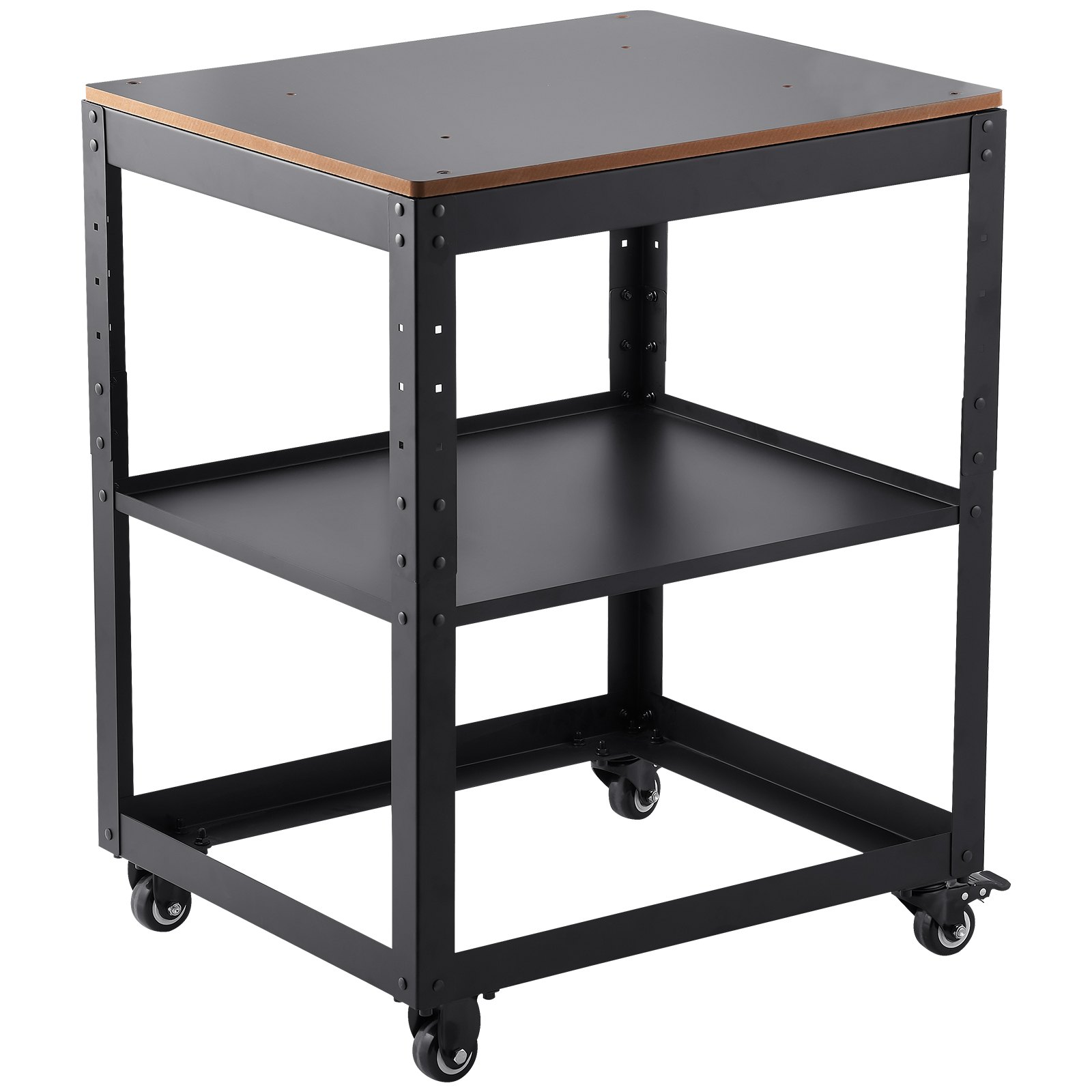

Photos from current listings. Actual item, color, and included accessories may vary.
Planer Stand With Wheel Buying Guide
A planer stand with wheels is a mobile base that supports a benchtop thickness planer and lets you reposition it in a small shop; the core trade-off is load rating and wheel quality versus footprint and height-adjustability. Buy the stand rated at least 1.5x your planer's wet weight with locking casters and a steel frame; skip particle-board or plastic bases and fixed-height stands if you need to match infeed/outfeed heights.


At a glance
- Category
- Workbenches & Shop Equipment
- Data updated
- Nov 20, 2026
Current offers
Highlights
- Steel-frame stands with 1.5-2 mm tube walls carry 100-300 lb safely; MDF or plastic tops sag and strip caster threads under planer vibration.
- Locking swivel casters (2 locking minimum, 4 preferred) prevent walk during 15-20 lb passes; non-locking casters let the machine drift on smooth concrete.
- Three-gear or pin-adjustable height tables let you match planer bed height to infeed/outfeed rollers and bench height within a 2-4 in range.
- Caster wheel diameter drives rolling ease: 3-4 in wheels clear debris and cords; 2 in casters stall on expansion joints and sawdust.
Best use cases
- Best fit: benchtop planer (60-100 lb) in a garage shop on smooth concrete — pick a 150-300 lb steel stand with 4 locking 3 in casters and a height-adjustable top.
- Wrong fit: 15 in floor-model planer (300+ lb) — skip benchtop stands entirely and use a fixed mobile base rated 500 lb or more with heavy-duty casters.
- Best fit: shared stand for planer, scroll saw, and bench grinder — choose a flat steel top with slotted mounting holes and storage shelf, not a planer-specific cradle.
- Wrong fit: sloped or gravel driveway work area — small casters and height-adjustable legs are unstable; use a fixed-foot stand or larger pneumatic wheels.
Buying tips
- Match load rating: stand capacity should exceed planer weight plus 30-50 lb of stock and clamping force; a 100 lb planer needs at least 150 lb rated stand.
- Check caster mounting: bolt-on casters with steel plates and 5/16 in or 3/8 in bolts outlast stamped-socket casters that pull out under vibration.
- Measure your planer base footprint and bolt pattern before buying; most benchtop planers use 10-14 in wide bases with 8-12 in bolt spacing.
- Prefer stands with a lower center of gravity and shelf space for outfeed support; top-heavy setups tip when rolling over cords.
Specs
| Load Rating | 100-300 lb steel-frame tiers |
|---|---|
| Caster Type | 3-4 in swivel, 2-4 locking |
| Height Adjustment | Fixed vs 2-4 in geared/pin |
| Frame Material | Steel tube vs MDF/plastic |
Related searches
What to check before buying
- Weigh your planer and add 30-50 lb for stock and accessories; confirm stand capacity exceeds that total.
- Measure planer base width, depth, and bolt-hole spacing; verify stand top and slot pattern accommodate it.
- Confirm caster diameter clears floor transitions and that at least two casters lock; check wheel material for concrete vs wood floors.
- Measure your bench and infeed/outfeed roller heights; confirm the stand's height range lets the planer bed align within 1/2 in.
FAQ
Data sources: eBay / Amazon listings and product attribute feeds Data updated Nov 20, 2026.
Some links on this page are affiliate links. If you buy after clicking one, we may earn a commission at no extra cost to you. This does not change which products appear here or their order. Affiliate disclosure.