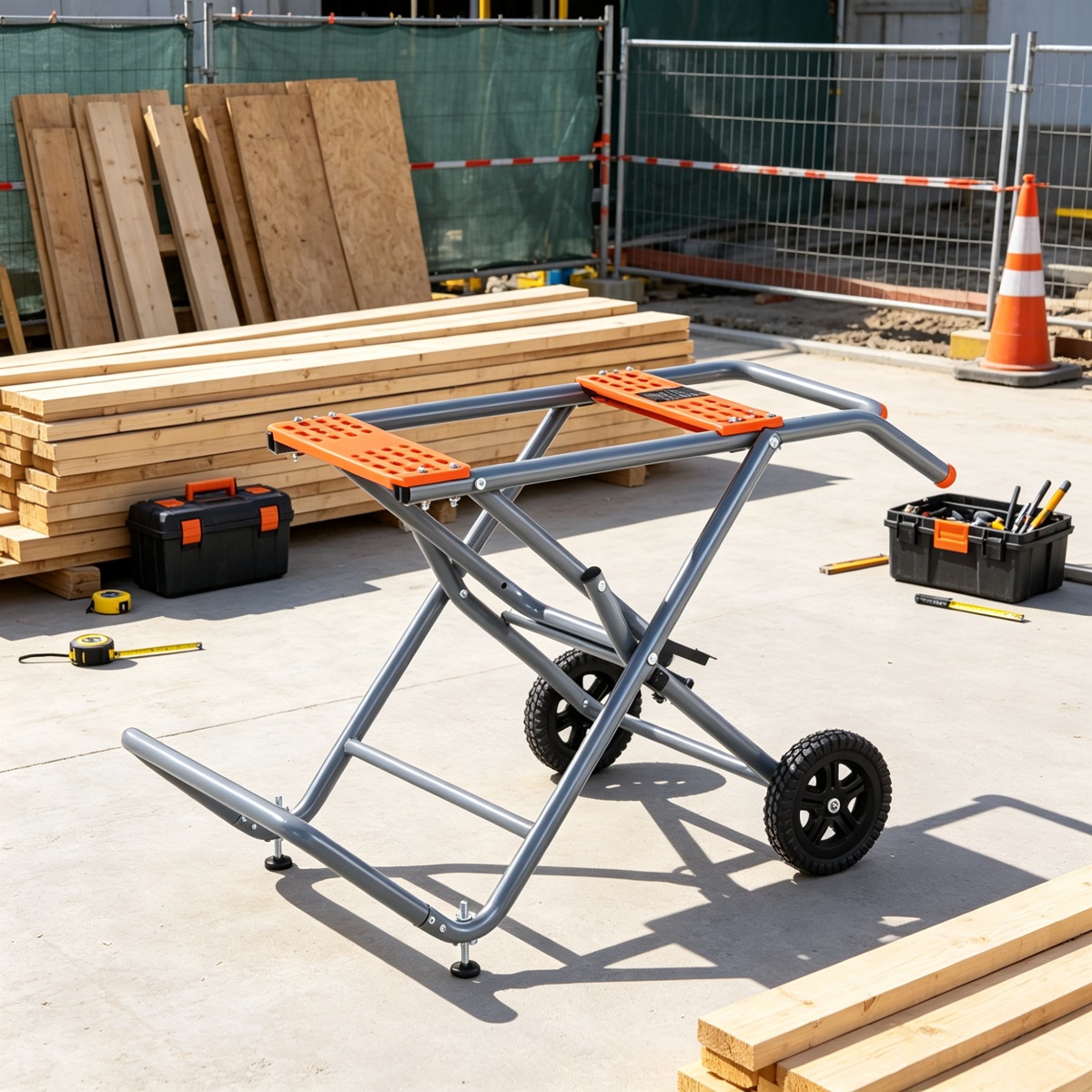

Photos from current listings. Actual item, color, and included accessories may vary.
Portable Table Saw Stand Buying Guide
A portable table saw stand is the mobile base that turns a benchtop saw into a stable, roll-away work station. The core trade-off is fold-and-roll convenience versus vibration-damping mass: lightweight aluminum stands prioritize portability, while steel frames with locking casters and outfeed support deliver accuracy under load. Buy a stand rated at least 1.5x your saw's weight with positive caster locks; skip any folding stand that lacks a locking mechanism or rated load capacity.


At a glance
- Category
- Workbenches & Shop Equipment
- Data updated
- Nov 20, 2026
Current offers
Highlights
- Load ratings on universal stands typically range from 250 to 500 lbs; the stand must exceed the combined saw and workpiece weight by a safe margin to prevent flex during rip cuts.
- Steel tube frames with 1.5-2 mm wall thickness damp vibration better than aluminum, preserving blade alignment and cut quality on benchtop saws.
- Caster size determines rolling ease on shop floors: 8-inch rubber wheels clear debris and thresholds, while 4-5 inch casters suit smooth concrete only.
- Universal mounting systems rely on adjustable rails or slotted brackets; saws with non-standard base footprints require a stand with a wide bolt-pattern range.
Best use cases
- Best fit: small shops and garage woodworkers who need to roll the saw against a wall between sessions — choose a foldable steel stand with locking 8-inch casters and a 350+ lb rating.
- Best fit: job-site carpenters moving between floors or vehicles — pick an aluminum folding stand under 30 lbs with quick-release brackets and a compact folded profile.
- Wrong fit: permanent cabinet-saw installations — a mobile base with leveling feet or a full cabinet stand is more stable than any folding portable stand.
- Wrong fit: saws over 60 lbs or with cast-iron tops — universal folding stands flex under that mass; use a heavy-duty fixed stand rated for the load instead.
Buying tips
- Match the stand's rated capacity to at least 1.5x your saw's weight so the frame stays rigid during push-through cuts and sheet-goods rips.
- Measure your saw's base footprint and bolt-hole spacing; universal stands need adjustable rails spanning roughly 16-24 inches to fit most benchtop models.
- Choose casters with dual-lock (wheel and swivel) mechanisms; single-lock casters let the stand pivot mid-cut, which ruins fence alignment.
- Prefer steel over aluminum for saws above 40 lbs; aluminum is lighter to carry but transmits more vibration into the saw's trunnion assembly.
Specs
| Frame Material | Steel tube vs aluminum |
|---|---|
| Load Rating | 250-500 lbs class |
| Wheel Size | 4-8 in locking casters |
| Mounting Fit | Universal adjustable rails |
Related searches
What to check before buying
- Weigh your table saw and confirm the stand's load rating exceeds it by 50 percent or more for safe ripping stability.
- Measure the saw base width and depth plus bolt-hole centers; compare against the stand's adjustable mounting range before purchase.
- Check your shop floor surface and doorway thresholds: 8-inch wheels roll over cords and lips, smaller casters require smooth concrete.
- Confirm the folded dimensions fit your storage wall or vehicle bay, and that the stand's folded height clears your bench overhang.
FAQ
Data sources: eBay / Amazon listings and product attribute feeds Data updated Nov 20, 2026.
Some links on this page are affiliate links. If you buy after clicking one, we may earn a commission at no extra cost to you. This does not change which products appear here or their order. Affiliate disclosure.