Painting a room or refinishing a piece of furniture starts with a simple split: roll it or spray it. The right choice depends on the surface and how much cleanup you can handle. If you're comparing painting finishing supplies, you'll likely weigh two very different tools: a self-feed paint roller and an HVLP spray gun.
Quick verdict
For a fast, low-mess wall painting job, the 9-inch self-feed roller is the more straightforward choice at $3.99. For a controlled sprayed finish on smaller surfaces, the $27.98 HVLP spray gun brings adjustable spray and higher power to the job.
At a glance
| Product | Listed Price | Price Bar |
|---|---|---|
| Self-Feed Paint Roller | $3.99 | |
| Electric Spray Gun | $27.98 |
Where each product wins
The roller wins when you want to cover walls and ceilings without setting up a paint tray. Its built-in paint storage chamber lets you pour paint in, seal it, and roll, while the seamless sponge roller is designed for smooth, drip-free strokes. It comes with an extension rod and a lightweight build, which makes long sessions easier on your arm.
The sprayer wins when you need a more precise finish on smaller surfaces. The 900ml container and handheld frame make it ready for tables, chairs, fences, interior walls, and crafts, while the adjustable pattern control, air flow control, and material flow control help you tune the spray instead of accepting whatever the roller leaves behind.
9" Self-Feed Paint Roller
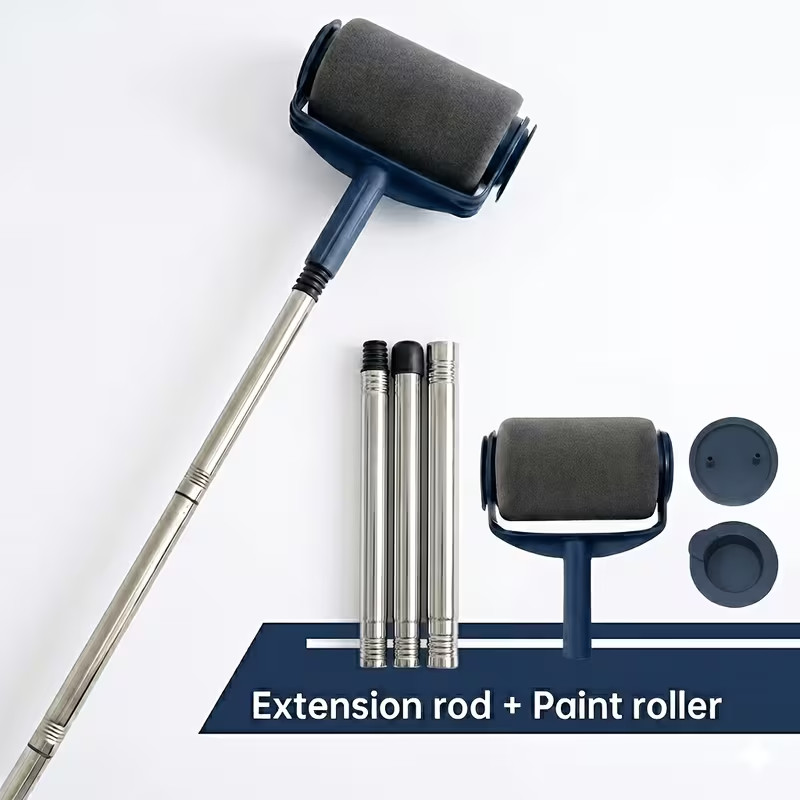
The self-feed roller's biggest appeal is simplicity. Open the lid, pour paint into the built-in storage chamber, seal it, and start rolling - no tray, no repeated re-dipping, and no need to carry a separate pan around the room. The thick seamless sponge roller is made to glide without sticking or jamming, and the high-elasticity construction is designed to reduce fiber shedding. It includes a roller plus extension rod, and the plastic handle and lightweight build keep the tool easy to manage. The trade-off is that this is a roller, not a sprayer, so you'll get broad, even coverage rather than a sprayed finish a gun can deliver. It's also the lower-priced option in this head-to-head, making it an easy pick for large wall projects where speed and simplicity matter more than fine detail.
Electric Spray Gun
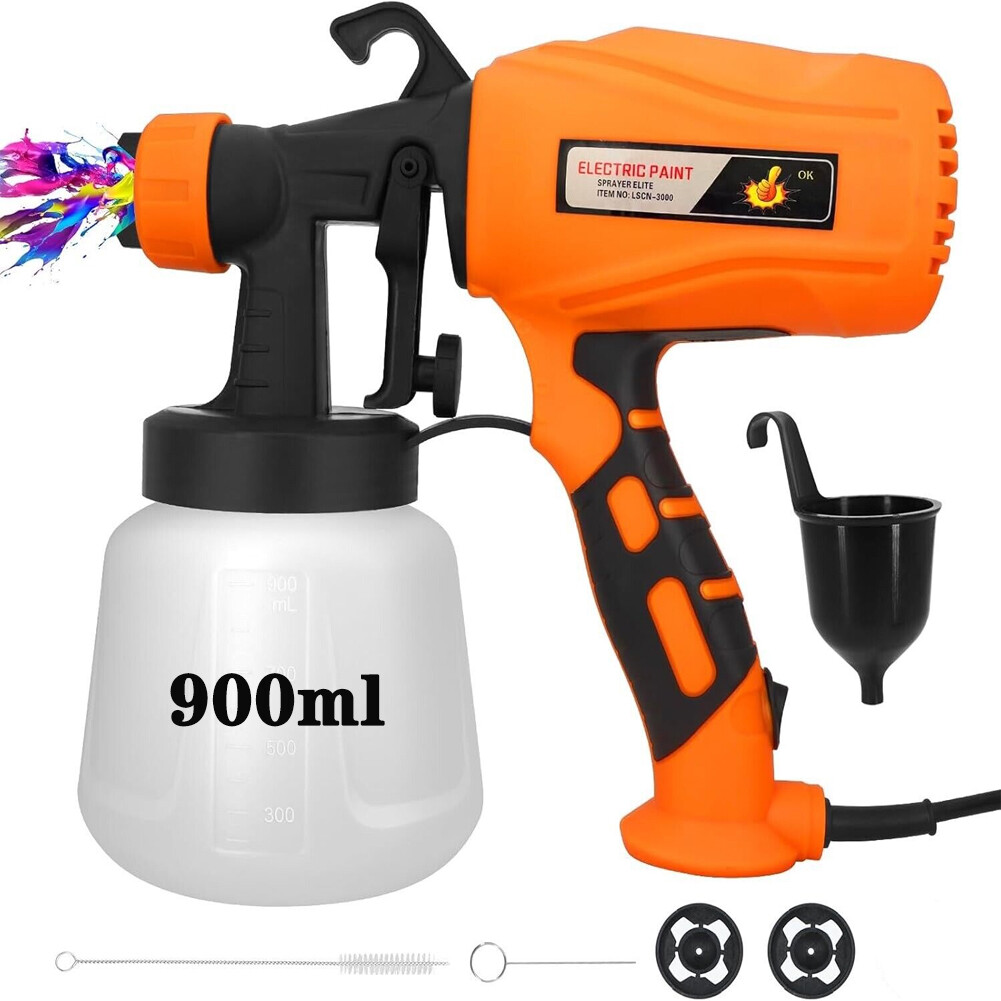
The sprayer brings a different kind of control. It's a handheld, AC-powered unit with a 550W turbine pump and a 900ml container, and its adjustable pattern, air flow, and material flow controls let you shift between projects without swapping your whole setup. The package includes two size nozzles, a viscosity cup, a cleaning needle, a cleaning brush, and an extra 900ml container for different paint viscosities and cleanup. The one-key switch and cooling air inlet are useful on a tool you'll hold for extended periods. The limitation is that spraying is more involved: you need an outlet, you'll likely mask off adjacent areas, and cleanup takes longer than wiping down a roller. If your goal is a smoother finish on smaller projects, the sprayer is the more capable tool, but it's also the higher-priced purchase here.
Final choice by use case
Choose the Self-Feed Paint Roller for walls, ceilings, wood, or outdoor residential surfaces when you want a no-tray, low-mess way to cover large areas with minimal cleanup. Choose the Electric Spray Gun for tables, chairs, fences, interior walls, and crafts when you want adjustable spray patterns, flow control, and a smoother finish - and you're ready to handle the extra setup and cleanup that comes with spraying.