When you're stocking up on painting finishing supplies, the biggest decision isn't which shade of white to buy-it's which tool gets the paint onto the wall without making a mess. Do you pick a clever self-feed roller that carries its own paint supply, or a cordless sprayer that can cover a fence in a fraction of the time? These two applicators are at opposite ends of the price spectrum, and the right choice depends on the size of your project, the finish you want, and how willing you are to trade speed for simplicity.
Quick Verdict
The 9" Self-Feed Paint Roller at $3.99 is the low-cost choice for anyone who wants a simple, self-contained way to roll walls and ceilings. The CISIVIS Cordless Paint Sprayer at $26.49 is the time-saver for bigger jobs. If you're painting one room and want the lowest possible price, pick the roller. If you're painting multiple rooms, fences, or furniture and want speed, pick the sprayer.
Comparison
| Feature | 9" Self-Feed Paint Roller | Cordless Paint Sprayer for DeWalt 20V |
|---|---|---|
| Price | $3.99 | $26.49 |
| Paint delivery | Built-in paint chamber, no tray | 1000 mL cup, high-pressure spray |
| Nozzle/battery | Manual roller with extension rod | 4 nozzles, needs DeWalt 20V battery (not included) |
| Coverage control | Dense sponge, smooth rolling | Adjustable spray pattern 1-10 in |
Where Each Product Wins
The roller wins on cost and simplicity. You pour the paint in, seal the lid, and roll. There's no cord to untangle and no paint mist to breathe in.
The sprayer wins on speed and coverage, which makes it the better pick when the square footage adds up.
Product Notes
9" Self-Feed Paint Roller No Drip Self Contained No Tray Wall Painting Tool
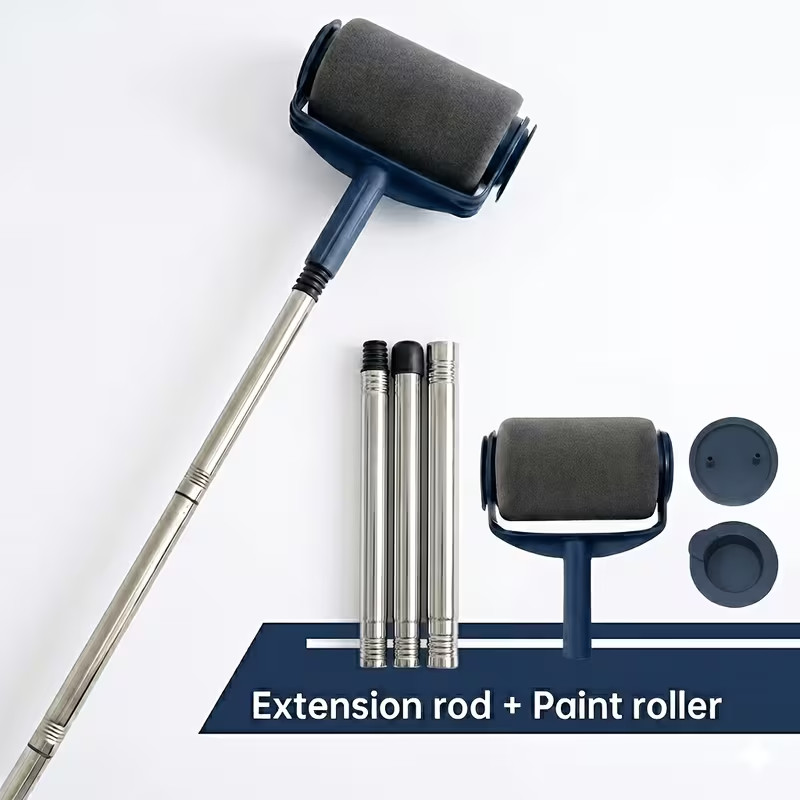
This roller is the low-cost workhorse for anyone who wants to finish a wall without dragging out a paint tray. The built-in storage chamber holds paint inside the roller, so you pour once, seal the lid, and roll until the chamber runs low. It comes with an extension rod and a seamless dense sponge cover that glides without sticking. The lightweight plastic handle keeps your hand from getting tired, and the design works for indoor or outdoor residential surfaces. If your priority is a simple, cheap, no-tray painting process for walls or ceilings, this is a great pick. The main limitation is speed: you are still rolling manually, so large multi-room jobs will take longer than they would with a sprayer. It's a purely manual tool, so you supply all the power.
Cordless Paint Sprayer For DEWALT 20V Battery High Pressure Spray Paint Gun
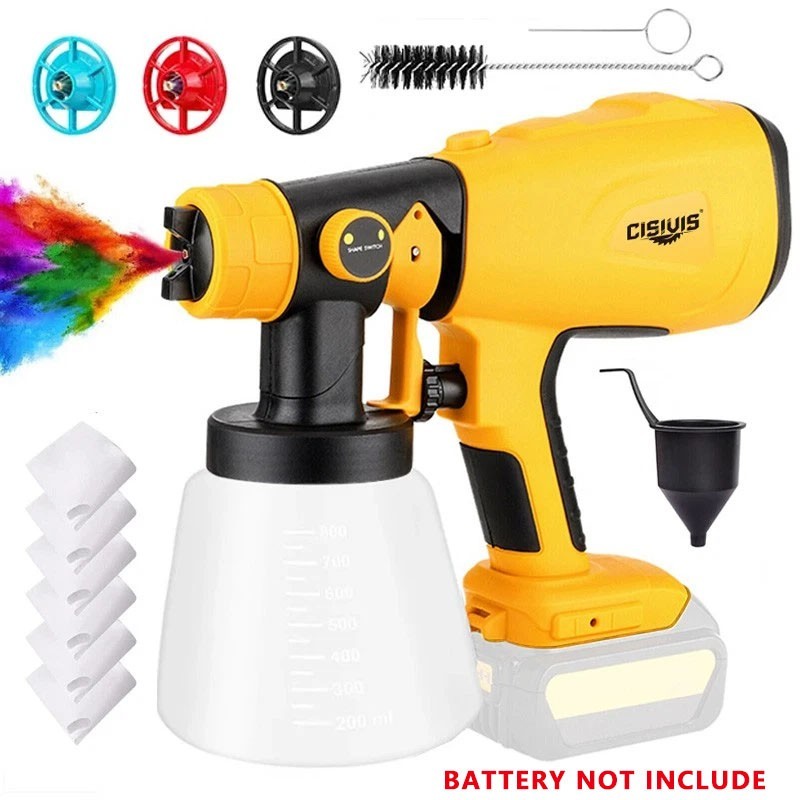
If you already have a DeWalt 20V battery, this CISIVIS sprayer turns it into a high-capacity finishing tool. The 1000mL container holds enough paint to cover a large area before you need to refill, and the four nozzle sizes-1.0mm, 1.8mm, 2.5mm, and 3.0mm-let you match the flow to the material you're spraying. You can also adjust the spray pattern from 1 to 10 inches, which gives you real control over coverage. The yellow body is lightweight and ergonomic, and the quick-disassembly design makes cleanup easier between projects. The trade-off: the battery is not included, so if you don't already own a compatible DeWalt 20V battery, you'll need to factor that into the total cost. A sprayer also creates more overspray than a roller, so you'll want to mask off areas you want to protect.
Final Choice by Use Case
For small to medium rooms, ceilings, or a single accent wall, the self-feed roller is the straightforward, hands-on route. It handles the job with very little prep. For exterior walls, fences, furniture, and any project where speed matters more than a low upfront price, the cordless paint sprayer is the better fit. Match the tool to the scale of the job, and the right pick becomes clear.