When you're stocking painting finishing supplies, the first fork in the road is scope: do you need a quick room refresh or a full exterior coating? One option is a self-feed roller that stores its own paint. The other is a high-pressure airless sprayer built to move a lot of paint through a spray gun. Each can put a finish on a wall, but they are not interchangeable.
Quick verdict
For a bedroom, a ceiling, or a weekend touch-up, the self-feed roller is the simpler, cleaner pick. For a fence, barn, or large exterior, the airless sprayer is the coverage-speed pick. Choose by surface size and the cleanup you are willing to handle.
Comparison table
| Comparison | 9" Self-Feed Paint Roller | Infinity 750W Airless Sprayer |
|---|---|---|
| Listed price | USD 3.99 | USD 189.99 |
| Paint delivery | Self-contained roller, no tray | Airless spray gun |
| Best for | Walls, ceilings, and wood surfaces | Large surfaces and quick coverage |
Where each product wins
Where the 9-inch self-feed roller wins
It costs less, weighs very little, and arrives with a plastic handle and extension rod. The roller stores paint inside a built-in chamber, so you can pour, seal, and start immediately. The thick seamless sponge is built to glide without sticking or jamming, and this setup suits indoor and outdoor residential work. Its limitation is scale: a handheld roller can cover a wall or wood surface efficiently, but it isn't a high-volume tool for an open exterior.
Where the Infinity 750W airless sprayer wins
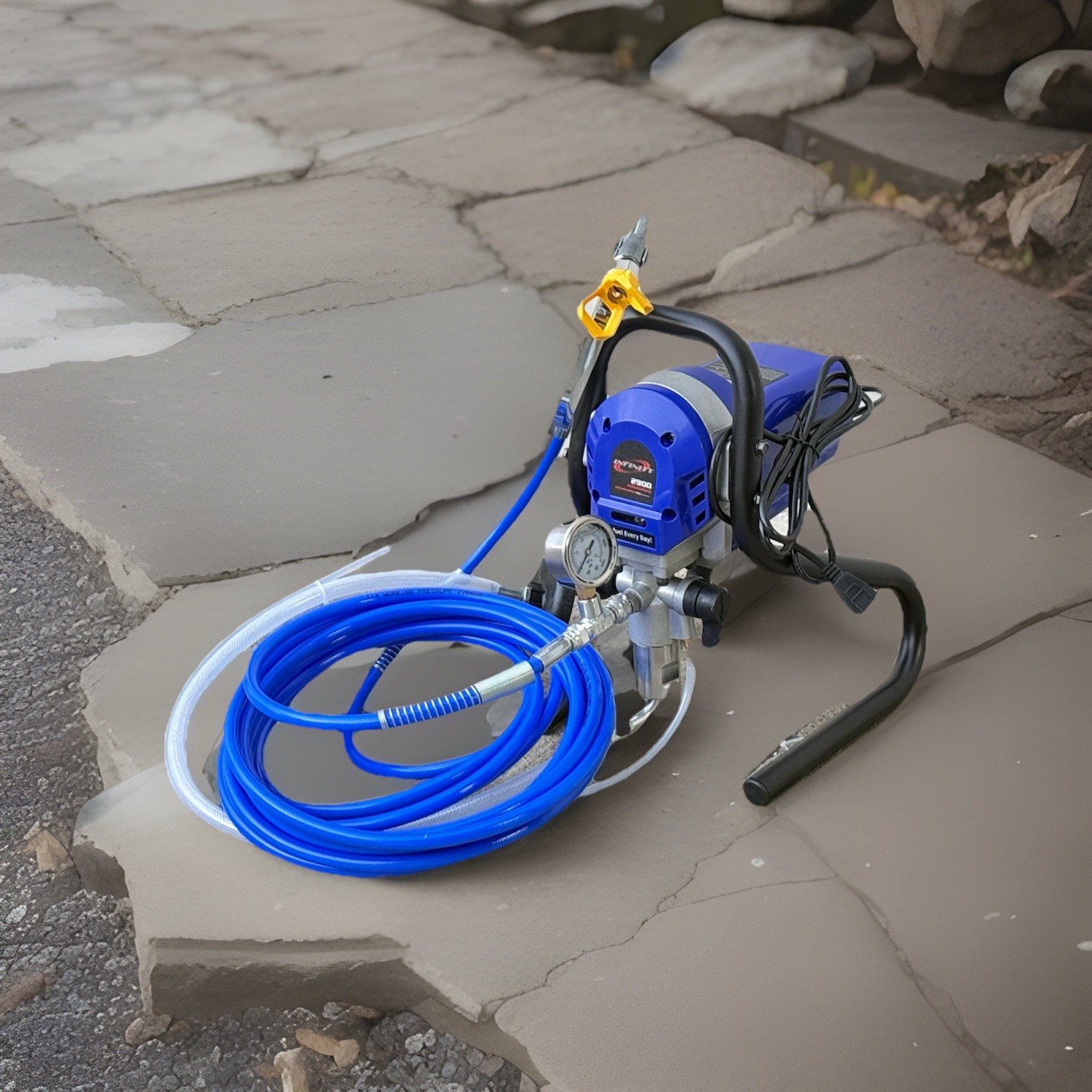
Its 1 HP pump can push unthinned latex paints through a spray gun at up to 3000 PSI, which is why it covers wide surfaces faster than a roller. The adjustable pattern control and air flow control let you shape the spray and reduce overspray. The main trade-off is the higher price and the larger amount of equipment you'll be handling.
Product notes
9" Self-Feed Paint Roller
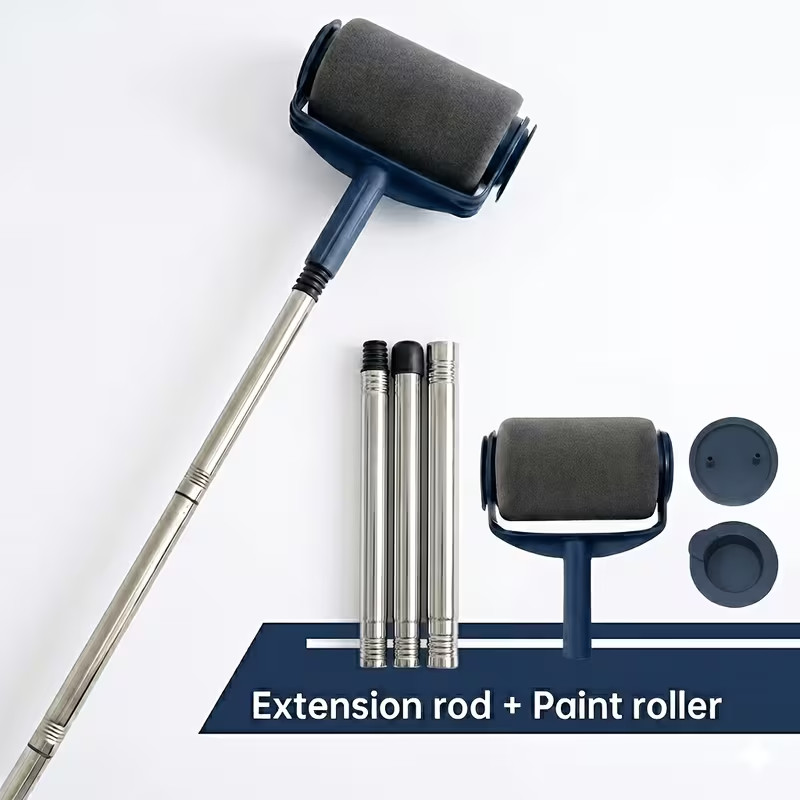
This roller solves the tray problem by storing paint inside the roller. Pour paint into the chamber, seal it, and start rolling without repeated dipping. The sponge roller cover is thick and seamless, which helps it glide without sticking, and the lightweight plastic handle with extension rod makes upper walls and ceilings easy. It's an inexpensive way to refresh one room or a piece of furniture. It isn't built to push paint across a whole house: the built-in tank means frequent refills on very large jobs, and the sponge surface is better for smooth, even passes than for rough exterior texture. Pick it when you want a no-drip finish on a small or medium project.
Infinity 750W Airless Sprayer
This sprayer is for jobs that would take all day with a brush or roller. The 750W motor and 0.39 GPM flow rate keep paint moving through the included hose and spray gun, and the pressure range lets it atomize unthinned latex, primer, and stains. Adjustable controls help you tailor the spray fan, which is useful on large walls and fences. The trade-off is cost and setup: it's a real investment, and it brings more gear to clean and store than a simple roller. Choose it when speed across square footage matters and you have a project big enough to justify the machine.
Final choice by use case
For small rooms, ceilings, and touch-ups, take the 9-inch self-feed roller. For large exterior surfaces and wide-open jobs, take the Infinity 750W airless sprayer. If you paint occasionally and want the lowest possible entry cost, the roller is the more practical finishing supply. If you're coating a whole house or shop, the sprayer's speed and pattern control justify the larger investment.