Choosing between these FDM 3D printers comes down to a clear tradeoff: do you need dedicated high-temperature capability for materials such as PEEK and PEI, or a larger work area for functional prototypes and production parts? The IEMAI3d High-Temp 3D Printer emphasizes thermal control in a compact format. The Fusion3 Edge emphasizes a large-format build area, magnetic bed, and PEI surface. Both use FDM technology and include enclosed, heated build-plate designs with adjustable layer thickness and print speed.
Quick verdict
Choose the IEMAI3d High-Temp 3D Printer when your workflow centers on PEEK, PEI (ULTEM), PPSU, PC, or PA-CF and you want a 450°C nozzle with an actively heated chamber. Choose the Fusion3 Edge when larger parts, Ethernet connectivity, or its magnetic bed and PEI configuration matter more. The listed-price gap is $1,240.01, making the decision primarily about thermal capability, working scale, and condition rather than a minor specification change.
Comparison at a glance
| Printer | Listed price | Maximum print size | Interfaces | Condition |
|---|---|---|---|---|
| IEMAI3d High-Temp 3D Printer | USD 3,490.00 | 220 x 220 x 220 mm | USB 2.0, USB 3.0, Wi-Fi | New |
| Fusion3 Edge | USD 2,249.99 | 368 x 368 x 343 mm | Ethernet, USB 2.0, USB 3.0, Wi-Fi | Used |
Where each printer wins
- IEMAI3d: The stronger match for high-temperature engineering materials. Its 450°C nozzle, chamber temperature up to 90°C, heated build plate up to 150°C, and stated material list give it a specific role for demanding thermoplastics.
- Fusion3 Edge: The better fit for large-format work and network flexibility. Its 368 x 368 x 343 mm maximum print size, Ethernet interface, magnetic bed, PEI, and hardened nozzle options point toward functional prototypes, tooling, and end-use parts.
Product notes
IEMAI3d High-Temp 3D Printer
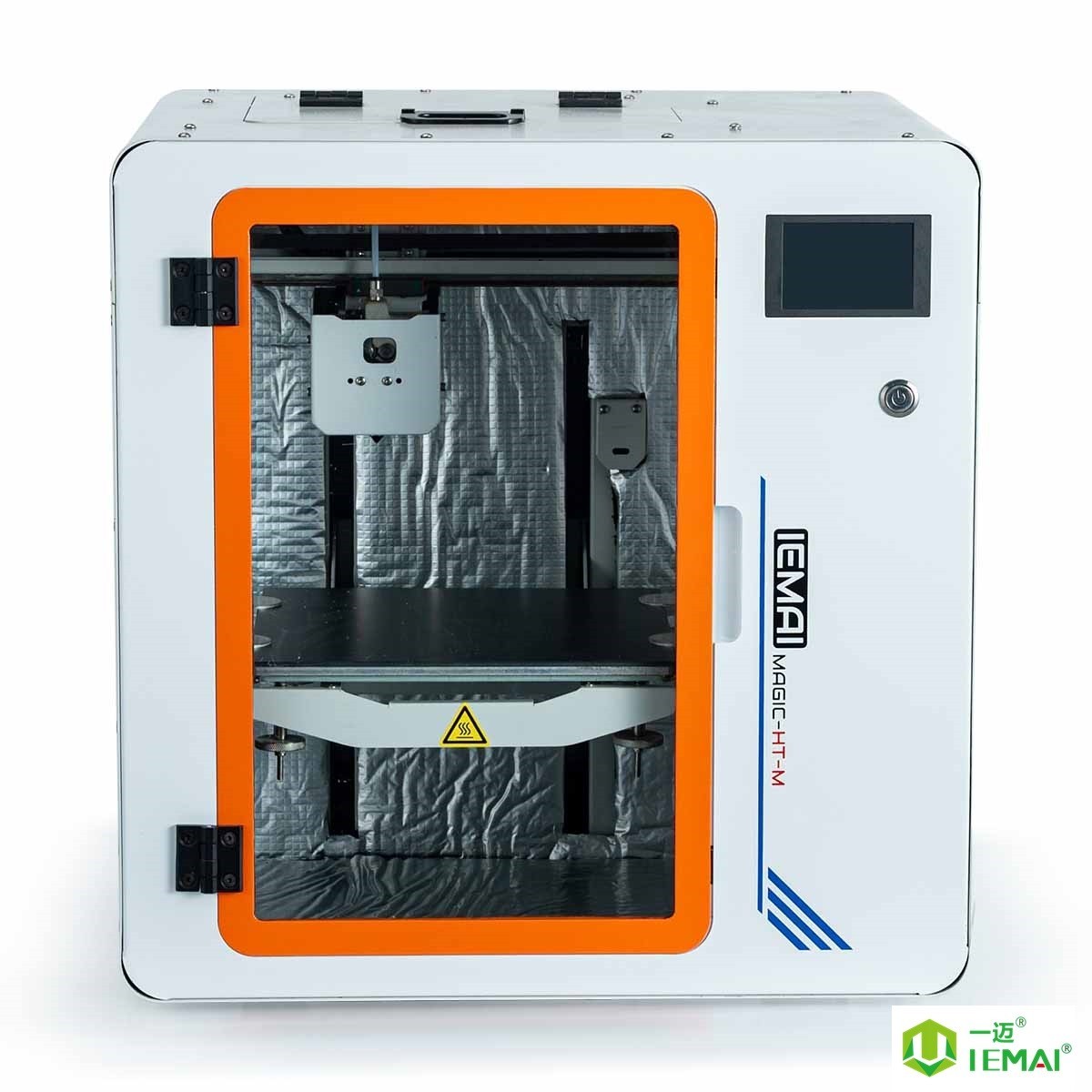
Choose the IEMAI3d HT-M when thermal capability is the main reason for buying an FDM 3D printer. The stated material list includes PEEK, PEI (ULTEM), PPSU, PC, and PA-CF, while power-failure recovery, touchscreen controls, and adjustable layer thickness support a more specialized print workflow. The 0.4 mm standard nozzle, with 0.8 mm and 1.0 mm options, gives the machine a clearly defined nozzle setup. Its limitation is the 220 x 220 x 220 mm maximum print size, which is a compact working envelope beside the Fusion3 Edge. It is also listed as New, so it suits shoppers who place that condition ahead of the larger-format alternative.
Fusion3 Edge Industrial FDM 3D Printer
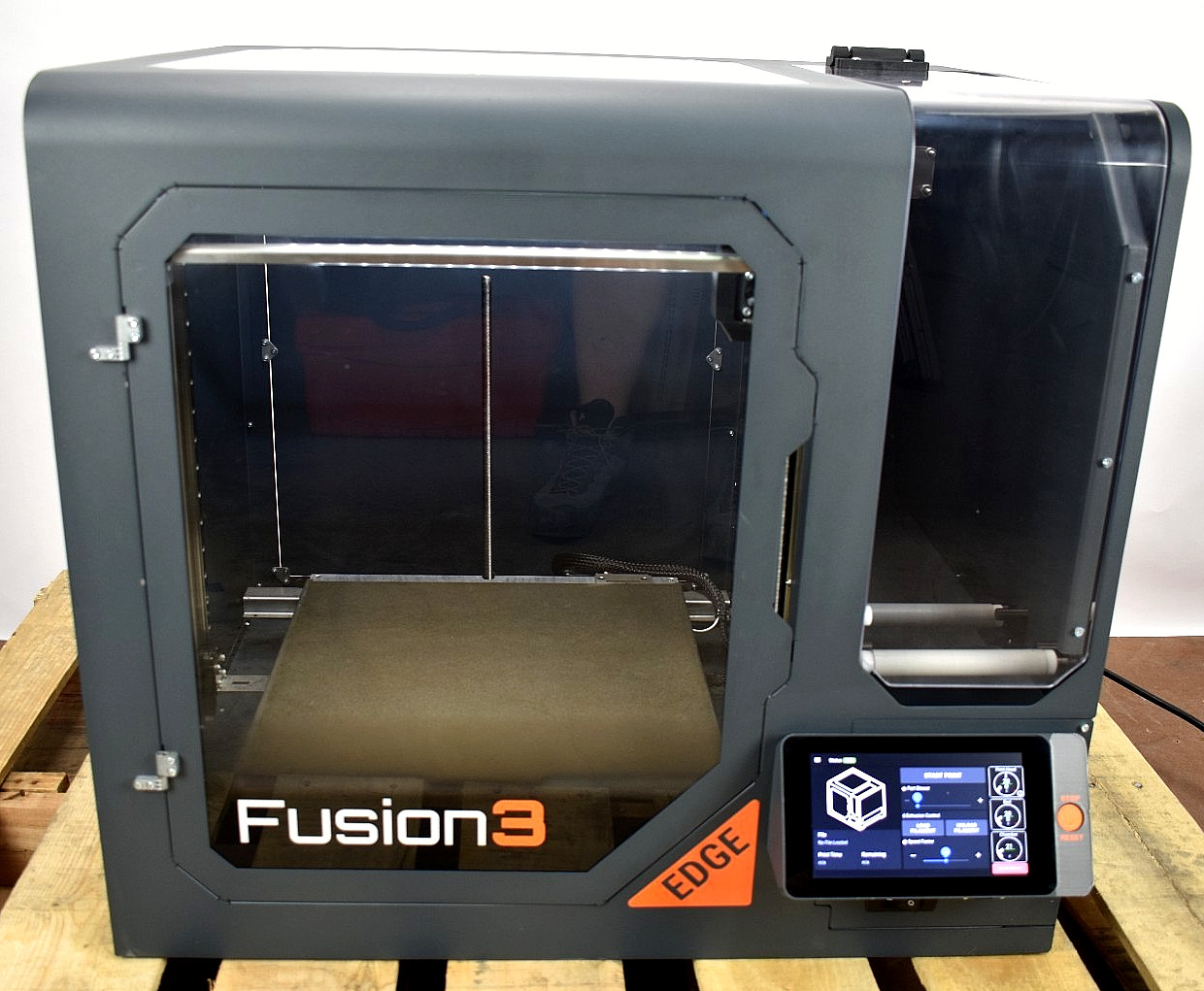
Fusion3 Edge makes sense for shoppers planning larger functional prototypes, tooling, or end-use parts. The product description identifies a fully enclosed, filtered, passively heated chamber, heated bed, high-temperature print head, and hardened nozzle options for engineering polymers and fiber-reinforced composites. The magnetic bed and PEI wording are useful if those specific bed features belong on your shortlist, while Ethernet adds a connection choice beyond the IEMAI3d interface set. The main limitation is condition: Fusion3 Edge is listed as Used. That makes it suitable for someone comfortable with that status, while a shopper requiring a New machine has a straightforward reason to choose IEMAI3d instead.
Final choice by use case
- For PEEK, PEI, PPSU, or other listed engineering materials: Choose the IEMAI3d High-Temp 3D Printer for its explicit 450°C nozzle, 90°C chamber, and 150°C heated build plate.
- For larger prototypes, tooling, or end-use parts: Choose Fusion3 Edge for its large-format design and 368 x 368 x 343 mm maximum print size.
- For Ethernet connectivity: Fusion3 Edge is the clear fit because Ethernet appears alongside USB and Wi-Fi.
- For a New condition: Choose IEMAI3d, which is listed as New, rather than Fusion3 Edge, which is listed as Used.
The IEMAI3d is the specialized thermal choice; Fusion3 Edge is the large-format choice. Match the printer to the material requirements and part scale that matter most to your work.