Photos from current listings. Actual item, color, and included accessories may vary.
Crimping Tool Cable Wire Buying Guide
Crimping tools for cable and wire are either modular-plug crimpers (RJ45/RJ11) or insulated-terminal/solar-connector crimpers, and the core trade-off is stamped-steel frames with loose tolerances versus ratcheting forged frames with hardened dies. The decision rule: buy a ratcheting tool with interchangeable or caliber-marked dies for any connector you will crimp more than a few times; skip non-ratcheting stamped crimpers for production or outdoor/solar work.


At a glance
- Category
- Electrician Hand Tools
- Data updated
- Nov 20, 2026
Current offers
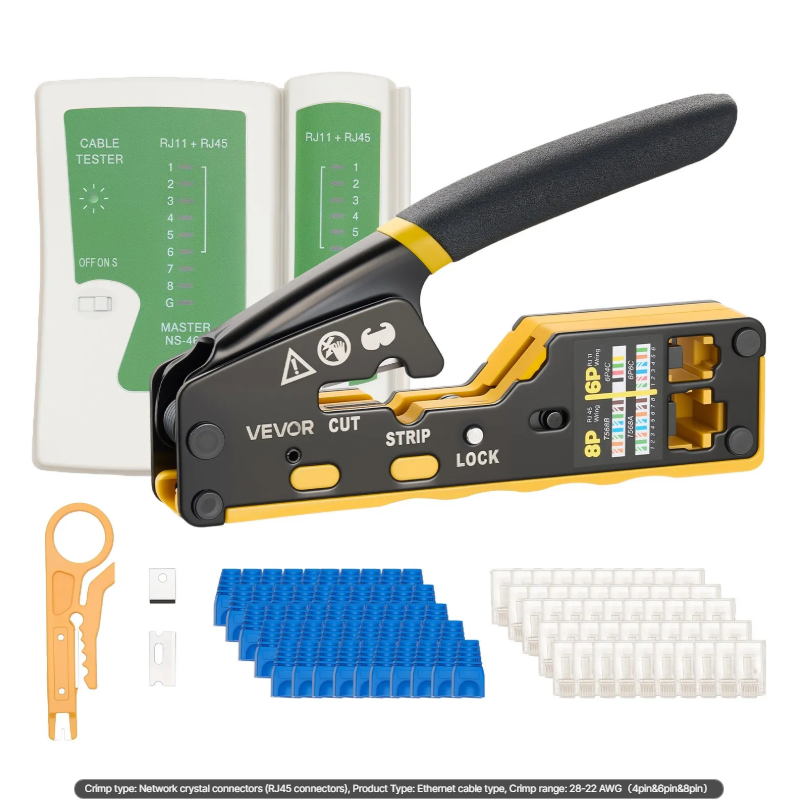 VEVOR Crimping Tool, RJ45-RJ11-RJ12 Ethernet Crimper, Crimp Kit For 4-6-8-Pin Modular Plugs, With Mini Wire Stripper, 50 Connectors And 50 Boots, Replacement Blades, And Network Cable Tester$29.99
 View on Mallflare
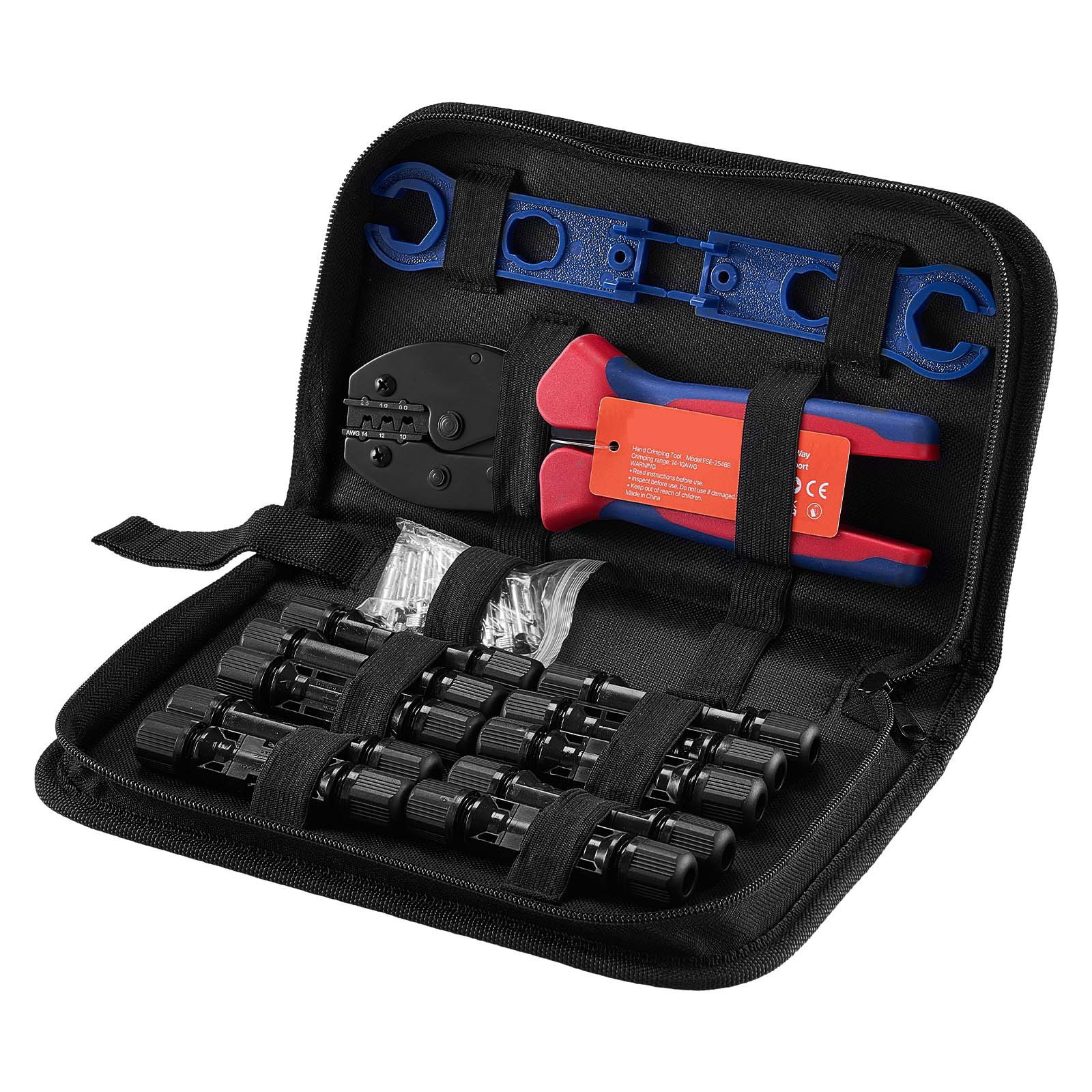 Crimping Tool, 14-10 AWG Ratcheting Solar Connector Crimper Kit, Clear Metric & AWG Markings, With 10 Pairs Connectors, 10 Of Cable Wrenches, And A Storage Case$29.99View on Mallflare
Highlights
- Ratcheting mechanism guarantees full crimp cycle — the tool will not release until the die bottoms out, preventing under-crimped lugs and intermittent RJ45 connections.
- RJ45 crimpers need 8P8C die geometry for Cat5e/Cat6; 4P/6P modular dies (RJ11/RJ12) are separate cavities, so a 3-in-1 frame covers phone and Ethernet but not shielded or pass-through plugs unless stated.
- Solar/terminal crimpers are sized by AWG: 14-10 AWG covers common 10/12 AWG PV cable and 10-14 AWG insulated lugs; 12-6 AWG or 8-6 AWG frames are needed for battery and heavier feeder lugs.
- Hardened steel or chrome-vanadium dies outlast stamped mild-steel jaws; replaceable blade/die sets and a built-in cable tester are the practical durability differentiators on modular kits.
Best use cases
- Best fit: terminating Cat5e/Cat6 patch cables, phone lines, and alarm wire — pick a ratcheting RJ45/RJ11/RJ12 crimper with 8P8C die, spare blades, and a continuity tester; skip pass-through-only or non-ratcheting stamped pliers-style crimpers.
- Best fit: solar PV and battery cable lugs — pick a ratcheting 14-10 AWG (or 12-6 AWG for heavier) crimper with AWG/metric markings and a connector assortment; skip modular RJ45 crimpers for this job, they cannot form a gas-tight lug crimp.
- Wrong fit: one tool for both Ethernet and 4/0 battery lugs — no single frame covers RJ45 dies and 2/0 AWG lugs; buy two dedicated ratcheting tools or a modular frame with swappable die sets rated for the largest lug.
- Wrong fit: occasional speaker/automotive butt-splice crimps — a basic insulated-terminal crimper with color-coded 22-10 AWG nests is sufficient; skip solar-connector kits unless you actually own MC4-style connectors.
Buying tips
- Match the die to the connector, not the wire: 8P8C for RJ45, 6P6C/6P4C for RJ11/RJ12, and hex or indent dies sized in AWG for lugs — confirm the die cavity count on the frame.
- Choose ratcheting over plier-style for anything beyond occasional repairs: ratchet release, full-cycle lockout, and adjustable crimp depth are the features that prevent callbacks.
- For solar, size to PV cable: 10 AWG and 12 AWG are standard, so a 14-10 AWG tool covers most residential strings; step up to 12-6 AWG only for 8 AWG and larger feeders.
- Check die material and spares: hardened steel or Cr-V dies with replaceable blade sets extend life; kits that include 50 connectors and boots plus a tester are self-contained for Ethernet work.
Specs
| Crimp Action | Ratcheting vs plier-style |
|---|---|
| Connector Standard | RJ45 8P8C / RJ11-RJ12 / MC4 / lugs |
| Wire Range | 22-10 AWG terminals; 14-10 AWG solar |
| Die Material | Hardened steel / Cr-V, replaceable |
Related searches
What to check before buying
- List every connector type you will crimp (RJ45, RJ11/RJ12, MC4 solar, insulated/spade lugs) and confirm the tool has a dedicated die for each — one frame rarely covers all.
- Measure your cable jacket and conductor AWG: Ethernet needs round solid or stranded Cat5e/Cat6 within the die's wire range; PV cable is typically 10-12 AWG.
- Confirm ratcheting action and full-cycle release before buying; non-ratcheting frames rely on hand strength and give inconsistent crimp height.
- For solar kits, verify the included connectors match your panel/inverter connector standard (MC4-compatible) and that the case holds spare dies and a cable wrench.
FAQ
Data sources: eBay / Amazon listings and product attribute feeds Data updated Nov 20, 2026.
Some links on this page are affiliate links. If you buy after clicking one, we may earn a commission at no extra cost to you. This does not change which products appear here or their order. Affiliate disclosure.