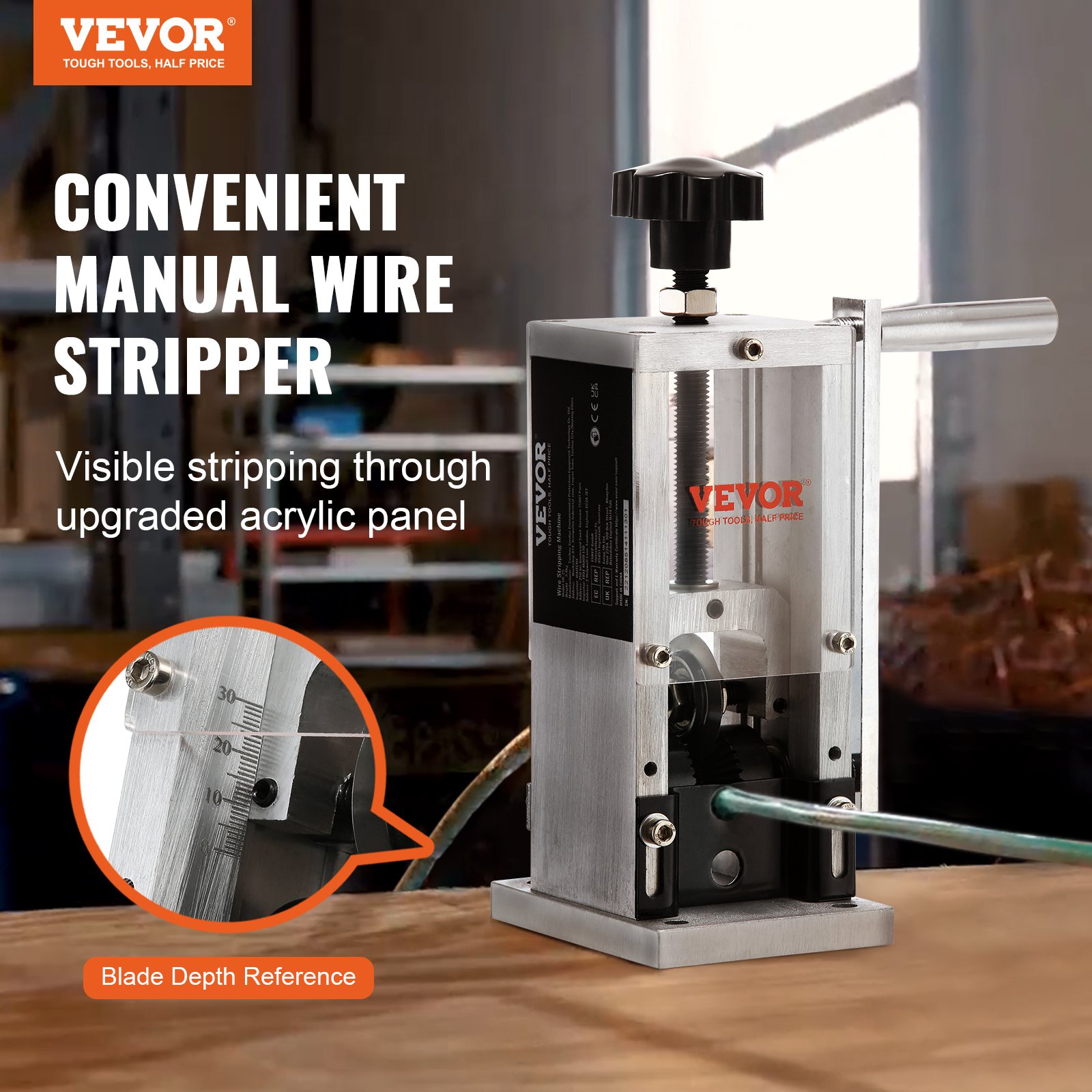

Photos from current listings. Actual item, color, and included accessories may vary.
Manual Wire Stripper Buying Guide
Manual wire strippers range from handheld plier-style tools to bench-mounted drill-powered machines, and the core trade-off is between precision on small gauges and throughput on scrap cable. Durable options use hardened steel blades with gauged notches or adjustable depth stops, while compromises rely on soft stamped metal that nicks conductors and dulls quickly. Choose a handheld stripper for 10–30 AWG insulated wire, and a crank or drill-powered machine only for reclaiming copper from thick scrap cable.


At a glance
- Category
- Electrician Hand Tools
- Data updated
- Nov 20, 2026
Current offers
Highlights
- Handheld plier strippers use hardened steel blades with laser-etched AWG notches; soft stamped blades deform and nick copper strands after repeated use.
- Bench scrap strippers rely on a adjustable blade depth and a guide roller or funnel; visible depth reference prevents cutting into the copper core.
- Crank-powered units process thick cable manually; drill-powered versions accept a hex shank and spin the feed roller for faster scrap recycling throughput.
- Aluminum frame construction resists flex under load; plastic-bodied bench strippers crack at the blade mount when pulling heavy cable.
Best use cases
- Best fit: handheld plier-style stripper for electricians terminating 10–30 AWG solid or stranded wire in panels, outlets, and fixtures — skip bench machines for this task.
- Best fit: crank or drill-powered bench stripper for scrapping 8–2 AWG or thicker copper cable — skip handheld pliers, which cannot feed heavy cable cleanly.
- Wrong fit: using a drill-powered scrap stripper on small 18–22 AWG control wire — the feed roller crushes fine strands; use a precision handheld tool instead.
- Wrong fit: buying a plastic-frame bench stripper for continuous daily scrap recycling — aluminum or cast-metal frames hold blade alignment under repeated heavy pulls.
Buying tips
- Match the stripper's rated AWG range to your work: handheld models typically cover 10–30 AWG, while bench scrap machines handle 8 AWG and larger.
- For bench scrap strippers, confirm the blade depth adjusts in fine increments and includes a visible reference scale to avoid nicking copper.
- Choose a drill-powered model only if you have a variable-speed drill with a hex chuck; crank models work without power but are slower on long cable runs.
- Check blade material: hardened steel or replaceable carbide blades outlast stamped steel; verify replacement blades are available before buying.
Specs
| Tool Type | Handheld plier vs bench machine |
|---|---|
| Power Source | Manual crank or drill-powered |
| Wire Gauge Range | 10–30 AWG handheld / 8+ AWG bench |
| Blade Material | Hardened steel vs stamped steel |
Related searches
What to check before buying
- Measure your wire gauge and insulation thickness; confirm the tool's AWG range and maximum insulation diameter cover your cable.
- For bench machines, confirm bench or vise mounting clearance and that the frame footprint fits your workspace.
- For drill-powered strippers, verify your drill's chuck type (hex or keyed) and variable-speed trigger compatibility.
- Check that replacement blades or blade assemblies are sold separately and match your model's part number.
FAQ
Data sources: eBay / Amazon listings and product attribute feeds Data updated Nov 20, 2026.
Some links on this page are affiliate links. If you buy after clicking one, we may earn a commission at no extra cost to you. This does not change which products appear here or their order. Affiliate disclosure.