Photos from current listings. Actual item, color, and included accessories may vary.
Heavy Duty Cable Cutter Buying Guide
Heavy-duty cable cutters split into two architectures: high-leverage compound pliers for portable AWG work and ratcheting models for large MCM copper/aluminum. The engineering trade-off is jaw steel and leverage ratio versus cut capacity, not cosmetic handle color. Buy a ratchet when your cable exceeds 2/0 AWG copper, and a forged high-leverage plier when you need one-hand portability up to 4/0 aluminum.

At a glance
- Category
- Electrician Hand Tools
- Data updated
- Nov 20, 2026
Current offers
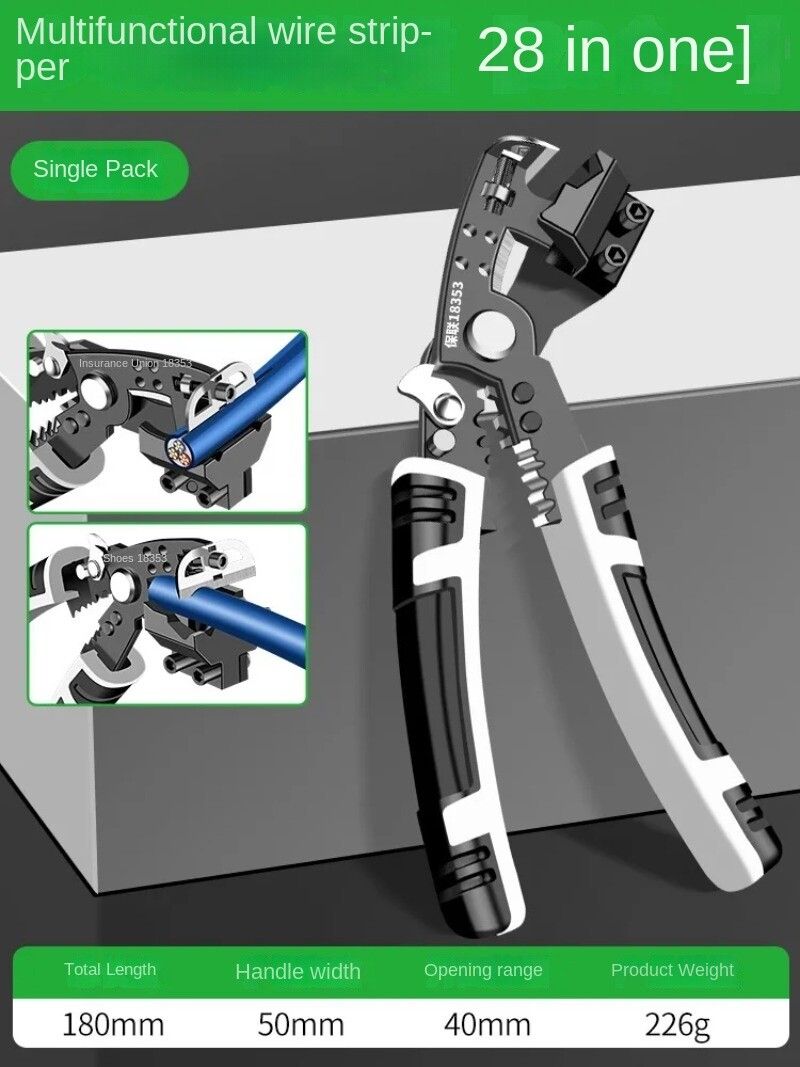 Heavy Duty Wire Strippers Electrician's Multi-Purpose Pliers Cable Cutter$30.02
 View on eBay
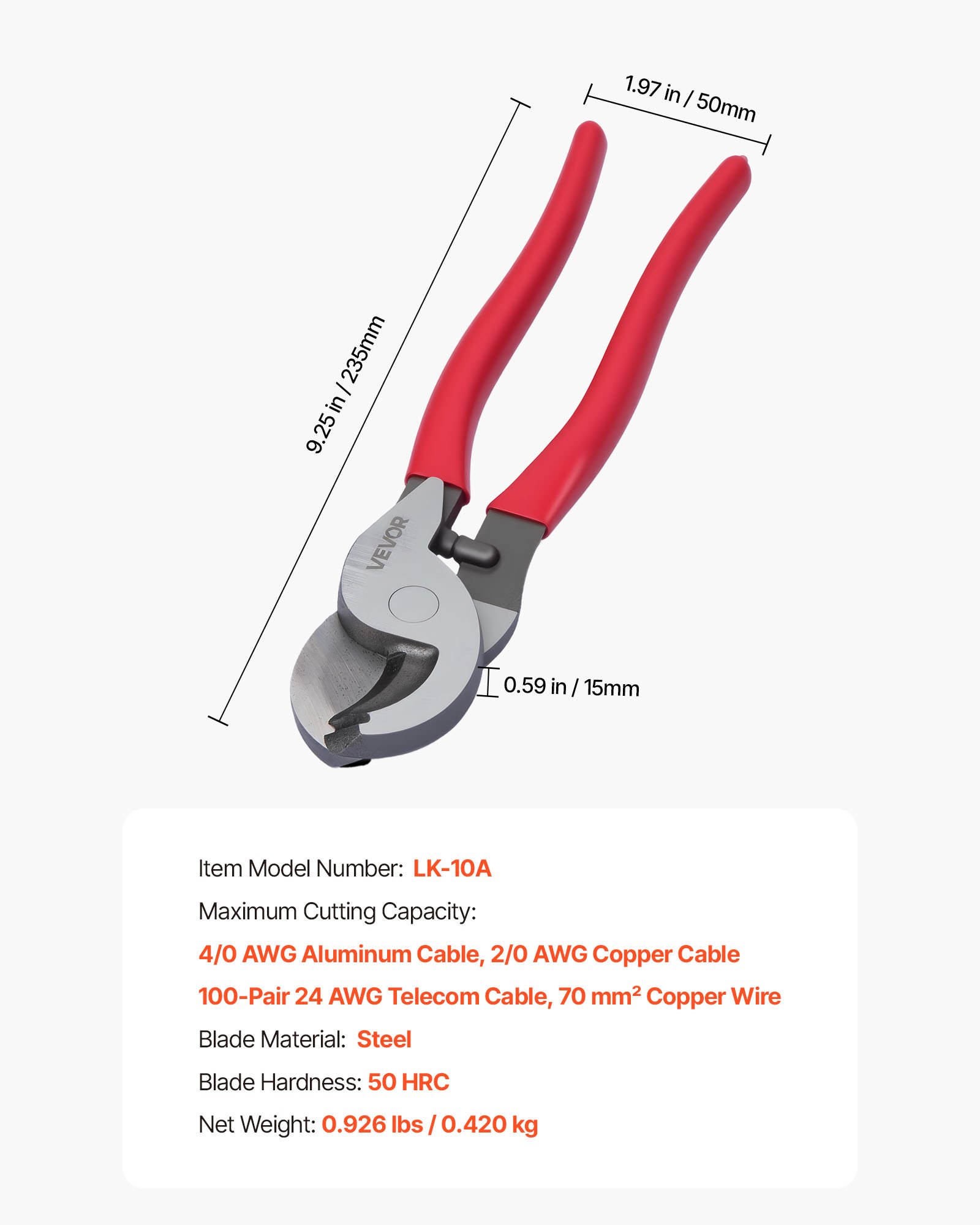 High Leverage Cable Cutter, 9-1/4 In Compact, Forged Blades And PVC-Coated Handles, Heavy Duty Cutting Pliers Tool For 4/0 AWG Aluminum, 2/0 AWG Soft Copper And 100-Pair 24AWG Comm Cables$15.99
 View on Mallflare
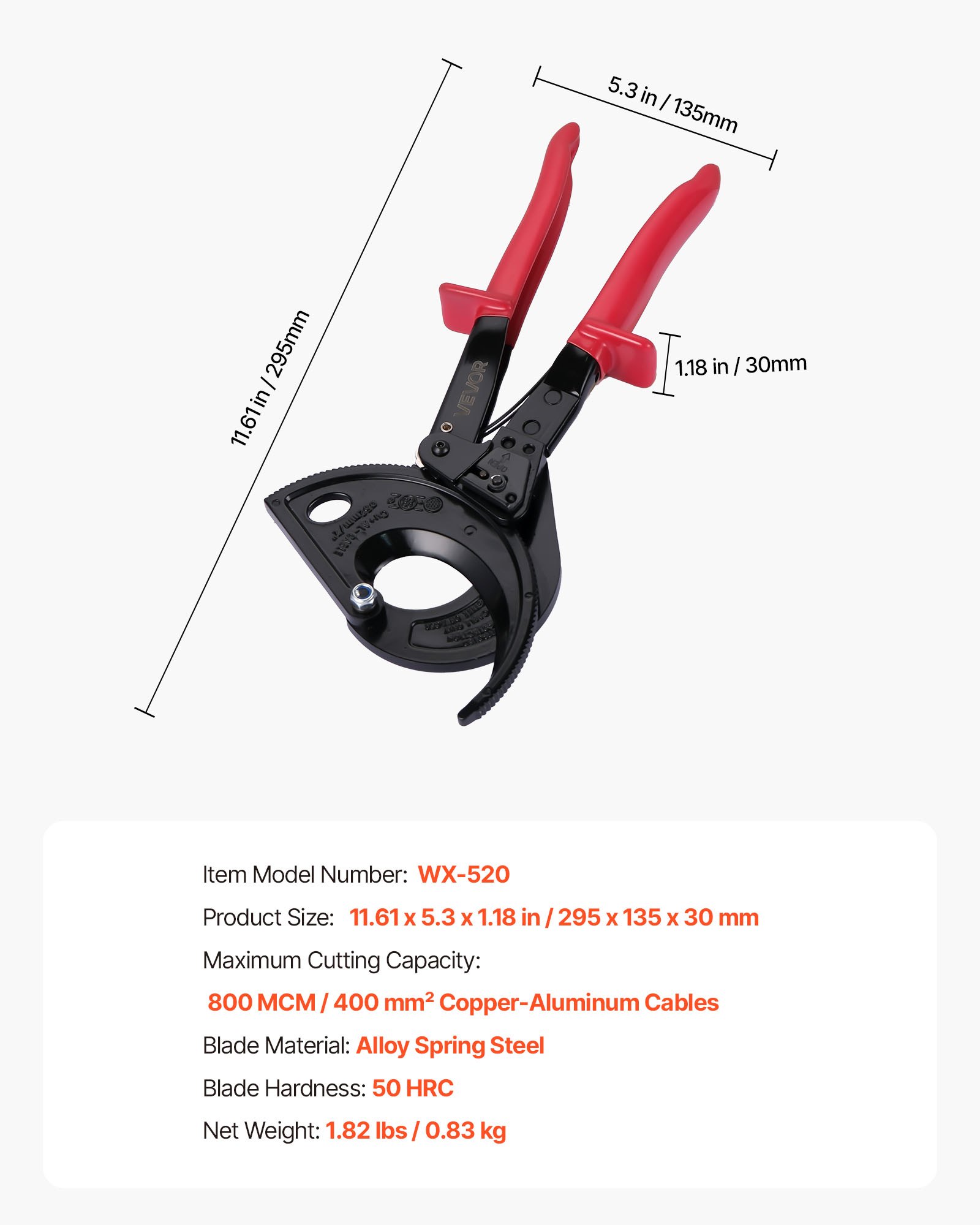 Ratcheting Cable Cutter, Spring Steel Blades With Insulated Handles, Quick-Release Button, Heavy Duty Ratchet Wire For Cutting Copper & Aluminum Cables Up To 800 MCM / 400 Mm²$54.99View on Mallflare
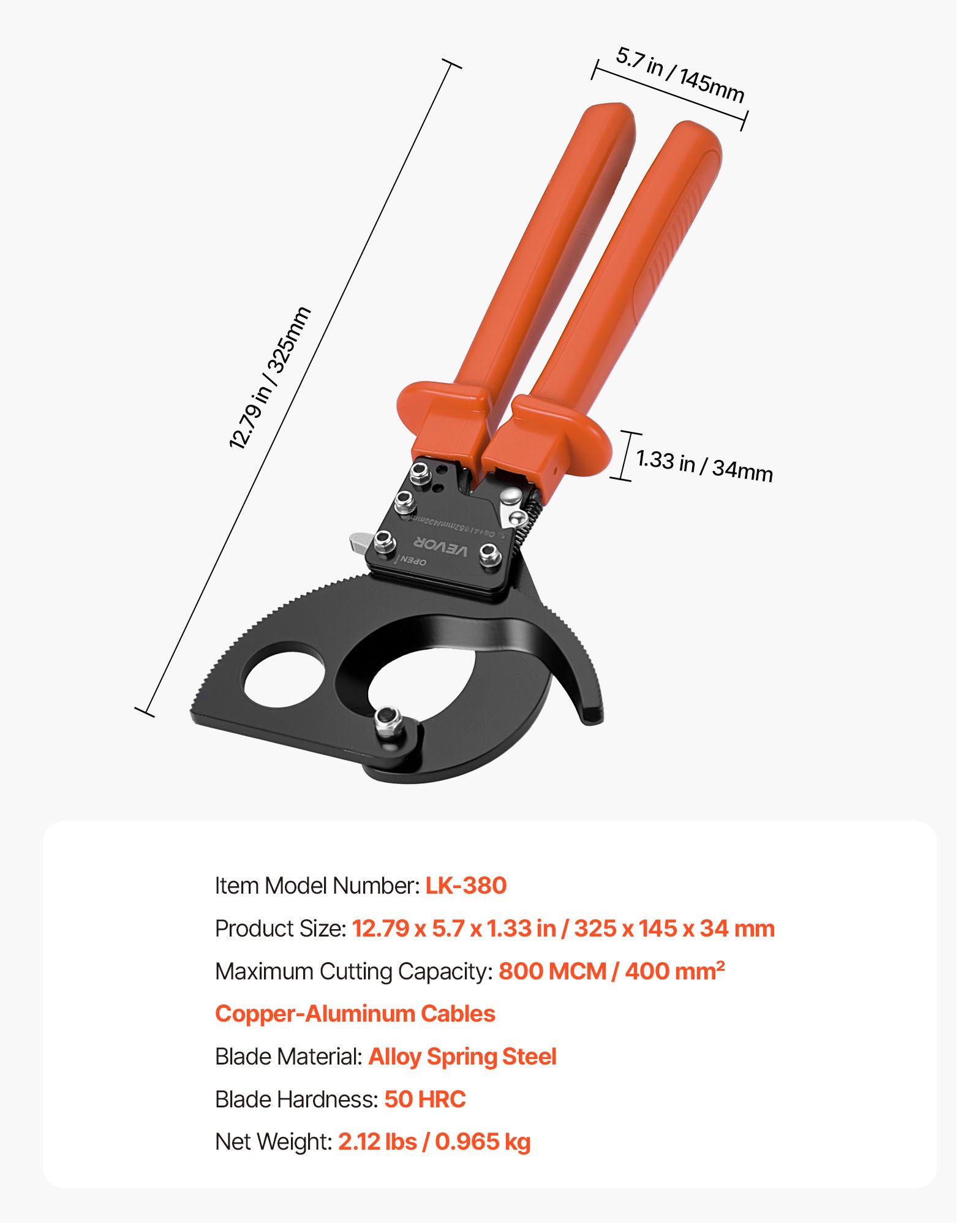 Ratcheting Cable Cutter, Spring Steel Blades With PVC-Coated Handles, Quick-Release Button, Heavy Duty Ratchet Wire For Cutting Copper & Aluminum Cables Up To 800 MCM / 400 Mm²$81.99View on Mallflare
Highlights
- Ratcheting cutters use a pawl-and-gear mechanism that multiplies hand force across multiple strokes, enabling 800 MCM / 400 mm² copper and aluminum cuts with one hand.
- High-leverage pliers rely on compound pivot geometry and forged blades; typical ratings are 4/0 AWG aluminum, 2/0 AWG soft copper, and 100-pair 24 AWG comm cable.
- Spring-steel or forged blades hold an edge under repeated cuts; PVC-coated or insulated handles are dielectric comfort layers, not a substitute for rated live-line gloves.
- A quick-release button on ratchet models retracts the jaw mid-stroke if the cable is mis-seated, preventing blade jamming and jaw spring fatigue.
Best use cases
- Pick a ratcheting 800 MCM cutter for service-entrance, panel, and feeder work in 250–500 kcmil copper or 4/0–500 kcmil aluminum; skip high-leverage pliers in this range.
- Pick a forged high-leverage plier for residential rough-in, 2/0 AWG copper sub-feeds, and 100-pair comm cable where ladder portability and one-hand operation matter.
- Skip ratcheting cutters for fine stranded control wire and small branch circuits; they add weight and stroke count without benefit below 6 AWG.
- Skip compact 9-1/4 in pliers on 750 kcmil and larger; the jaw opening and compound ratio cannot complete the cut and will deform the blade edge.
Buying tips
- Match cutter rating to cable: 2/0 AWG soft copper and 4/0 AWG aluminum are high-leverage plier limits; 800 MCM / 400 mm² copper-aluminum requires a ratcheting frame.
- Check blade material and replacement availability; forged or spring-steel blades that are field-replaceable outlast riveted one-piece jaw assemblies.
- Verify handle insulation is molded or dual-layer PVC, not a slip-on sleeve, for grip retention on sweaty or oily gloves.
- For ratchet models, confirm a quick-release lever and a stroke count under eight per 500 kcmil cut to reduce wrist fatigue on repetitive work.
Specs
| Cut Mechanism | Ratcheting vs high-leverage compound |
|---|---|
| Max Capacity | 800 MCM / 400 mm² vs 4/0 AWG Al |
| Blade Material | Forged steel vs spring steel |
| Handle Type | PVC-coated / insulated grip |
Related searches
What to check before buying
- Measure the largest cable diameter you cut and confirm the jaw opening exceeds it by at least 1/8 in for clean seating.
- Confirm your work involves copper or aluminum only; these cutters are not rated for ACSR steel-core or steel guy wire.
- Check tool weight and length against your pouch or ladder bag; ratchet cutters run longer and heavier than 9-1/4 in pliers.
- Confirm handle grip diameter fits your glove size and that insulated handles are not relied on for live-line voltage protection.
FAQ
Data sources: eBay / Amazon listings and product attribute feeds Data updated Nov 20, 2026.
Some links on this page are affiliate links. If you buy after clicking one, we may earn a commission at no extra cost to you. This does not change which products appear here or their order. Affiliate disclosure.