Photos from current listings. Actual item, color, and included accessories may vary.
Wire Crimp Tool Buying Guide
Wire crimp tools are the hand tools that cold-form a terminal or connector barrel onto a stripped conductor, and the decisive trade-off is ratcheting vs. non-ratcheting mechanism plus jaw geometry matched to the terminal family. Buy a ratcheting tool with hardened steel jaws and a full-cycle release for anything you need to trust; skip stamped-plate pliers-style crimpers and fixed-die tools with no pressure adjustment.


At a glance
- Category
- Electrician Hand Tools
- Data updated
- Nov 20, 2026
Current offers
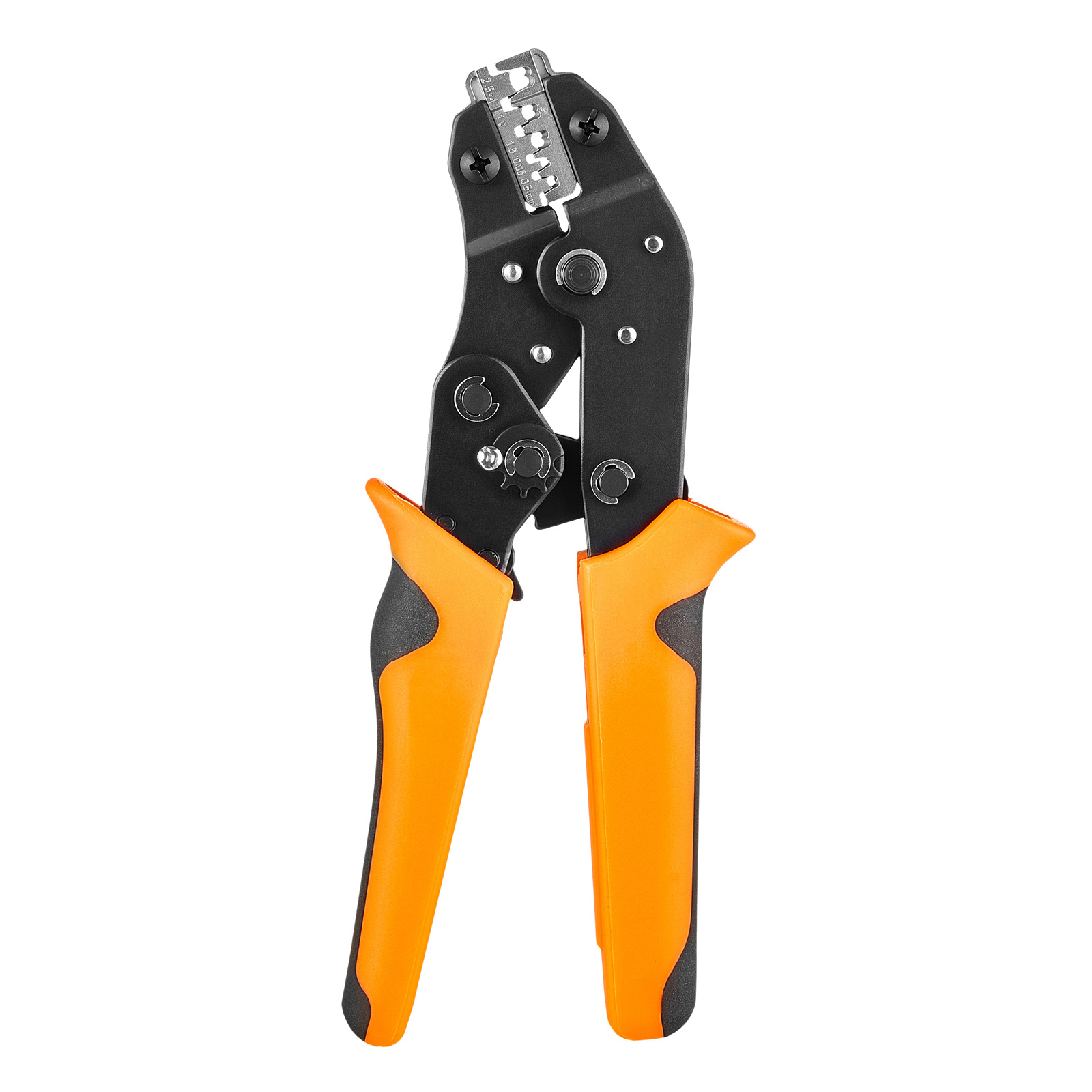 Crimping Tool, 24-12 AWG Ratcheting Wire Crimper Labor-Saving Electrical Terminal Crimp Pliers With Clear Metric & AWG Markings, Quick Release, Adjustable Pressure For Multiple Terminals$18.99
 View on Mallflare
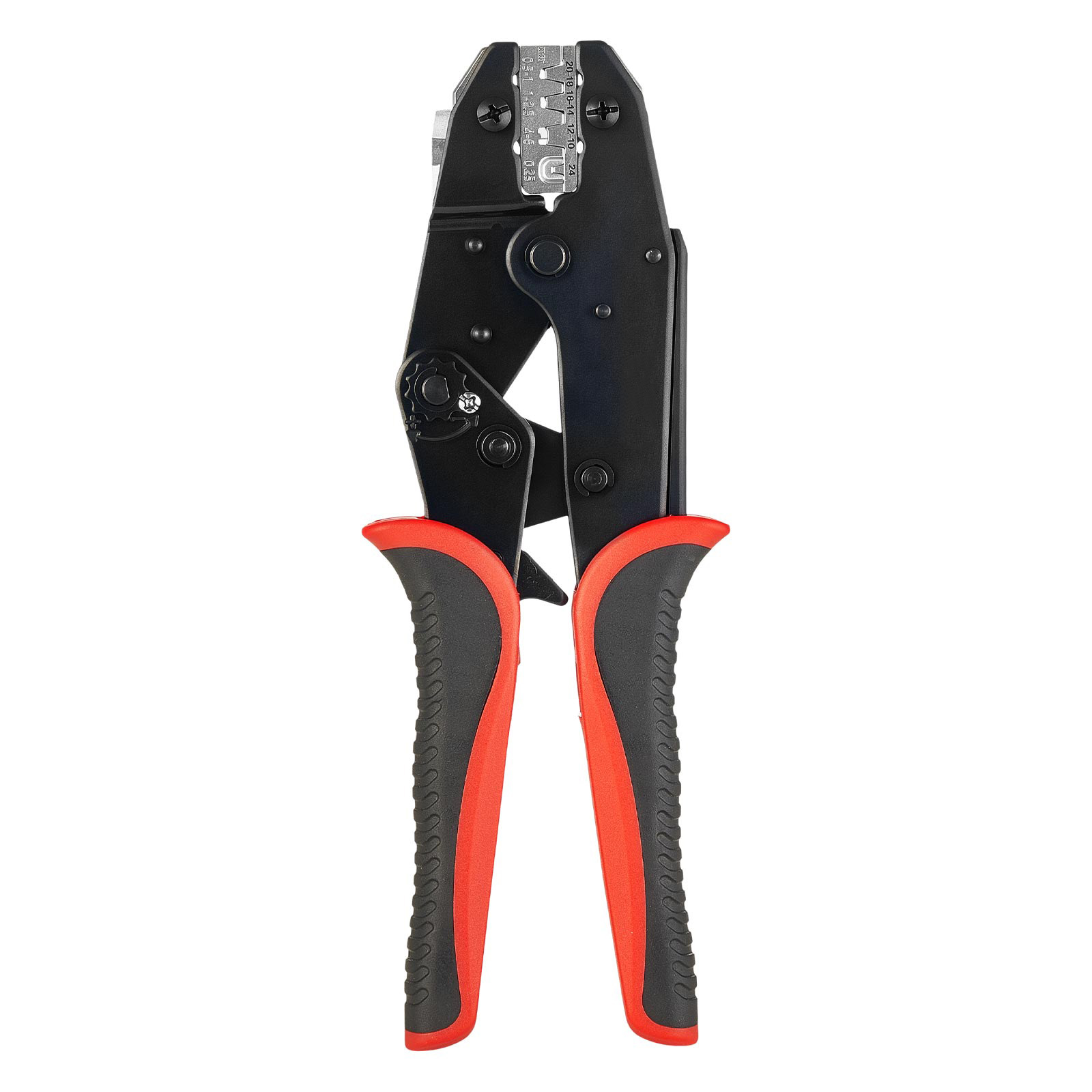 Crimping Tool, 24-10 AWG Ratcheting Wire Crimper Labor-Saving Electrical Terminal Crimp Pliers With Clear Metric & AWG Markings, Quick Release, Adjustable Pressure For Multiple Terminals$20.99View on Mallflare
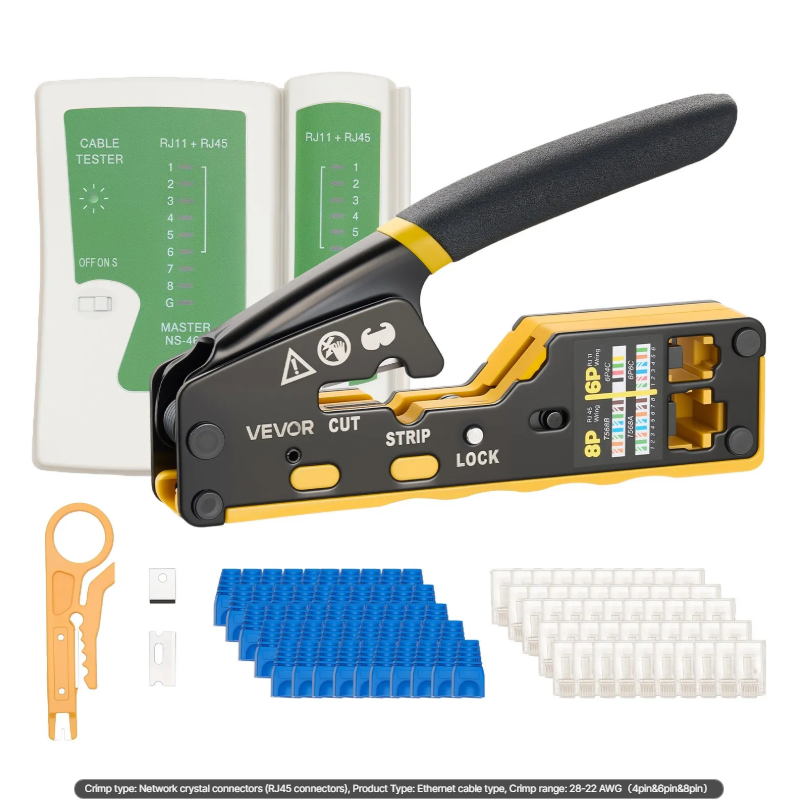 VEVOR Crimping Tool, RJ45-RJ11-RJ12 Ethernet Crimper, Crimp Kit For 4-6-8-Pin Modular Plugs, With Mini Wire Stripper, 50 Connectors And 50 Boots, Replacement Blades, And Network Cable Tester$29.99View on Mallflare
Highlights
- Ratcheting mechanism enforces a full crimp cycle and won't release until the jaw bottoms out, so every terminal gets the same compression; non-ratcheting pliers-style crimpers depend entirely on operator grip force and produce inconsistent pull-off strength.
- Jaw/die family is the real compatibility spec: insulated terminal crimpers use a stepped cavity (typically red/blue/yellow color-coded), open-barrel uninsulated crimpers use a nest-and-concave profile, and modular-plug crimpers use a flat anvil sized for 4/6/8-position RJ plugs — one tool rarely covers all three well.
- AWG range on the tool must bracket your wire, not just your terminal: a 24-12 AWG ratcheting crimper covers 0.20-3.3 mm² control and fixture wire, while a 24-10 AWG tool extends to 5.3 mm² for heavier appliance and panel terminations; using an undersized jaw on large wire under-crimps the barrel.
- Hardened steel (typically 45-55 HRC) jaws with a quick-release lever outlast cast-zinc jaws; adjustable pressure via a jaw-set screw lets you tune crimp height for different terminal thicknesses without swapping dies.
Best use cases
- Best fit: residential/commercial electricians terminating insulated butt splices, spade and ring terminals on 22-12 AWG — pick a ratcheting insulated-terminal crimper with color-coded stepped jaws and a 24-12 AWG range. Skip open-barrel-only tools unless you exclusively run uninsulated terminals.
- Best fit: low-voltage, network and security installers making RJ45/RJ11 patch terminations — pick a dedicated modular-plug crimper with 4/6/8-position anvils and a built-in cable tester; skip it for mains-voltage terminal work because the flat anvil won't form insulated barrels correctly.
- Best fit: panel builders and appliance techs regularly crimping 10 AWG and larger — pick a 24-10 AWG ratcheting tool with adjustable pressure; skip 24-12 tools that stop at 3.3 mm² because 10 AWG (5.26 mm²) won't seat in the jaw.
- Wrong fit: anyone crimping only a handful of terminals a year — a basic non-ratcheting stamped crimper is adequate and cheaper; the ratcheting premium only pays off with repeatable, inspectable crimps.
Buying tips
- Match the tool's AWG/mm² range to your actual wire: 24-12 AWG (0.20-3.3 mm²) covers most control wiring; step to 24-10 AWG (up to 5.3 mm²) if 10 AWG is in scope. Never crimp a wire outside the marked range.
- Choose ratcheting over pliers-style for any connection that carries current: the full-cycle lockout prevents partial crimps that pass a tug test but fail under load or vibration.
- For modular plugs, confirm the crimper lists 4-, 6- and 8-position support and includes a replacement blade; RJ45 (8P8C) and RJ11/RJ12 (6P) anvils are not interchangeable.
- Prefer hardened-steel jaws with a quick-release lever and an external pressure-adjustment screw; cast-zinc jaws deform under repeated 10 AWG crimps and lose crimp height.
Specs
| Mechanism | Ratcheting full-cycle vs pliers-style |
|---|---|
| Terminal Type | Insulated / open-barrel / modular plug |
| AWG Range | 24-12 AWG vs 24-10 AWG (0.2-5.3 mm²) |
| Jaw Material | Hardened steel 45-55 HRC vs cast zinc |
Related searches
What to check before buying
- List every terminal family you'll crimp — insulated, uninsulated/open-barrel, ferrules, or modular plugs — and confirm the tool's die profile matches each, because one jaw geometry cannot correctly form all of them.
- Measure your largest and smallest conductor in AWG or mm² and confirm both fall inside the tool's marked range; a tool rated 24-12 AWG will not correctly crimp 10 AWG.
- Check jaw access for your work: a straight-in jaw suits panel and junction-box work, while a 45° head helps in tight fixture cans; confirm the tool's overall length fits your pouch and reaches inside boxes.
- For modular-plug kits, verify the bundle includes the plug positions you need (8P8C for RJ45, 6P for RJ11/12), spare blades, and a continuity tester so terminations can be verified on site.
FAQ
Data sources: eBay / Amazon listings and product attribute feeds Data updated Nov 20, 2026.
Some links on this page are affiliate links. If you buy after clicking one, we may earn a commission at no extra cost to you. This does not change which products appear here or their order. Affiliate disclosure.