Photos from current listings. Actual item, color, and included accessories may vary.
Wire Cutter Buying Guide
Wire cutters for electricians are defined by jaw geometry and steel hardness: flush diagonal cutters for clean electronics work versus high-leverage side cutters for hard copper and armored cable. The core trade-off is edge retention versus cutting capacity, so buyers must match the cutter type to the conductor and insulation they cut daily. A clear decision rule separates durable forged, induction-hardened tools from soft stamped steel that dents on first use.

At a glance
- Category
- Electrician Hand Tools
- Data updated
- Nov 20, 2026
Current offers
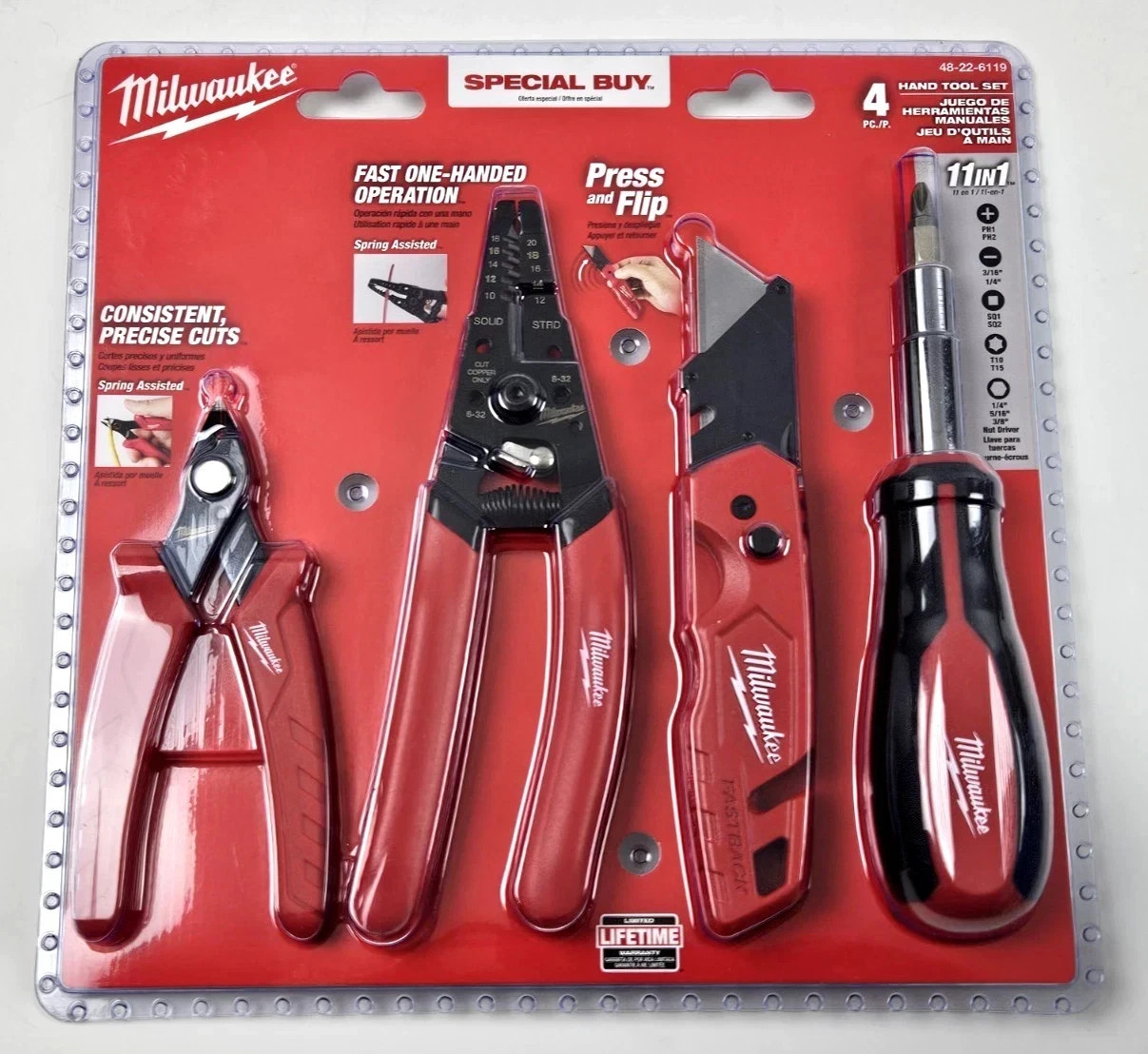 MILWAUKEE 4pc ELECTRICIAN'S HAND TOOL SET WIRE STRIPPER CUTTER SCREWDRIVER KNIFE$29.88
 View on eBay
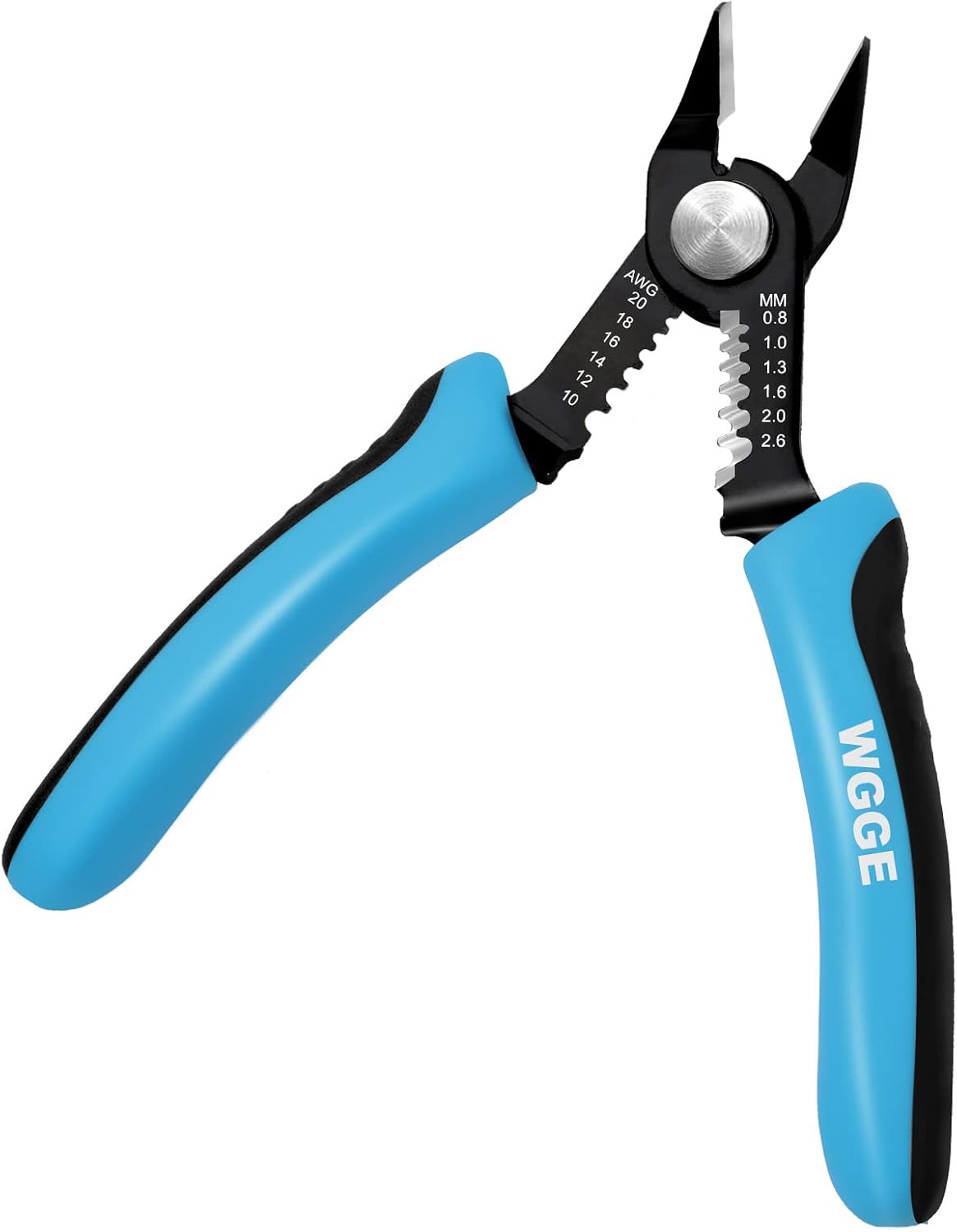 Precision Flush Wire Cutter & Stripper, 10-20 AWG, 6-Inch High-Carbon Steel Tool With Spring Handle & Angled Jaws For Electronics$44.99
 View on Mallflare
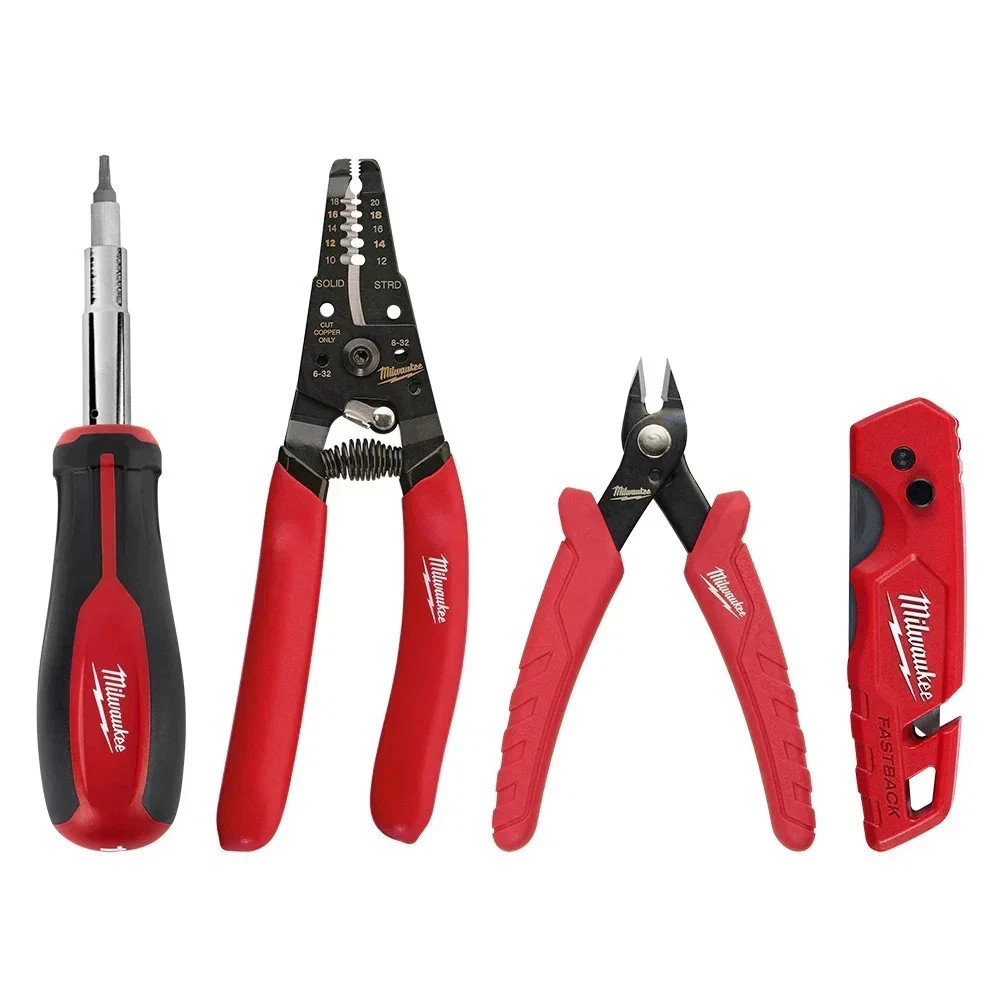 MILWAUKEE 48-22-6119 Electrician's HAND TOOL SET 4-PIECE WIRE STRIPPER CUTTER ..$29.98View on eBay
Highlights
- Forged vs stamped steel: forged jaws resist nicking and hold an edge through thousands of copper cuts; stamped steel deforms under 12 AWG solid wire.
- Flush vs semi-flush vs standard bevel: flush leaves near-zero pinching on soft wire, while beveled edges handle hardened steel and screws without chipping.
- Induction-hardened cutting edges (typically 60-65 HRC) are essential for cutting hardened piano wire and ACSR without rolling the edge.
- Leverage ratio matters: high-leverage compound-joint cutters reduce hand force by 30-50% on 10-12 AWG compared to standard pivot cutters.
Best use cases
- Best fit: electronics and control-panel work — pick a 5-6 inch flush cutter rated 10-20 AWG for clean lead trimming; skip heavy side cutters that crush fine stranded wire.
- Best fit: residential rough-in — choose 8-inch high-leverage diagonal cutters rated at least 10 AWG solid for Romex and NM cable; skip 6-inch flush cutters that lack leverage.
- Best fit: armored cable and MC — use a dedicated cable cutter or lineman's-style side cutter with a notched jaw; skip flush cutters, which chip on steel armor.
- Wrong fit: cutting hardened screws or bolts with any wire cutter — this rolls the edge; use bolt cutters or a hacksaw instead.
Buying tips
- Match AWG rating to your daily wire: a cutter rated 10-20 AWG covers most branch circuits; 12 AWG solid needs a 7-8 inch high-leverage model.
- Choose induction-hardened edges rated 60 HRC or higher if you cut piano wire, ACSR, or hardened nails; standard edges chip on these.
- For flush cuts on soft copper and stranded wire, select a cutter with a ground flush face and a spring-loaded return for repetitive trimming.
- Handle grips should be dual-material or dipped for 1000V insulation only if you work live; standard grips are fine for de-energized work.
Specs
| Cutter Type | Flush / Semi-flush / Beveled diagonal |
|---|---|
| Steel Construction | Forged vs stamped; induction-hardened edges |
| Cutting Capacity | 10-20 AWG typical; 8-inch for 10 AWG solid |
| Handle Insulation | Standard grip vs 1000V insulated |
Related searches
What to check before buying
- Measure your maximum conductor: 12 AWG solid needs a cutter with at least a 1/8-inch jaw opening and high-leverage pivot.
- Confirm the cutter type matches your work: flush for electronics, beveled diagonal for general electrical, cable cutter for MC/AC.
- Check handle ergonomics for glove fit: 8-inch models suit larger hands and leverage; 6-inch models suit tight panel work.
- Verify edge hardness specification or brand reputation for induction hardening if cutting hardened wire or ACSR.
FAQ
Data sources: eBay / Amazon listings and product attribute feeds Data updated Nov 20, 2026.
Some links on this page are affiliate links. If you buy after clicking one, we may earn a commission at no extra cost to you. This does not change which products appear here or their order. Affiliate disclosure.