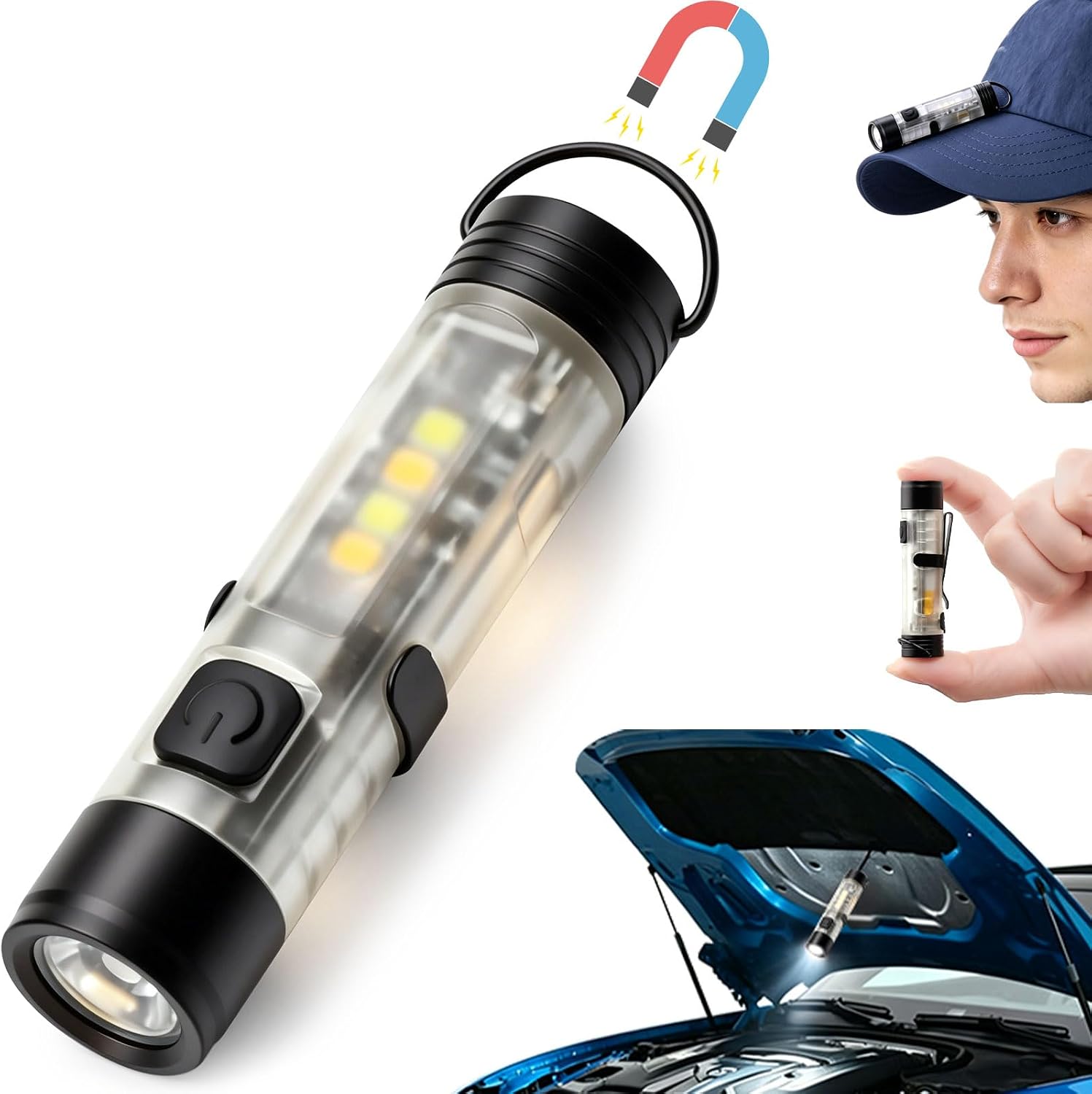

Photos from current listings. Actual item, color, and included accessories may vary.
Mini Keychain LED Flashlight Buying Guide
A mini keychain LED flashlight is a sub-3-inch, keyring-mounted light that trades battery capacity and beam throw for always-with-you convenience. The core trade-off is between disposable coin-cell models (ultralight, low output) and USB-rechargeable lithium-polymer units (higher lumens, recurring charge cycles). Buy rechargeable with a locking keyring gate and at least IPX4 for daily carry; accept coin-cell only for backup or ultralight keyring minimalism.


At a glance
- Category
- Flashlights & Headlamps
- Data updated
- Nov 20, 2026
Current offers
Highlights
- Rechargeable units use built-in Li-polymer cells (typically 100–300 mAh) with micro-USB or USB-C; USB-C is the current standard and eliminates cable hunting.
- Output tiers split clearly: coin-cell models deliver 10–50 lumens, while Li-polymer rechargeables reach 100–500 lumens on turbo with step-down to 30–100 lumens sustained.
- Body materials grade from ABS plastic (light but prone to cracking) to anodized 6061 aluminum (abrasion-resistant, better heat sinking) to titanium (premium, heavier).
- Water resistance is rated IPX4 (splash) to IPX8 (submersion); keyring attachment must be a closed gate or screw-lock carabiner — split rings without a gate are the most common failure point.
Best use cases
- Best fit: USB-C rechargeable aluminum body with 100+ lumen turbo and IPX4+ for everyday keyring carry, dog walking, and car emergency use — pick this as your primary.
- Best fit: coin-cell (CR2032/CR2016) plastic micro-light for ultralight keyring minimalism or as a backup that sits unused for years without self-discharge worries.
- Wrong fit: buying a 500-lumen turbo model for sustained work lighting — mini lights step down hard after 30–60 seconds due to thermal mass limits; use a 18650 EDC light instead.
- Wrong fit: relying on a friction-fit or open split ring for keys — choose a screw-lock gate or closed carabiner to avoid losing the light.
Buying tips
- Match battery to use: USB-C Li-polymer for weekly use and 100+ lumens; CR2032 coin-cell for backup or sub-20-gram keyring weight.
- Choose anodized 6061 aluminum over ABS plastic if the light shares a pocket with keys — plastic bodies crack at the keyring hole under repeated stress.
- Verify IPX rating: IPX4 minimum for rain/splash; IPX8 only if you need submersion (boat, fishing). IPX4 is sufficient for pocket carry.
- Check charge standard: USB-C (current) vs micro-USB (older stock) — USB-C avoids carrying a legacy cable and is the forward-compatible choice.
Specs
| Power Source | USB-C Li-polymer vs CR2032 coin-cell |
|---|---|
| Output Range | 10–500 lm (turbo) / 30–100 lm sustained |
| Body Material | Anodized 6061 aluminum vs ABS plastic |
| Water Resistance | IPX4 splash to IPX8 submersion |
Related searches
What to check before buying
- Measure your keyring load: add the light's weight (15–50 g) and confirm your keyring or carabiner gate closes fully without gap.
- Confirm charging port type and whether the light uses a built-in USB-C port or a proprietary magnetic dock — built-in USB-C needs no extra cable.
- Check the attachment: screw-lock gate or closed carabiner preferred; open split rings can separate under pocket friction.
- Verify IPX rating against your environment: IPX4 for rain/splash, IPX8 for submersion; plastic bodies often rate lower than aluminum.
FAQ
Data sources: eBay / Amazon listings and product attribute feeds Data updated Nov 20, 2026.
Some links on this page are affiliate links. If you buy after clicking one, we may earn a commission at no extra cost to you. This does not change which products appear here or their order. Affiliate disclosure.