Photos from current listings. Actual item, color, and included accessories may vary.
Digital Angle Finder Buying Guide
A digital angle finder is a precision instrument that converts angular position into a digital readout using an accelerometer or inclinometer, replacing bubble vials and protractor arms for tasks requiring repeatable, tight-tolerance angle measurement. The core trade-off is between absolute accuracy and resolution versus practical durability and magnetic mounting strength: cheap units often specify ±0.5° or worse with plastic housings and weak magnets, while serious tools deliver ±0.1° or ±0.05° accuracy with machined aluminum bodies and rare-earth magnets. The decision rule is simple: if you need repeatable cuts or installs within 0.2°, buy a unit rated ±0.1° or better with a metal frame and strong magnetization; if you only need approximate leveling, a ±0.5° plastic unit is acceptable but will not hold calibration under job-site abuse.


At a glance
- Category
- Measuring & Layout Tools
- Data updated
- Nov 20, 2026
Current offers
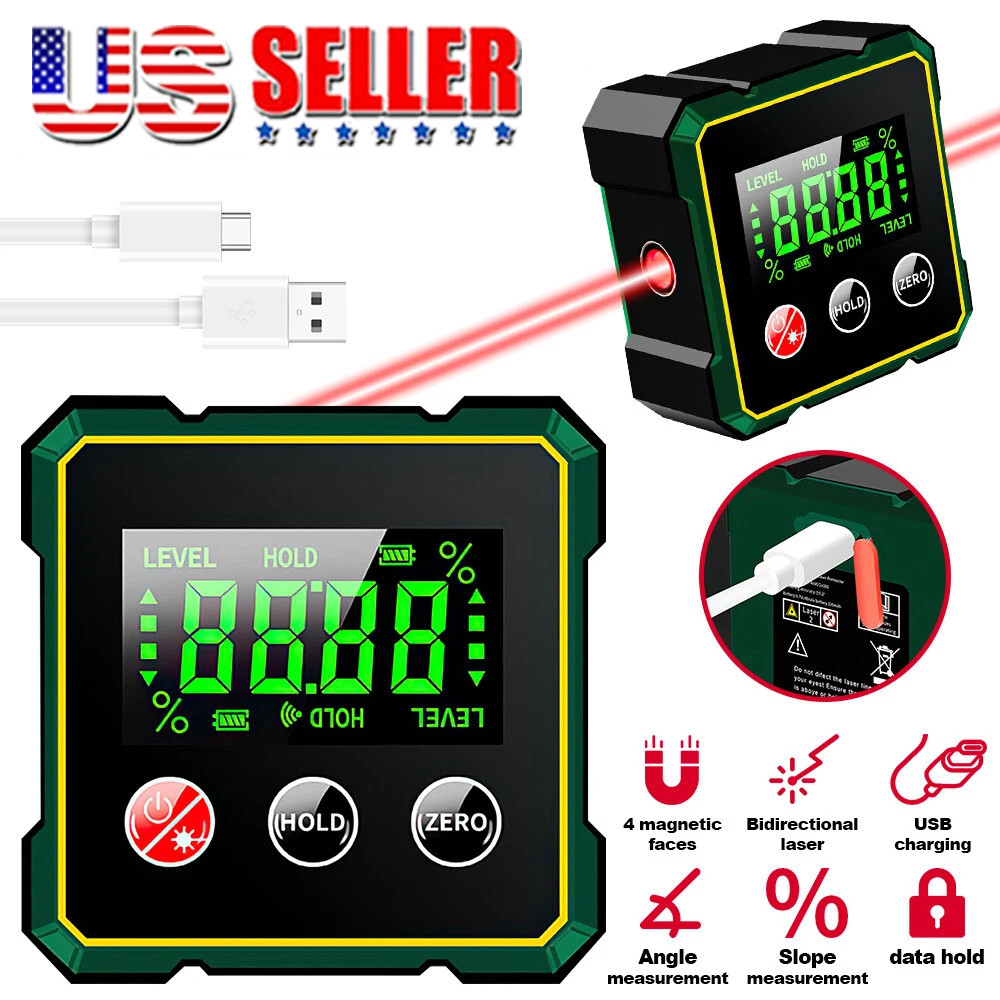 Digital Angle Finder with Electronic Laser 4-side Strong Magnetic Angle Gauge US$7.99
 View on eBay
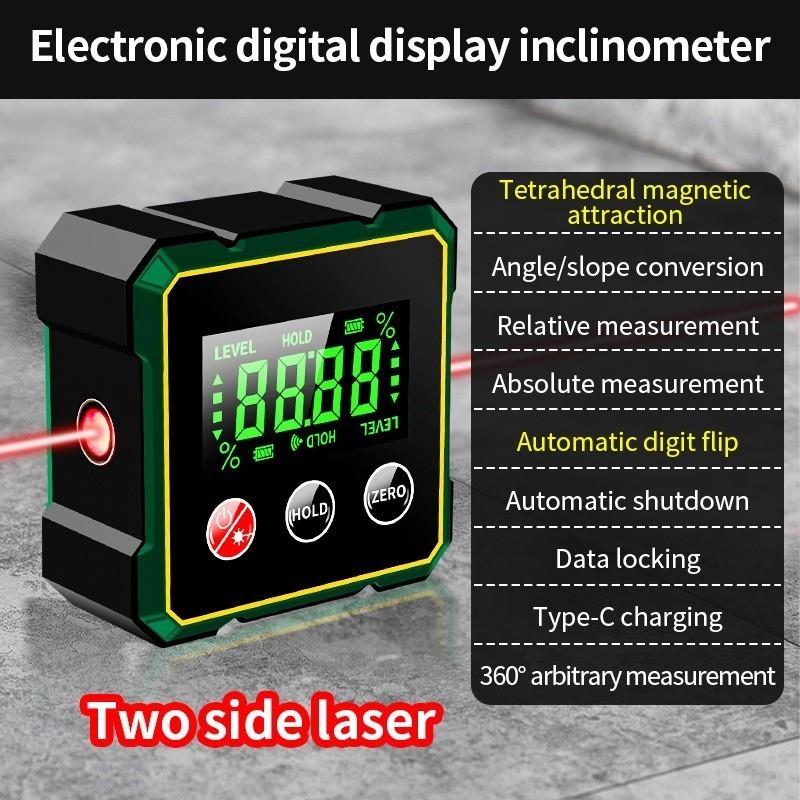 Digital Angle Finder with Electronic Laser 4-side Strong Magnetic Angle Gauge$12.99View on eBay
 Digital Angle Finder with Electronic Laser 4-side Strong Magnetic Angle Gauge$13.99View on eBay
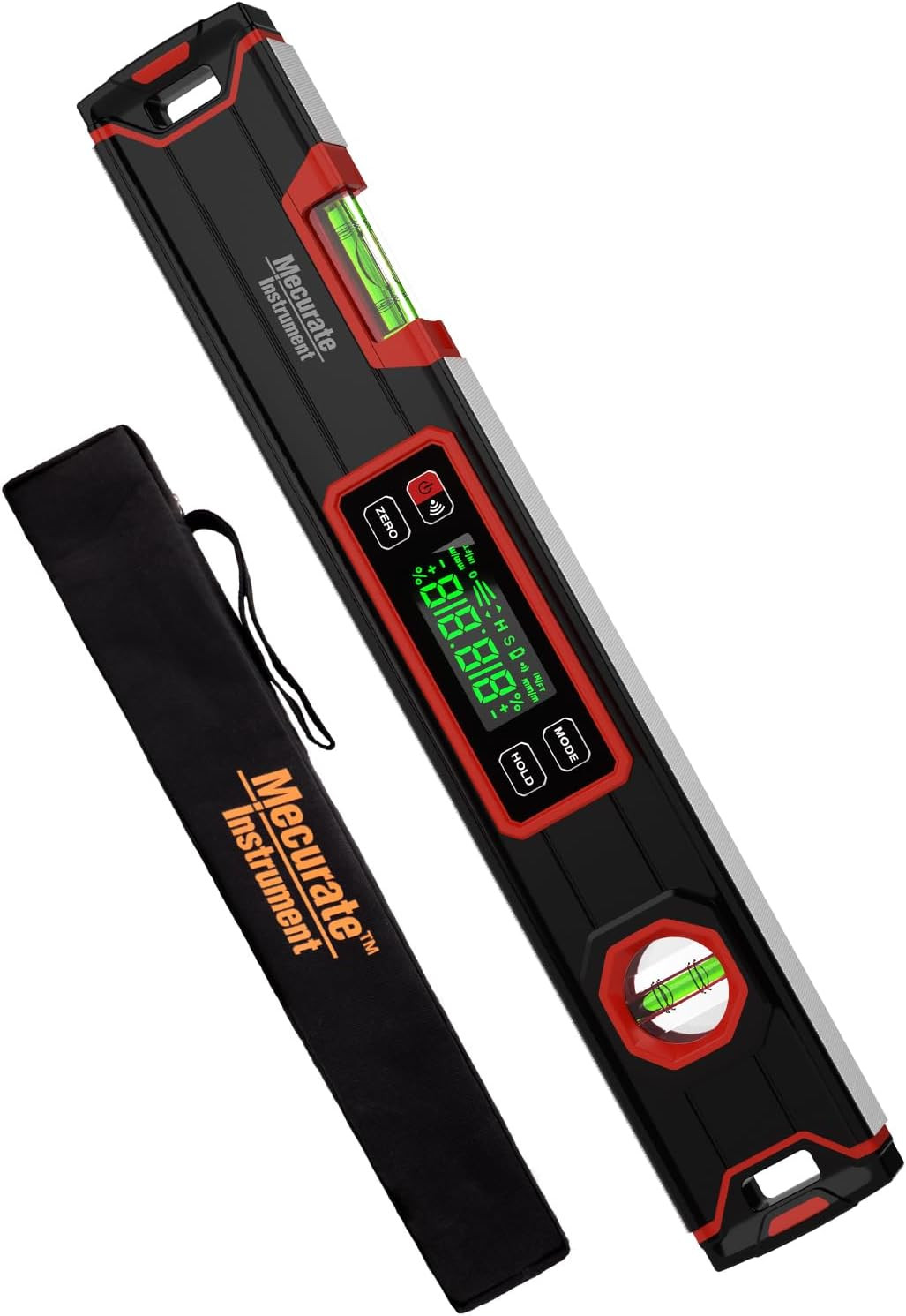 16-Inch Digital Level, Portable Electronic Angle Finder with Backlit Display, ±0$63.60View on eBay
Highlights
- Accuracy tiers separate professional from DIY: ±0.05° to ±0.1° units use dual-axis MEMS accelerometers and temperature compensation, while ±0.5° budget models drift with temperature and battery voltage.
- Magnetic mounting strength is rated in pull force or holding force; 4-side rare-earth magnets with 2 lb or higher pull force keep the tool stable on steel pipe, conduit, and saw tables without slipping.
- Display resolution is often finer than accuracy—0.01° resolution on a ±0.2° device is misleading; always compare the accuracy specification, not the decimal places shown.
- Housing material determines survival: machined 6061 aluminum bodies resist bend and maintain calibration, while ABS plastic housings flex and lose zero reference after drops or clamp pressure.
Best use cases
- Best fit for woodworking and cabinetry: pick a ±0.1° unit with a 2-inch or larger reference base and strong magnets for repeatable miter and bevel setups on table saws and miter saws; skip ±0.5° plastic gauges that shift when clamped.
- Best fit for HVAC, pipefitting, and conduit bending: choose a 4-side magnetic model with V-groove base and ±0.2° accuracy that grips round steel without a second hand; skip flat-only base units that roll off pipe.
- Best fit for general construction leveling and drainage slope: a 16-inch digital level with ±0.1° accuracy and backlit display covers long spans and dim spaces; skip short 6-inch angle finders for long-run slope work because short-base errors amplify over distance.
- Wrong fit for machine setup or metrology: a digital angle finder is not a substitute for a sine bar or precision rotary table below ±0.05°; for sub-0.05° work, use a dedicated metrology instrument.
Buying tips
- Verify accuracy against a known reference: a unit specified at ±0.1° should repeat within 0.1° when flipped 180° on the same surface; if it does not, the sensor or calibration is compromised.
- Match base length to task: a 2-inch base amplifies angular error over 12 inches by roughly 6x compared to a 12-inch base—use longer digital levels for slope and drainage work.
- Check magnet configuration: 4-side magnets with V-groove hold on pipe and conduit, while single-face magnets only hold on flat steel; for round stock, V-groove is mandatory.
- Confirm battery type and auto-off: coin-cell (CR2032) units are compact but expensive to replace frequently; AAA units last longer and are preferable for daily job-site use.
Specs
| Accuracy Grade | ±0.05° pro / ±0.1° mid / ±0.5° DIY |
|---|---|
| Magnet Mount | 4-side V-groove vs single flat face |
| Housing Material | 6061 aluminum vs ABS plastic |
| Base Length | 2-6 in angle finder / 16 in level |
Related searches
What to check before buying
- Measure the widest surface you will reference: ensure the tool base is at least as long as the surface or use a longer digital level to avoid short-base error amplification.
- Confirm the tool fits your work environment: check IP rating (IP54 or better for dusty job sites) and operating temperature range if working outdoors in extreme heat or cold.
- Verify magnet pull force and base shape: for pipe or conduit, require a V-groove base and 4-side magnets rated for at least 2 lb pull force to hold without clamping.
- Check display visibility: backlit LCD or OLED is necessary for dim cabinets and crawlspaces; confirm the display rotates or flips for overhead readings.
FAQ
Data sources: eBay / Amazon listings and product attribute feeds Data updated Nov 20, 2026.
Some links on this page are affiliate links. If you buy after clicking one, we may earn a commission at no extra cost to you. This does not change which products appear here or their order. Affiliate disclosure.