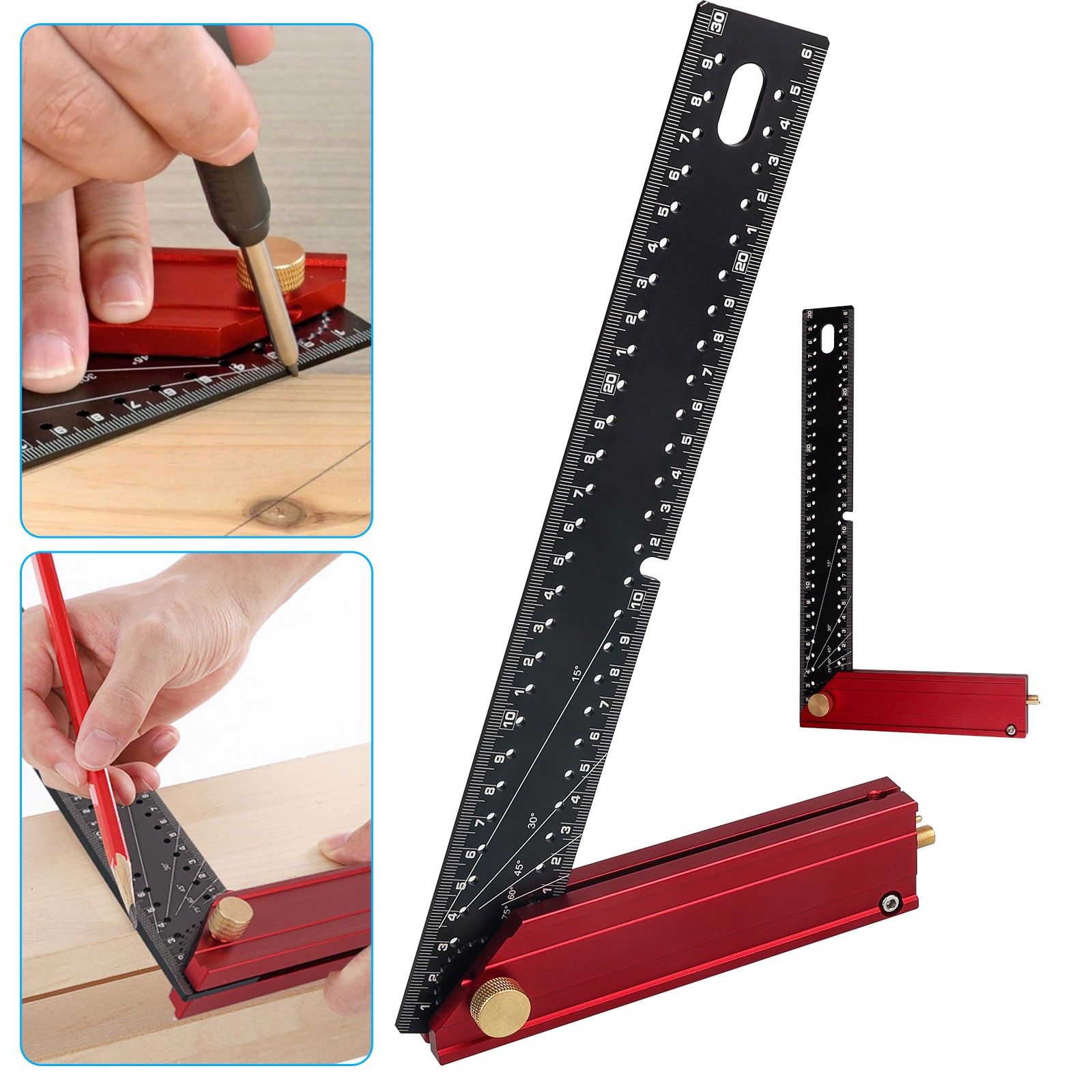

Photos from current listings. Actual item, color, and included accessories may vary.
Carpenter Square Buying Guide
A carpenter square is a rigid 90-degree layout reference—either a solid L-shaped try square or an adjustable two-piece square—used to mark, check, and transfer angles in framing and finish work. The core trade-off is between a fixed, stamped-steel square that stays true for decades and an adjustable square that trades absolute rigidity for fence-and-blade versatility. Buy a fixed square for 90-degree reference work; buy an adjustable square only if you need repeatable angle setting and accept re-checking it against a known true edge.


At a glance
- Category
- Measuring & Layout Tools
- Data updated
- Nov 20, 2026
Current offers
Highlights
- Fixed L-squares rely on a stamped or machined 90° bend in steel or aluminum; adjustable squares use a slotted blade and screw lock that can slip under lateral load.
- Blade length drives layout reach: 12 in squares handle stud and sheet-goods layout; 16 in and 24 in framing squares span wider stock and rafter layout.
- Graduation quality separates tiers: etched or photo-anodized scales resist wear, while printed scales on budget squares fade and misread within a season.
- Heavier steel bodies resist flex during marking; thin aluminum adjusts easily but deflects, so verify squareness against a known straight edge after any drop.
Best use cases
- Framing and stud layout: pick a fixed 12 in steel L-square with etched graduations; skip adjustable squares that drift when bumped.
- Rafter and stair layout: choose a 16x24 in framing square with rafter tables; a 12 in adjustable square is too short for consistent seat and plumb cuts.
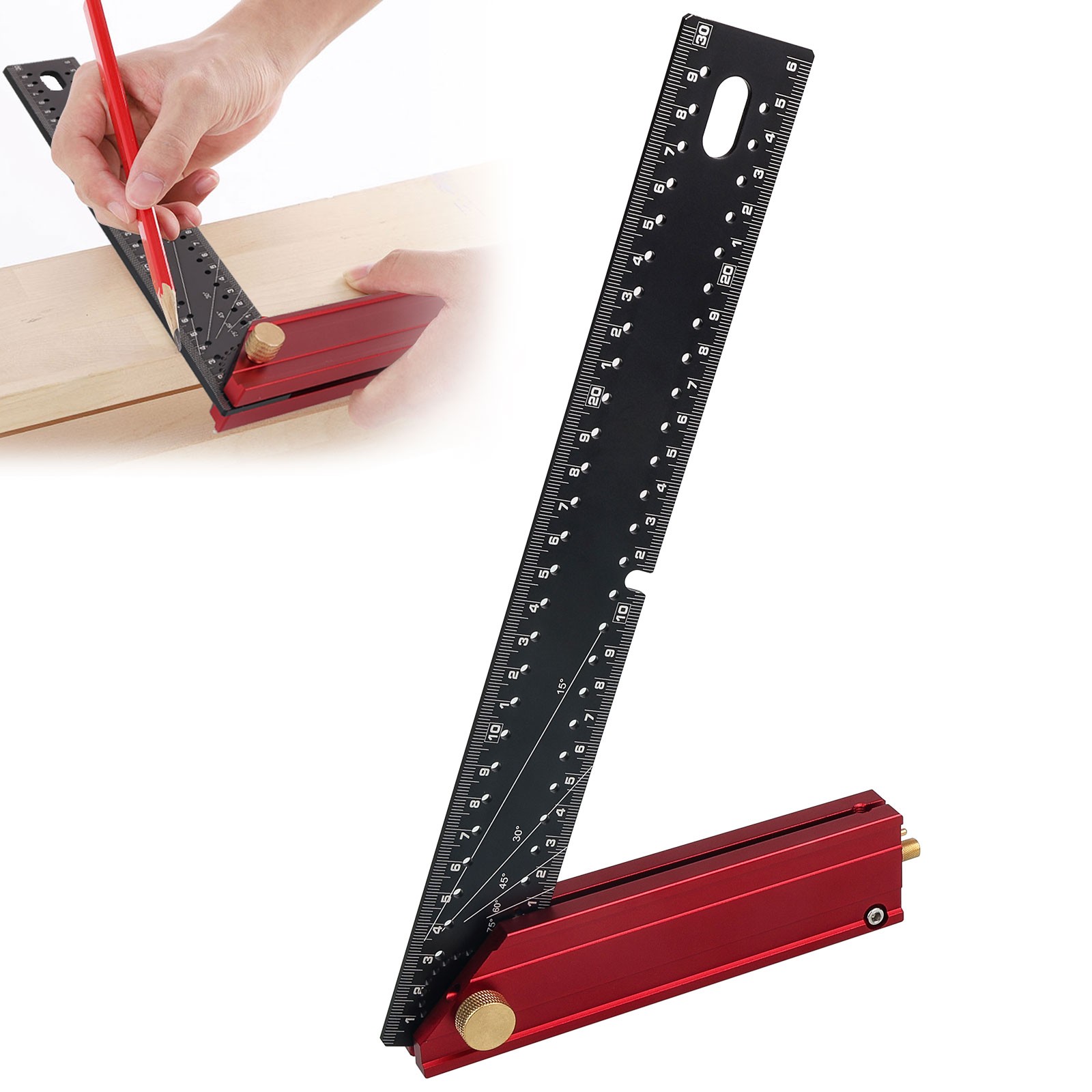
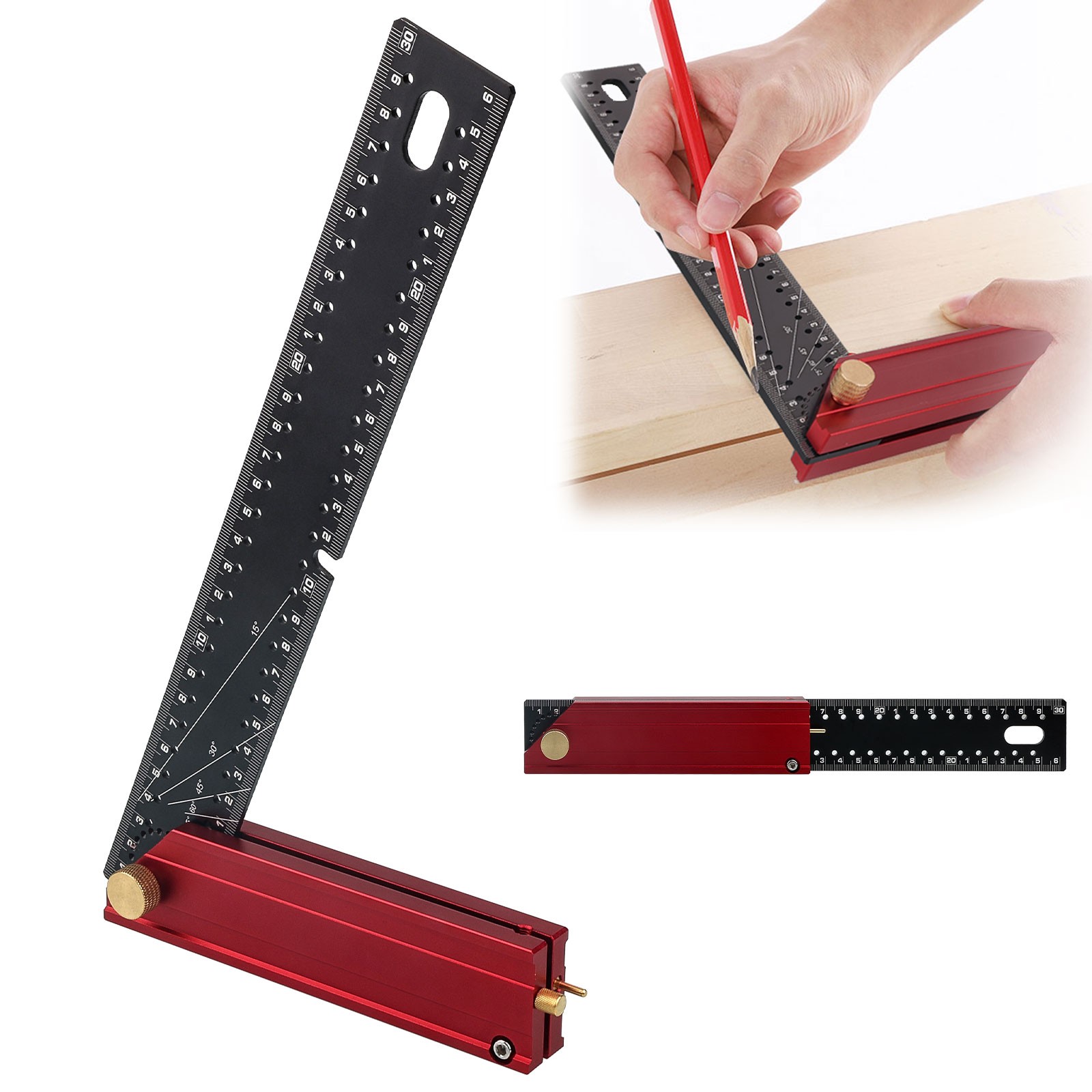
- Trim and cabinet installs: a small adjustable square with a scribing pin suits transferring odd angles; still keep a fixed square for true 90° checks.
- Heavy site abuse and shared toolboxes: buy a one-piece machined square; multi-piece adjustable squares loosen at the lock screw with repeated drops.
Buying tips
- Match blade length to stock width: a 12 in square covers 2x lumber and 12 in sheet goods; step to 16 in or 24 in for wider panels and rafter work.
- Prefer etched, laser-marked, or anodized graduations over painted or printed scales; etched marks survive solvent and abrasion.
- For adjustable squares, confirm a positive screw lock and a blade with a straight reference edge; a loose lock is the failure point.
- Check body thickness and material: stamped steel in the 1/8 in range resists flex, while thin aluminum under 1/16 in deflects during marking.
Specs
| Square Type | Fixed L-square vs adjustable |
|---|---|
| Blade Length | 12 in / 16 in / 24 in |
| Body Material | Stamped steel vs aluminum |
| Graduation Type | Etched / anodized vs printed |
Related searches
What to check before buying
- Measure your widest common stock; blade length must exceed that width for a single-pass mark.
- Confirm the square sits flat on your bench or workpiece; a warped body ruins every mark regardless of graduations.
- Verify the 90° reference against a known straight edge or the 3-4-5 method before trusting any new square.
- For adjustable models, check that the lock screw engages the full blade slot and holds under hand pressure.
FAQ
Data sources: eBay / Amazon listings and product attribute feeds Data updated Nov 20, 2026.
Some links on this page are affiliate links. If you buy after clicking one, we may earn a commission at no extra cost to you. This does not change which products appear here or their order. Affiliate disclosure.