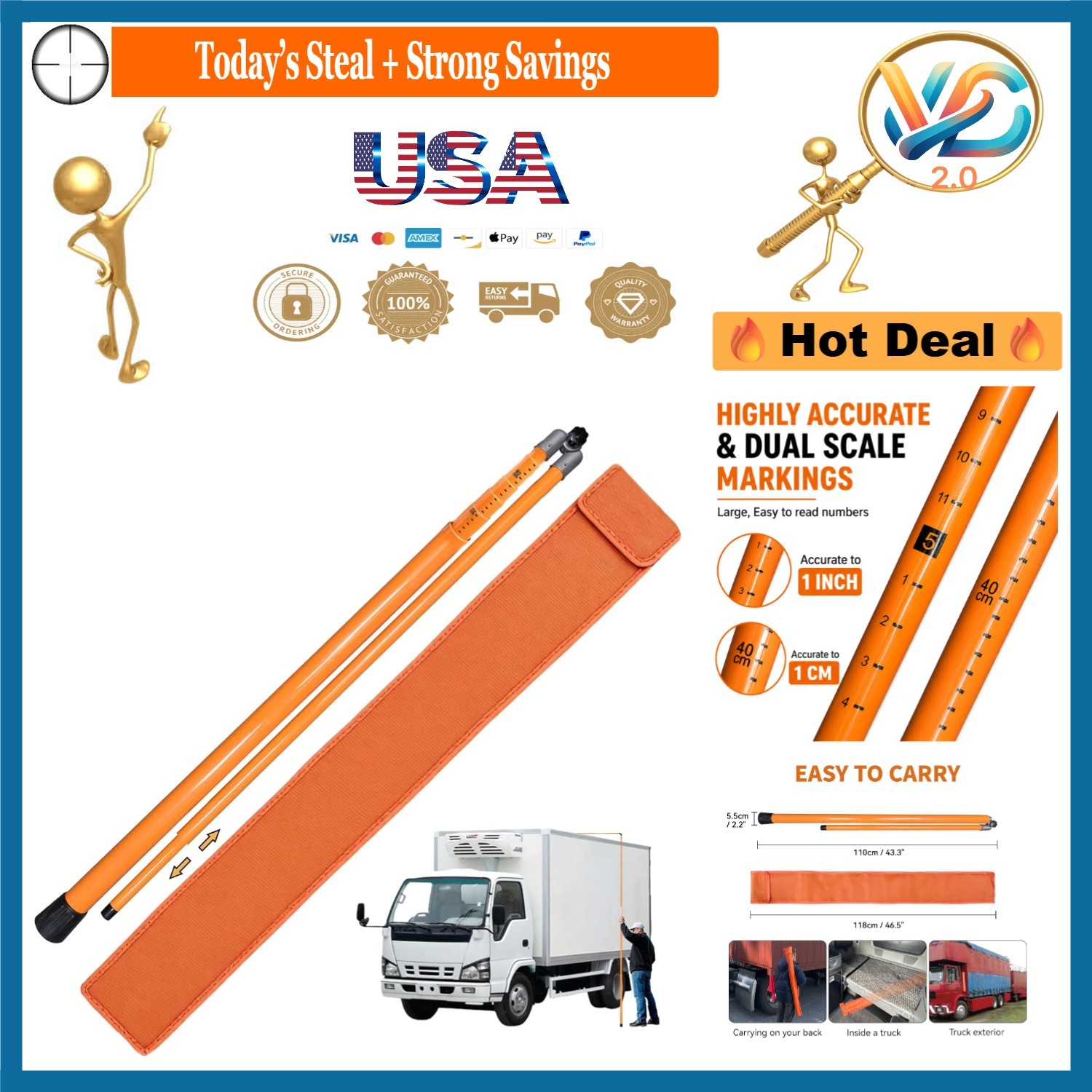

Photos from current listings. Actual item, color, and included accessories may vary.
Height Stick Buying Guide
A height stick is a telescoping measuring pole used to verify overhead clearance or vehicle load height quickly and safely. The primary trade-off is between fiberglass (non-conductive, rust-proof, but flexible) and aluminum (rigid, but conductive and dent-prone). Choose a fiberglass stick with a locking collar and graduated markings if you need reliable, repeatable height checks around trucks, trailers, or low-clearance structures; skip thin aluminum poles that flex or lack positive locks.


At a glance
- Category
- Measuring & Layout Tools
- Data updated
- Nov 20, 2026
Current offers
Highlights
- Fiberglass poles resist corrosion and are non-conductive, making them safer near power lines and ideal for outdoor truck-height checks; aluminum poles are stiffer but dent and conduct electricity.
- Telescoping sections rely on twist-lock or flip-lever collars; twist-locks are common on fiberglass truck sticks and hold extension under load, while friction-fit segments slip over time.
- Graduated markings in feet/inches or metric are essential for direct load-height readings; unmarked or sticker-marked poles fade and require a separate tape measure.
- A 15 ft maximum reach covers most truck load-height and bridge-clearance checks; shorter 8–12 ft sticks suit van, trailer, and indoor door-height measurement.
Best use cases
- Best fit: fiberglass 15 ft telescoping stick with twist-lock collars and printed graduations for daily truck load-height and overhead-clearance checks; skip unmarked aluminum poles that flex at full extension.
- Best fit: compact 8–12 ft aluminum or fiberglass stick for van, trailer, and warehouse door-height verification where portability matters more than non-conductivity.
- Wrong fit: a fixed-length wooden or plastic rule for high loads—it cannot reach 15 ft safely and lacks the locking extension needed for repeatable overhead readings.
- Wrong fit: using a standard tape measure alone for truck height checks—the blade kinks at height and cannot be read accurately without a second person; a graduated height stick is the correct single-person tool.
Buying tips
- Match maximum reach to your tallest check: 15 ft covers most truck load and bridge clearances; 8–12 ft is enough for vans, trailers, and standard door openings.
- Choose fiberglass for non-conductive safety near power lines and rust-free outdoor use; choose aluminum only if you need maximum rigidity and will not work near energized lines.
- Insist on positive locking collars (twist-lock or flip-lever) rather than friction-fit sections; locks prevent the pole from collapsing under load and keep extension length repeatable.
- Look for printed or etched graduations in feet/inches or metric along the full extension; sticker or label markings peel and fade, making the stick unreliable for compliance checks.
Specs
| Material | Fiberglass (non-conductive) vs Aluminum |
|---|---|
| Max Reach | 8–15 ft telescoping |
| Lock Type | Twist-lock / flip-lever vs friction |
| Graduations | Printed ft/in or metric |
Related searches
What to check before buying
- Measure your tallest required reading (load height or overhead clearance) and add at least 1 ft of margin; select a stick whose maximum reach exceeds that total.
- Confirm the collapsed length fits your vehicle cab or storage compartment—15 ft sticks typically collapse to roughly 4–5 ft and may not fit small truck cabs.
- Verify the stick’s tip or base design matches your measurement method: a flat top for under-bridge clearance or a hook/base for reaching over loads.
- Check the marking units and graduation spacing match your local regulations or logging requirements (feet/inches vs metric) before committing to a tier.
FAQ
Data sources: eBay / Amazon listings and product attribute feeds Data updated Nov 20, 2026.
Some links on this page are affiliate links. If you buy after clicking one, we may earn a commission at no extra cost to you. This does not change which products appear here or their order. Affiliate disclosure.