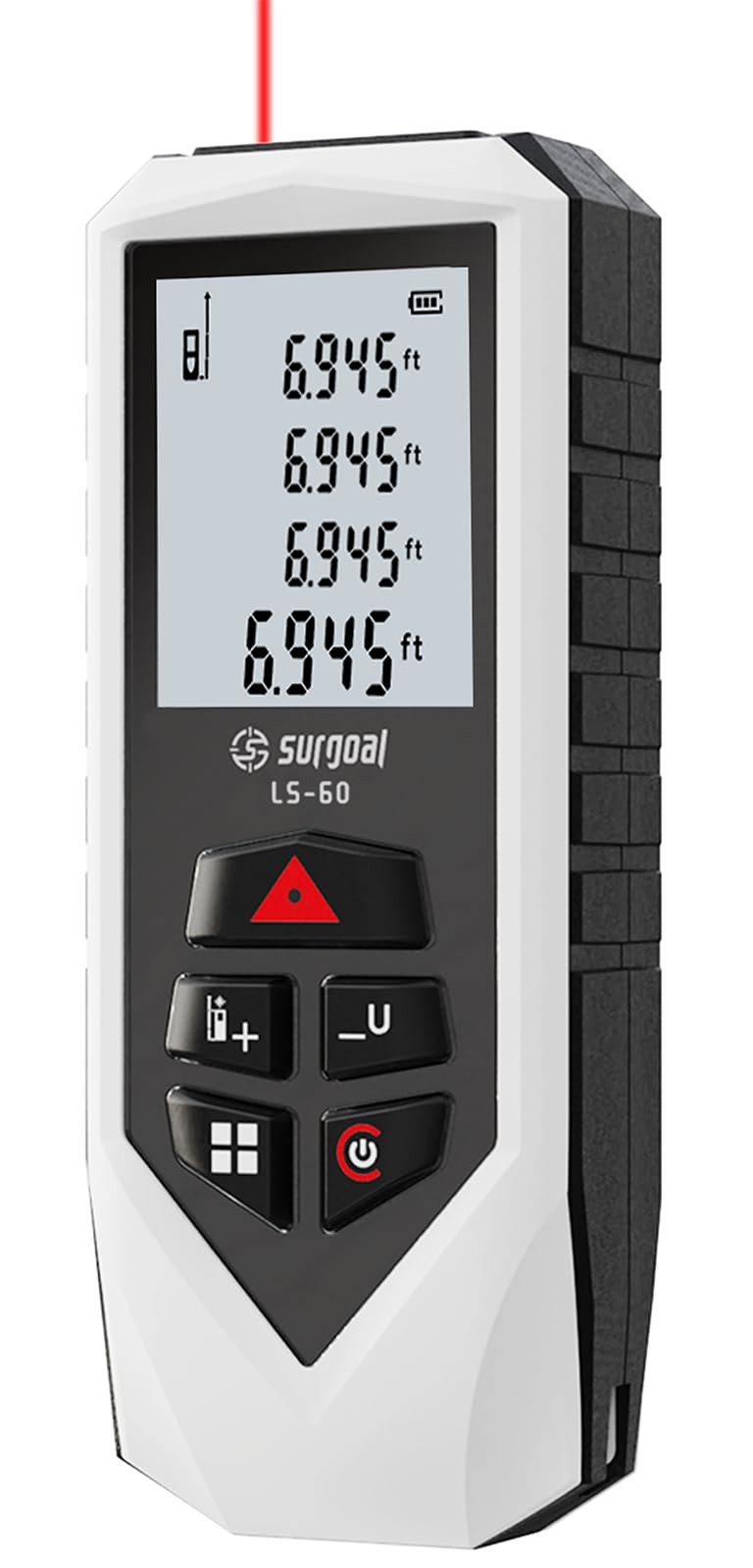

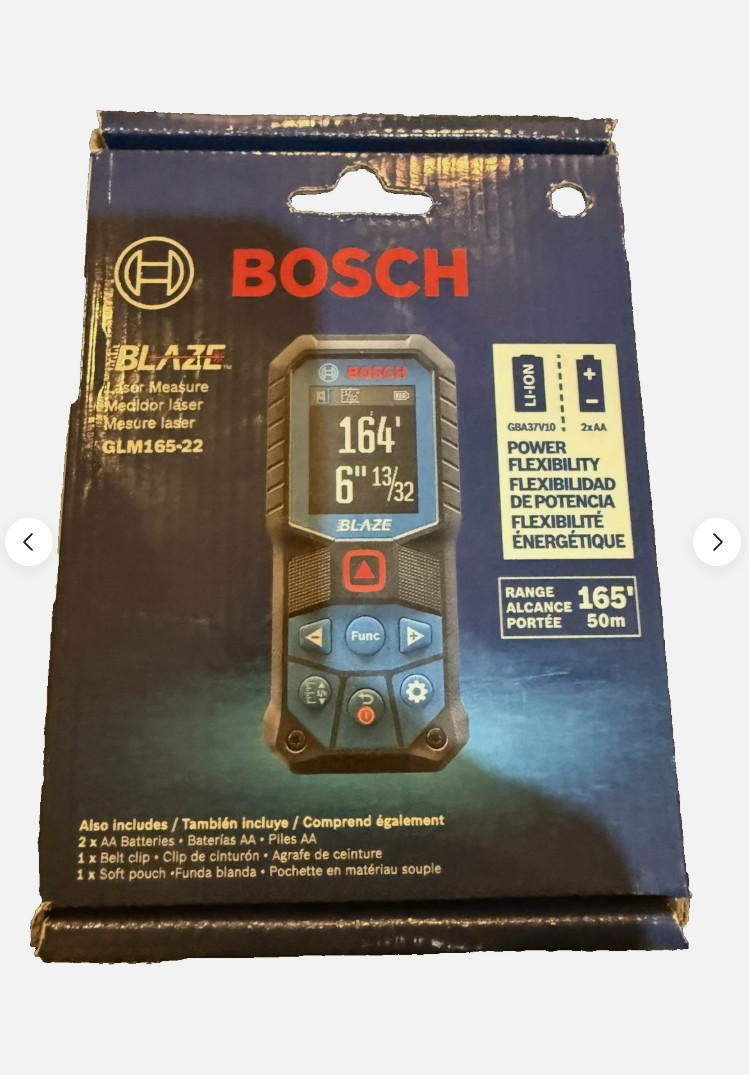
Photos from current listings. Actual item, color, and included accessories may vary.
Laser Distance Measuring Tool Buying Guide
A laser distance measurer replaces the tape for interior point-to-point and area/volume work, trading a physical blade for a pulsed diode and optical sensor. The decisive trade-off is measuring range and accuracy class versus environmental robustness: short-range ±2 mm units are fine indoors, while outdoor or long-span work demands a target plate, a viewfinder, and a higher range tier. The rule: pick a name-brand laser with a documented accuracy class and a replaceable AAA or rechargeable pack; skip no-name units that omit the accuracy tolerance and lack a Pythagorean/area function.


At a glance
- Category
- Measuring & Layout Tools
- Data updated
- Nov 20, 2026
Current offers
Highlights
- Accuracy class is the primary spec: ±1.5 mm to ±2 mm separates professional units from ±3 mm to ±5 mm budget lasers, and error compounds over multiple chained measurements.
- Range tiers are real: ~150-165 ft (45-50 m) covers most interior rooms, while 260-330 ft (80-100 m) units add a viewfinder or target plate for outdoor daylight use.
- Laser class matters: Class 2 (≤1 mW, 635-650 nm) is standard and eye-safe for consumer use; Class 3R units are brighter outdoors but carry stricter handling rules.
- Bosch Blaze GLM165-22 is a 165 ft, ±1/16 in (±1.5 mm) AAA-powered unit, while the 196 ft generic tier typically specifies ±2 mm — both viable, different accuracy classes.
Best use cases
- Interior room measuring, flooring, and painting takeoffs: choose a 150-165 ft ±1.5-2 mm unit with area/volume and continuous mode; skip 260 ft+ models unless you also measure building exteriors.
- Outdoor property lines, facades, and long spans: pick a 260 ft+ unit with a viewfinder or included target plate and Class 2 laser; a 165 ft indoor unit will fail in daylight.
- Multi-trade jobsite use: require IP54 dust/splash rating, a backlit LCD, and drop-tested housing; skip bare plastic units rated only for indoor hobby use.
- Replacing a tape for solo work: choose continuous-measurement mode and a memory/history function; skip units without MIN/MAX tracking, which is essential for standoff measuring.
Buying tips
- Match range to your longest span plus 20% headroom: a 165 ft unit is ample for rooms under 40 ft; choose 260 ft+ only for exterior or multi-story work.
- Check the accuracy tolerance, not the resolution: ±1.5 mm is the professional threshold; ±2 mm is acceptable; ±3 mm or unspecified tolerances are budget-grade.
- Prefer AAA or a documented rechargeable pack over proprietary cells; AAA lasers never brick on a dead battery mid-project.
- Confirm area/volume, Pythagorean (indirect height), and continuous modes are present; these separate a true layout tool from a basic point-and-shoot.
Specs
| Accuracy Class | ±1.5 mm pro / ±2 mm general / ±3 mm budget |
|---|---|
| Range Tier | 150-165 ft indoor / 260-330 ft outdoor |
| Laser Class | Class 2 (≤1 mW, 635-650 nm) |
| Power & Rating | AAA vs rechargeable; IP54 dust/splash |
Related searches
What to check before buying
- Measure your longest expected span in feet or meters and add 20% headroom before choosing a range tier.
- For outdoor use, confirm a target plate or viewfinder is included and that the laser is Class 2 for eye safety.
- Check the battery format (AAA vs rechargeable) and whether the unit ships with cells.
- Verify IP rating: IP54 or better for dusty or damp sites; IP40 is indoor-only.
FAQ
Data sources: eBay / Amazon listings and product attribute feeds Data updated Nov 20, 2026.
Some links on this page are affiliate links. If you buy after clicking one, we may earn a commission at no extra cost to you. This does not change which products appear here or their order. Affiliate disclosure.