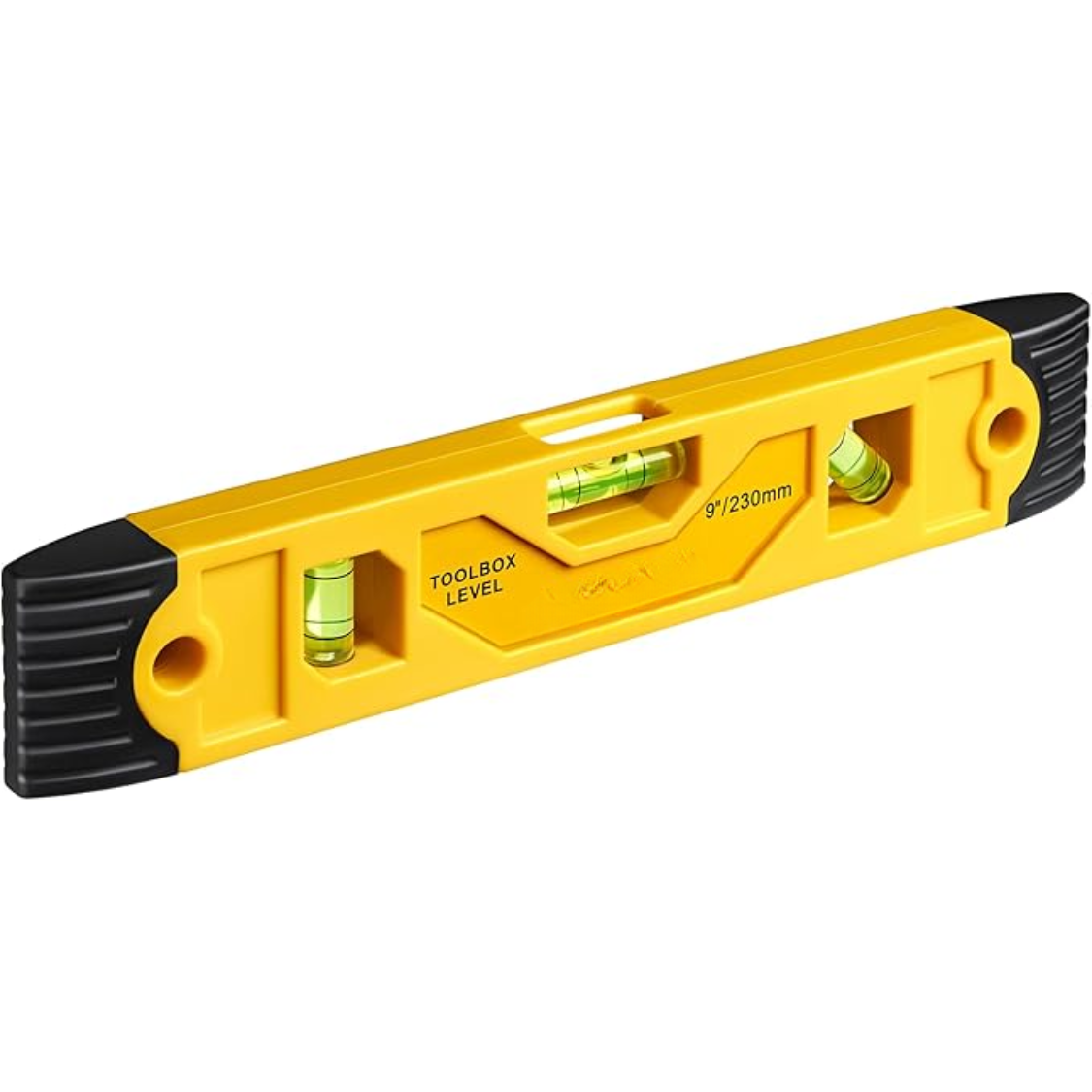

Photos from current listings. Actual item, color, and included accessories may vary.
Small Spirit Level Buying Guide
A small spirit level is a compact bubble vial tool (typically 6–12 inches) used for checking level and plumb over short spans, hanging shelves, aligning frames, and setting small fixtures. The core trade-off is between vial accuracy/maintaining calibration and body rigidity: machined or extruded aluminum bodies in the 9–12 inch range hold tolerance far better than stamped steel or plastic-bodied mini levels. The decision rule: buy an aluminum-bodied level with at least three vials (0°/45°/90°) and a machined reference face if you need repeatable accuracy; skip hollow plastic or single-vial keychain levels for any task where a 1–2 mm error matters.
At a glance
- Category
- Measuring & Layout Tools
- Data updated
- Nov 20, 2026
Current offers
Highlights
- Vial count and orientation: 3-vial layouts (horizontal, vertical plumb, 45°) cover hanging, framing, and stair/slope work; single-vial mini levels only verify one plane.
- Body material: extruded aluminum resists twist and dents; stamped steel bends and plastic bodies flex, both of which silently decalibrate the bubble.
- Accuracy spec: better small levels are rated around ±0.5 mm/m (±0.0005 in/in); unrated budget units can drift well beyond that after a drop.
- Magnetic base: rare-earth or ferrite magnets let the level cling to steel studs, door frames, and pipe; non-magnetic bodies are lighter but need a second hand.
Best use cases
- Hanging shelves, pictures, and small cabinets: pick a 9–12 inch magnetic aluminum level with 3 vials so it spans stud-to-stud and stays put on steel brackets; skip pocket/keychain levels.
- Plumbing and pipe alignment: choose a magnetic level with a V-groove base that seats on round pipe; a flat-only base will rock and read false.
- Tight cabinet, appliance, or drawer installs: a 6–9 inch body fits where a 24 inch level cannot; pick one with a machined top and bottom face for inverted use.
- Precision machinery or long countertop runs: skip small levels entirely—use a 24–48 inch level or a laser level, since a 9 inch vial amplifies error over long spans.
Buying tips
- Match length to span: a level should cover at least 80% of the surface being checked; for a 12 inch shelf, a 9–12 inch level is correct, for a 4 ft counter use 24 inch+.
- Demand an accuracy rating on the body or spec sheet (±0.5 mm/m is the practical benchmark); unrated levels are a gamble after any drop.
- Prefer extruded aluminum with a machined bottom face over stamped or molded bodies; check that vial housings are screwed or cemented, not press-fit.
- For steel-stud or appliance work, confirm a magnetic base rated for the tool's own weight so it does not slide when hands-free.
Specs
| Vial Configuration | 1-vial mini / 3-vial (0°, 45°, 90°) |
|---|---|
| Body Material | Extruded aluminum vs stamped steel vs plastic |
| Accuracy Rating | ±0.5 mm/m rated vs unrated |
| Base Type | Magnetic flat / V-groove / non-magnetic |
Related searches
What to check before buying
- Measure the surface you need to check; buy a level at least 80% of that span, and confirm the body height clears nearby obstructions.
- Confirm the material you are checking: steel (magnetic base helps), wood/drywall (any body), or round pipe (needs V-groove).
- Check vial visibility and contrast (yellow/green fluid, magnified lens) for dim job sites or indoor cabinet work.
- Verify the level includes both plumb and level vials plus a 45° vial if you hang diagonal items or work stairs.
FAQ
Data sources: eBay / Amazon listings and product attribute feeds Data updated Nov 20, 2026.
Some links on this page are affiliate links. If you buy after clicking one, we may earn a commission at no extra cost to you. This does not change which products appear here or their order. Affiliate disclosure.