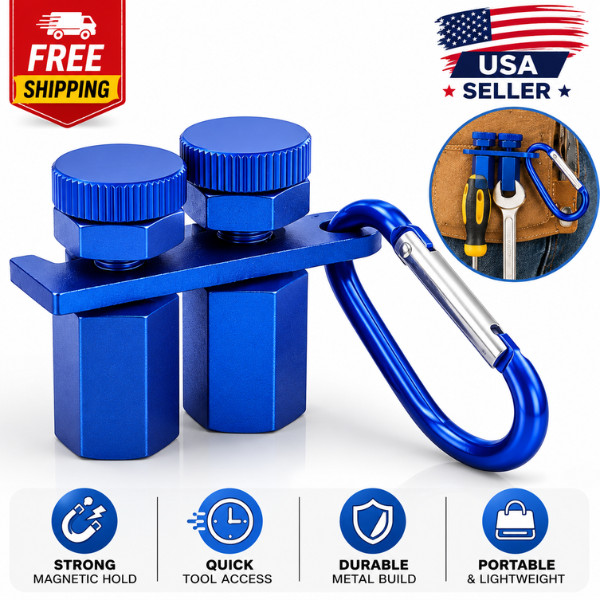

Photos from current listings. Actual item, color, and included accessories may vary.
Stair Gauge Buying Guide
Stair gauges are precision indexing accessories that clamp onto a framing square to lock consistent rise and run angles for stair stringers, rafters, and repetitive layout. The core trade-off is between stamped aluminum with coarse thumbscrews and machined or extruded aluminum with brass or hardened steel hardware that holds angle under vibration; choose machined bodies with fine-thread brass knobs for production framing, and skip thin stamped sets for anything beyond occasional trim work.


At a glance
- Category
- Measuring & Layout Tools
- Data updated
- Nov 20, 2026
Current offers
Highlights
- Stair gauge bodies are stamped aluminum (light, prone to flex) or extruded/machined aluminum (rigid, repeatable) — extrusion thickness and anodizing grade dictate how well the angle survives job-site drops.
- Brass or hardened-steel thumbscrews with fine threads provide clamping force that resists slipping on the square; plastic or coarse zinc screws loosen under saw vibration.
- Standard gauges fit any 16-inch or 24-inch steel framing square with a 1/8-inch to 3/16-inch thick blade; undersized jaws wobble and throw off rise/run pairs.
- A paired set with a holder or carabiner keeps both gauges together, preventing the most common layout error: mixing a rise gauge with an unmatched run gauge.
Best use cases
- Best fit: production stair stringer layout — pick a machined-aluminum pair with brass fine-thread knobs and a holder so both gauges stay matched through repeated moves.
- Best fit: roof rafter and repetitive-angle layout — choose extruded gauges with wide jaws that clamp firmly on a 24-inch square for consistent plumb and seat cuts.
- Wrong fit: heavy timber or wet-pressure-treated stringers where saw vibration is high — skip thin stamped gauges and step up to hardened-steel-screw machined sets.
- Wrong fit: one-off hobby trim work — a basic stamped-aluminum pair is adequate; do not overspend on machined sets for a single project.
Buying tips
- Match gauge jaw capacity to your square: standard gauges fit 1/8-inch to 3/16-inch blade thickness; a loose jaw on a thin blade causes angle drift of a degree or more over a full stringer.
- Choose brass or hardened-steel fine-thread thumbscrews over plastic or coarse zinc — clamping force, not body weight, keeps the rise/run angle locked during repeated cuts.
- Buy gauges as a matched pair with a holder; unmatched singles invite mixing rise and run settings, which produces inconsistent step heights across a stringer.
- Prefer extruded or machined aluminum bodies with anodized finish over thin stamped aluminum; flex in stamped bodies transfers directly into angle error under cutting vibration.
Specs
| Body Material | Stamped vs Extruded/Machined Aluminum |
|---|---|
| Thumbscrew Type | Brass/Hardened Steel vs Plastic/Zinc |
| Square Compatibility | 16-in & 24-in framing squares, 1/8-3/16 in blade |
| Set Configuration | Matched Pair with Holder/Carabiner |
Related searches
What to check before buying
- Measure your framing square blade thickness (1/8-inch to 3/16-inch is standard) and confirm the gauge jaws clamp flush without rocking.
- Confirm you have both a 16-inch and 24-inch square if you lay out stairs and rafters — gauge sets are sized to one blade length at a time.
- Check that the set includes a holder or carabiner; loose gauges in a tool bag are the leading cause of mismatched rise/run pairs.
- Verify the thumbscrew material and thread pitch — brass or hardened steel with fine threads for framing; plastic or coarse threads only for light trim.
FAQ
Data sources: eBay / Amazon listings and product attribute feeds Data updated Nov 20, 2026.
Some links on this page are affiliate links. If you buy after clicking one, we may earn a commission at no extra cost to you. This does not change which products appear here or their order. Affiliate disclosure.