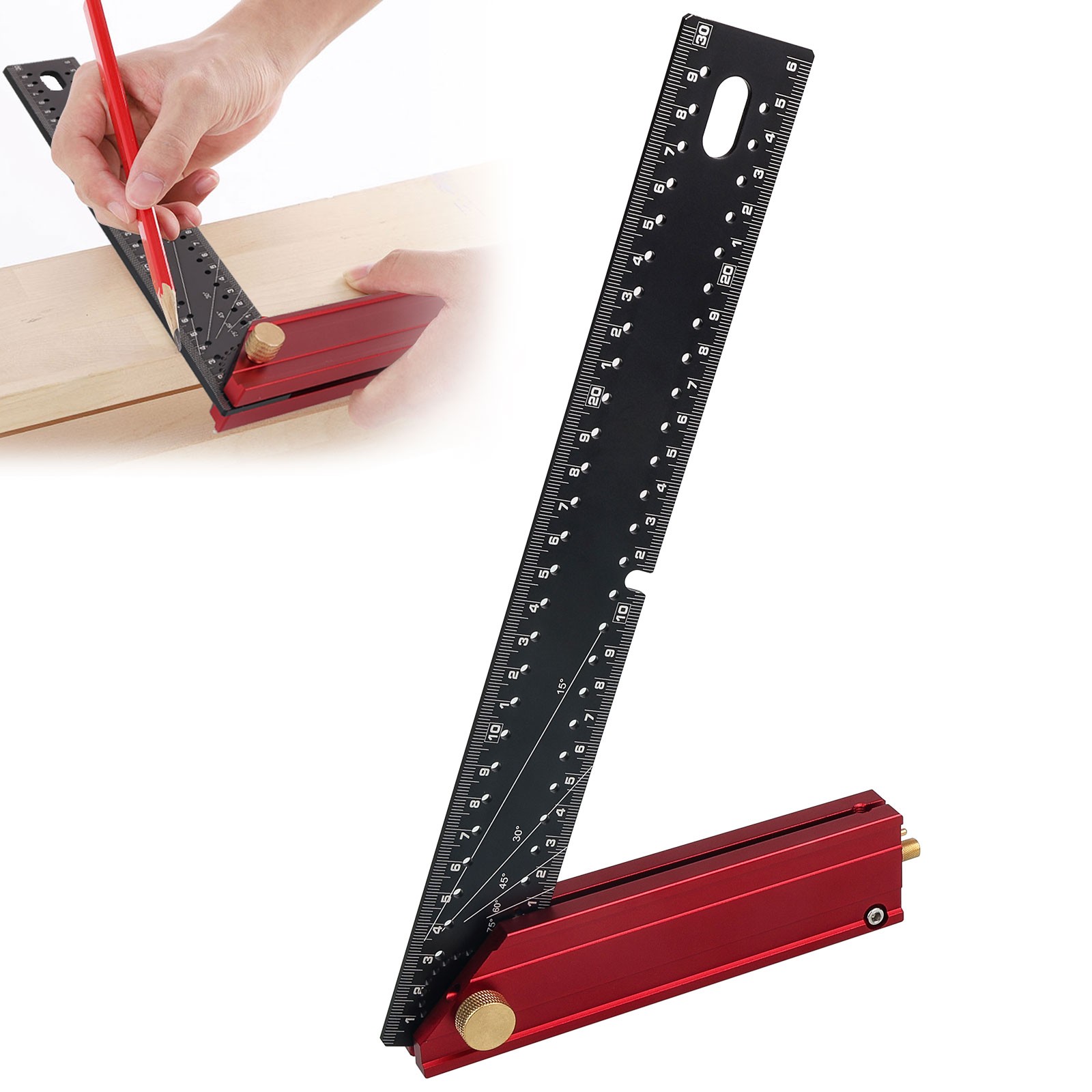

Photos from current listings. Actual item, color, and included accessories may vary.
Woodworking Square Buying Guide
A woodworking square is a rigid 90° reference tool that transfers angles and checks squareness across boards, frames, and assemblies. The core trade-off is between stamped/formed sheet-metal squares that flex and lose accuracy under load versus machined or forged solid-body squares that hold tolerance. Choose a hardened, ground, or forged square with a thick stock and precise heel; skip thin stamped hardware-store squares for joinery or machine setup.


At a glance
- Category
- Measuring & Layout Tools
- Data updated
- Nov 20, 2026
Current offers
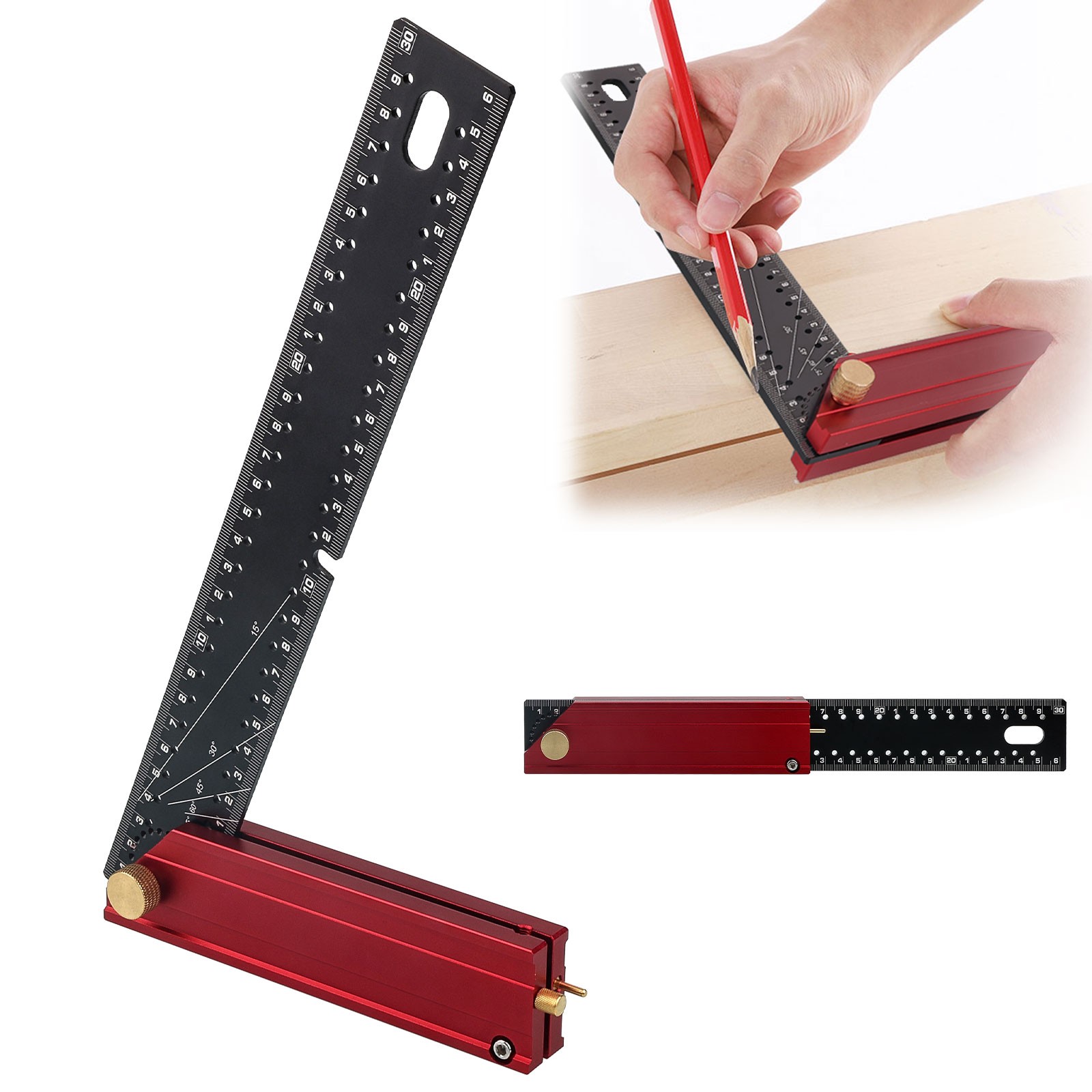
Highlights
- Machined billet or forged steel squares hold 90° within 0.001–0.002 in over the blade length; stamped sheet squares commonly deviate 0.005–0.010 in and flex under hand pressure.
- A thick, wide stock (3/4–1 in face) registers against the workpiece edge and resists tipping; thin 1/8–3/16 in stock squares rock and read false on rough lumber.
- Hardened steel blades resist file and saw nicks; aluminum and unhardened stainless are lighter but dent and wear at the heel, the point that sets true 90°.
- Adjustable carpenter squares add a moveable fence and scribing pin for repeat angles and marking; fixed try squares and rafter squares trade that adjustability for rigidity.
Best use cases
- Best fit: cabinet and furniture joinery — pick a 6–8 in machined steel try square with a thick stock and hardened blade for checking case corners and drawer parts.
- Best fit: framing and deck layout — pick a 12 in adjustable L-square or rafter square with a scribing pin for repeat 90° cuts and stair stringer layout.
- Wrong fit: using a thin stamped 12 in carpenter square as a machine-setup or jointer fence reference — it flexes and will not hold 0.001 in squareness.
- Wrong fit: buying an adjustable square for precision joinery without locking the fence and re-checking 90° — the pivot introduces play that a fixed try square avoids.
Buying tips
- Match blade length to the longest joint you check: 4–6 in for small boxes, 8–12 in for casework, 16–24 in for framing and sheet goods.
- Demand a hardened, ground blade and a stock at least 3/4 in wide; if the listing does not state hardened steel or forged body, assume stamped sheet metal.
- For adjustable squares, confirm a locking screw or cam clamp on the fence and a scribing pin sized for the stock thickness; friction-only pivots slip under marking pressure.
- Verify the heel is one-piece with the stock or pinned and brazed; riveted two-piece heels loosen and are the first point of squareness loss.
Specs
| Square Type | Try / Carpenter / Rafter / Adjustable |
|---|---|
| Blade Length | 4–24 in (6–12 in typical) |
| Body Material | Hardened steel / Forged / Aluminum |
| Squareness Tolerance | 0.001–0.002 in (machined) |
Related searches
What to check before buying
- Measure the widest board or assembly you will check; the square's blade must span the full joint to read squareness, not just the corner.
- Confirm the stock face height clears your workpiece thickness and that the blade width fits inside closed frames and drawers.
- Check that the square's stock sits flat on your bench or machine table without rocking; a twisted stock reads false even if the blade is true.
- Verify the marking edge accepts a knife or scribe without chipping — hardened steel is required if you mark on abrasive or painted surfaces.
FAQ
Data sources: eBay / Amazon listings and product attribute feeds Data updated Nov 20, 2026.
Some links on this page are affiliate links. If you buy after clicking one, we may earn a commission at no extra cost to you. This does not change which products appear here or their order. Affiliate disclosure.