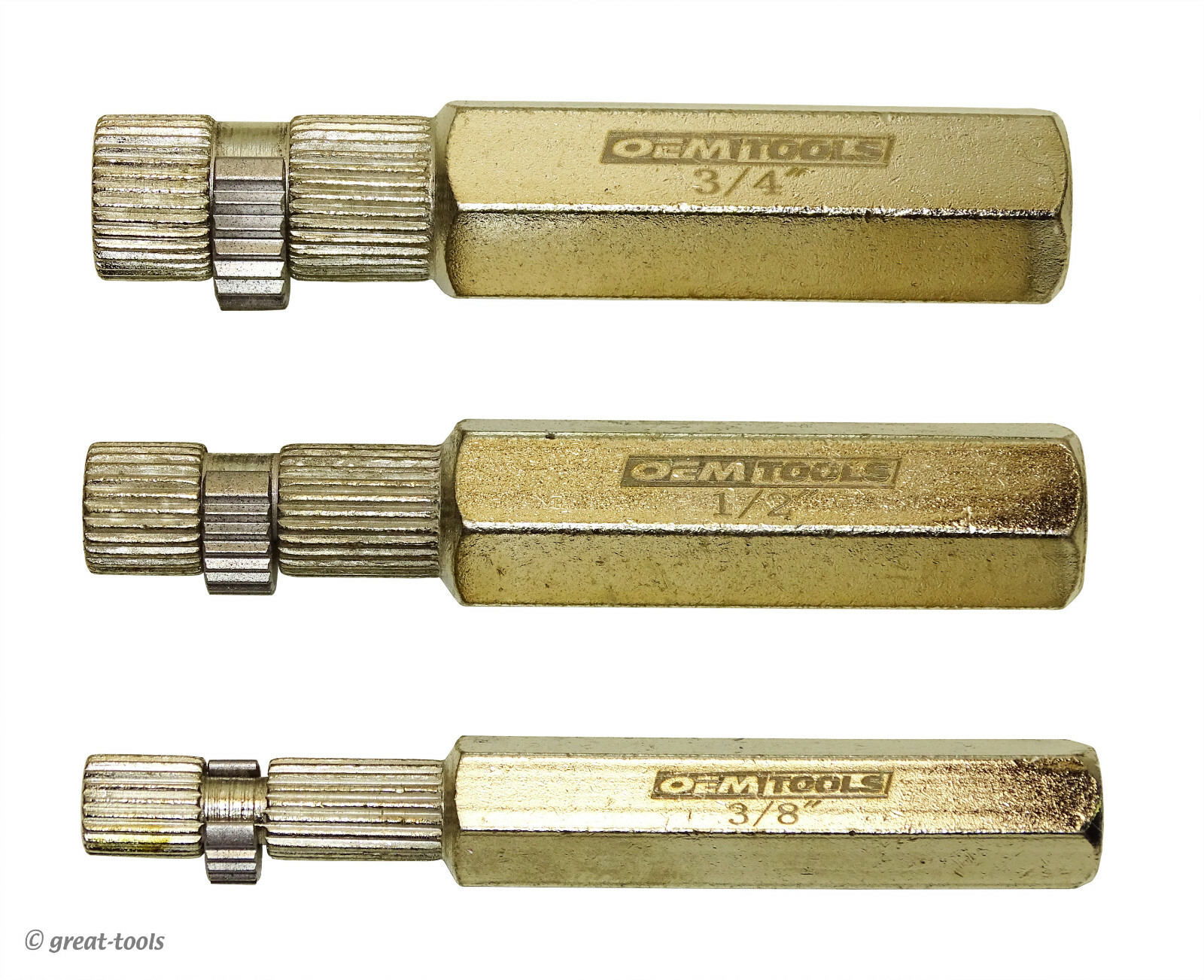

Photos from current listings. Actual item, color, and included accessories may vary.
Internal Pipe Wrench Set Buying Guide
An internal pipe wrench set uses expanding cam or wedge jaws to grip the inside wall of a broken nipple or fitting for extraction without damaging threads. The core trade-off is jaw engagement range versus steel hardness: budget sets cover a narrow diameter band with soft jaws that slip under torque, while pro sets add multi-size cams and hardened alloy for high-load removal. Choose a set whose stated range brackets your pipe ID and whose jaws are through-hardened alloy steel; skip any single-size 'universal' extractor that cannot expand to a positive bite.


At a glance
- Category
- Plumbing Tools
- Data updated
- Nov 20, 2026
Current offers
Highlights
- Cam-type internal wrenches expand a hardened eccentric jaw against the pipe ID; jaw hardness (HRC 45+) and knurl depth determine slip resistance under torque.
- Sets are sized by pipe inside diameter, not nominal trade size; a 3-piece set typically spans roughly 1/2 in to 2 in ID across dedicated cam bodies.
- Nipple extractor variants use tapered left-hand flutes driven into the bore; they need a matching hex or square drive and bite depth equal to wall thickness.
- Through-hardened chrome-vanadium or S2 tool steel resists jaw mushrooming; case-hardened budget jaws deform and spin inside galvanized or schedule 40 steel.
Best use cases
- Best fit: broken nipple flush with a fitting in copper or steel — pick a cam-type set with a jaw range covering the pipe ID and a square drive for a ratchet.
- Best fit: recessed plastic or brass fittings in tight cabinets — choose a compact 2–3 piece set with short cam bodies that clear the fitting shoulder.
- Wrong fit: extracting a nipple already drilled and tapped with an easy-out — skip the internal wrench and use the correct extractor size to avoid reaming the bore.
- Wrong fit: thin-wall or PVC pipe — do not use cam jaws that expand against unsupported wall; cut and re-thread or use a socket-style extractor instead.
Buying tips
- Match the set's stated ID range to your pipe: for 1/2 in nominal schedule 40 steel, the true ID is about 0.62 in, so a set covering 0.5–0.75 in ID is required.
- Prefer cam bodies with a positive stop and a full 3/8 in or 1/2 in square drive; 1/4 in hex shanks twist off under the torque needed for seized nipples.
- Check jaw material grade: chrome-vanadium or S2 steel with visible heat-treat color and cut knurls outlast smooth, cast budget jaws that cam out.
- For galvanized or rusted steel, select a set with aggressive coarse knurling and a tapered lead-in; fine knurls skate on scale instead of biting.
Specs
| Jaw Type | Expanding cam vs tapered flute |
|---|---|
| Pipe ID Range | ~0.5–2 in across 2–4 pc sets |
| Drive Standard | 3/8 in or 1/2 in square |
| Jaw Steel | Cr-V / S2, HRC 45+ |
Related searches
What to check before buying
- Measure the broken pipe's inside diameter with calipers, not the nominal trade size, and confirm the set's low and high ID limits bracket it.
- Confirm the cam body diameter clears the surrounding fitting or valve body; short-body sets are needed in recessed or close-coupled installations.
- Verify the drive standard on the cam (3/8 in or 1/2 in square) matches your ratchet or breaker bar before purchase.
- Inspect pipe wall condition: heavily corroded or thin-wall pipe will split under cam expansion, so plan a cut-and-replace fallback.
FAQ
Data sources: eBay / Amazon listings and product attribute feeds Data updated Nov 20, 2026.
Some links on this page are affiliate links. If you buy after clicking one, we may earn a commission at no extra cost to you. This does not change which products appear here or their order. Affiliate disclosure.