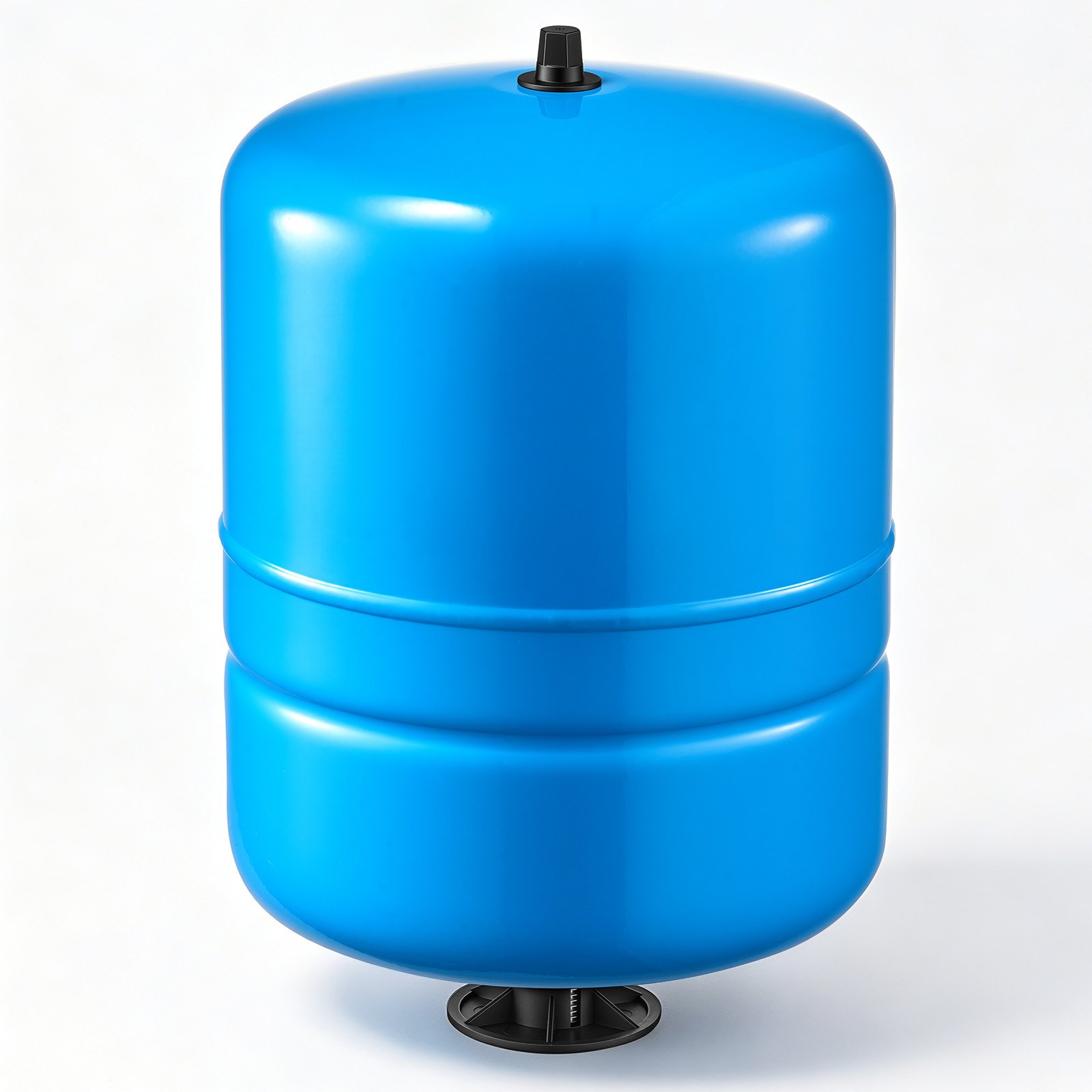

Photos from current listings. Actual item, color, and included accessories may vary.
Thermal Expansion Tank Water Heater Buying Guide
A thermal expansion tank is a sealed, pre-charged air chamber that absorbs the volume increase when water heats in a closed plumbing system, protecting the water heater, pipes, and fixtures from overpressure. The key trade-off is between a stamped, thin-wall tank with a low-grade bladder and a heavy-duty carbon-steel tank with a food-grade butyl diaphragm built to ASME/NSF standards. Choose a tank sized to your heater capacity and pre-charged to your static line pressure; skip any tank that lacks a replaceable bladder or falls below the minimum acceptance volume for your system.


At a glance
- Category
- Plumbing Tools
- Data updated
- Nov 20, 2026
Current offers
Highlights
- Heavy-duty tanks use 1.0-1.5 mm carbon steel shells with a butyl or EPDM diaphragm; thin stamped tanks (under 0.8 mm) corrode and rupture at seams within a few heating cycles.
- Pre-charge must match static line pressure (typically 40-60 PSI); the factory 29 PSI setting in many 2-gallon tanks is inadequate for most residential systems and must be field-adjusted.
- Acceptance volume is the usable water capacity, not the nominal tank size: a 2-gallon tank at 60 PSI pre-charge and 150 PSI max typically accepts only about 0.5-0.6 gallons of expansion.
- Connection standard is 3/4-inch NPT male; tanks with 1/2-inch NPT or proprietary thread require adapters and reduce flow, so match the tank fitting to the heater drain-valve or cold-inlet port.
Best use cases
- Best fit: closed-loop residential system with a backflow preventer, PRV, or check valve—install a 2-gallon tank on the cold-water inlet for a 40-50 gallon heater; skip if you have an open system with a plain gate valve and no backflow device.
- Best fit: tankless or high-recovery heater in a small mechanical closet—choose a 2-gallon vertical tank with a top connection and 3/4-inch NPT; skip large 4.5-gallon floor-standing tanks where wall space is limited.
- Best fit: municipal water with stable 50-60 PSI—set pre-charge to line pressure and use a standard butyl-diaphragm tank; skip tanks with a low-grade EPDM bladder if your water is chlorinated or has high sediment.
- Wrong fit: well water with a pressure tank already on the system—adding a second expansion tank without re-checking pre-charge causes nuisance PRV weeping; skip unless the well tank is isolated from the heater by a check valve.
Buying tips
- Size by heater gallon capacity and temperature rise: for a 40-50 gallon heater, use a 2-gallon tank; for 80-100 gallons, use a 4.5-gallon tank; undersizing causes pressure spikes above 150 PSI.
- Match pre-charge to measured static pressure with a tire gauge; a 29 PSI factory charge is only correct for 29 PSI systems—most homes need 50-60 PSI, so buy a tank with a standard Schrader valve for easy adjustment.
- Specify a butyl or EPDM diaphragm and a carbon-steel shell of at least 1.0 mm; avoid tanks with a plastic air-valve body or a non-replaceable bladder, which fail within 3-5 years.
- Confirm the connection is 3/4-inch NPT male and the tank orientation (vertical or horizontal) fits your piping; horizontal tanks require a mounting bracket rated for the tank's wet weight.
Specs
| Tank Capacity | 2 gal (residential) / 4.5 gal (large) |
|---|---|
| Connection | 3/4" NPT male (standard) |
| Pre-Charge | 29 PSI factory / adjust to line |
| Shell Material | Carbon steel >=1.0 mm / butyl diaphragm |
Related searches
What to check before buying
- Measure static water pressure with a gauge at a hose bib; record it—your tank pre-charge must equal this value before installation.
- Check the water heater's cold-inlet or drain-valve thread: 3/4-inch NPT is standard; 1/2-inch NPT requires a reducing bushing that may restrict flow.
- Verify clearance for the tank's diameter and height (a 2-gallon tank is typically about 11 inches in diameter and 14 inches tall) plus room for the air valve and drain.
- Confirm your system is closed: a backflow preventer, PRV, check valve, or dual-check meter means you need a tank; an open system with no backflow device does not.
FAQ
Data sources: eBay / Amazon listings and product attribute feeds Data updated Nov 20, 2026.
Some links on this page are affiliate links. If you buy after clicking one, we may earn a commission at no extra cost to you. This does not change which products appear here or their order. Affiliate disclosure.